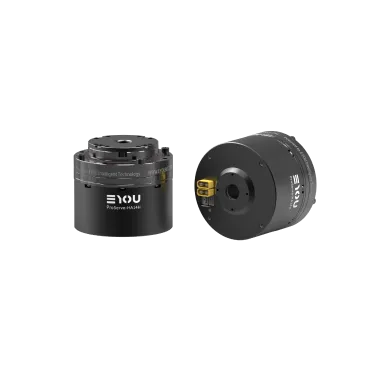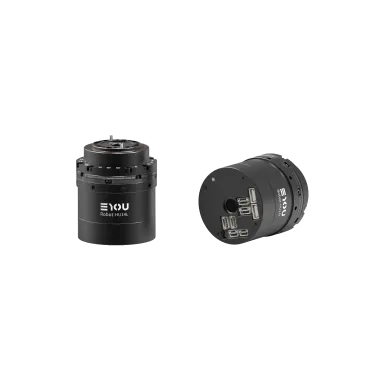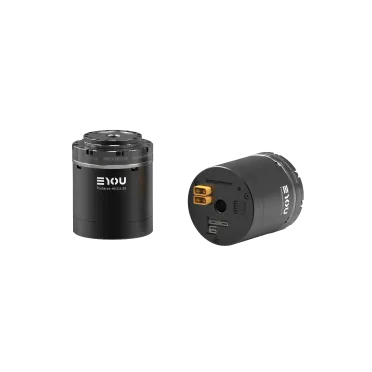
Bipedal Humanoid Robot Joint Selection: 0.8m, 1.3m & 1.7m Robot Schemes
A biped humanoid robot stands, walks, and keeps its balance on two legs. That single fact makes its joint selection harder than any other robot form: every step sends ground impact straight into the hip, knee, and ankle joints, while the arms still need precision. Pick the wrong joint and you get a robot that cannot walk steadily or falls short of payload. This article breaks down EYOU's three bipedal joint schemes for 0.8m, 1.3m, and 1.7m robots, plus a linear-rotary hybrid option, with full joint layouts and parameter tables from our production projects. If you are wondering how to select robot joints for a bipedal build, start here.
Why Bipedal Joint Selection Is Different
On a wheeled robot, the chassis absorbs most of the shock. On a biped humanoid robot, the leg joints absorb it instead, thousands of times per hour. Three consequences follow:
- Leg joints need high peak torque with impact resistance. Across the three sizes below, leg peak torque runs from 36 N.m on a 0.8m robot up to 200 N.m on a 1.7m robot. Planetary reducers handle this repeated impact far better than harmonic drives.
- Arm joints need precision more than brute force. Arm peak torque stays modest (6 to 60 N.m depending on size), but positioning accuracy decides whether the robot can grasp and manipulate.
- Every joint adds weight the legs must carry. With 23 to 31 degrees of freedom, joint weight directly eats into payload. Compact, integrated joint actuators keep the whole machine viable.
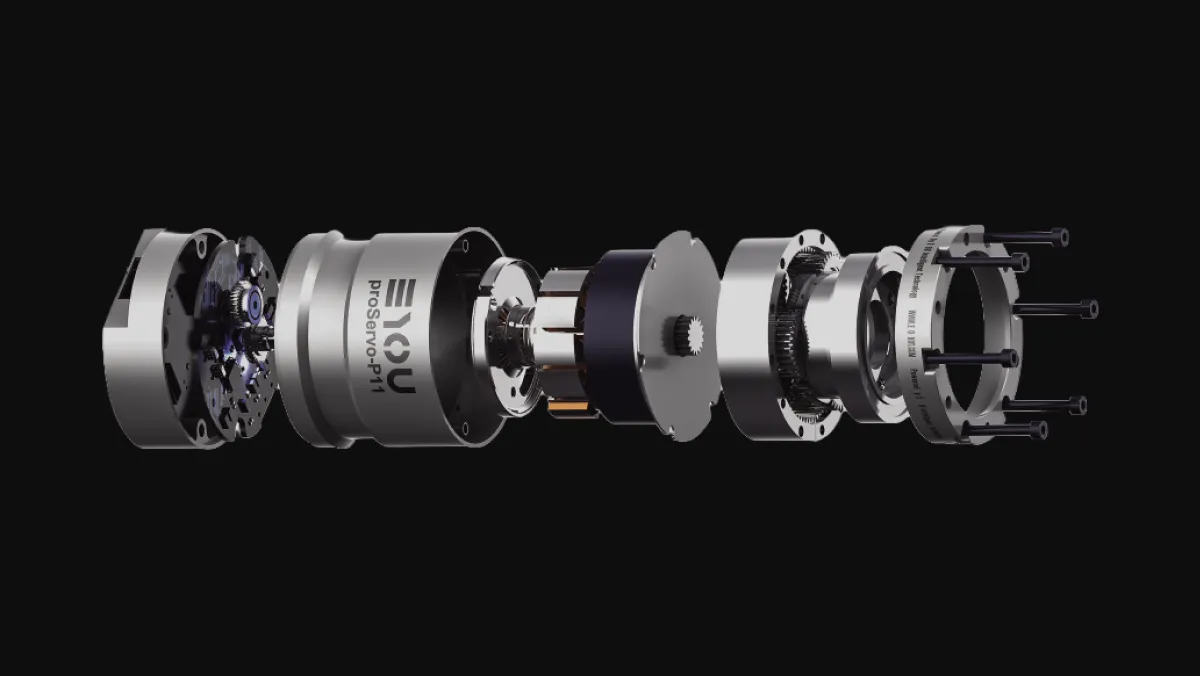
This is why all three bipedal schemes below build on the RP humanoid planetary joint actuator series, with a harmonic-plus-linear alternative for the 1.7m class.
Three Bipedal Schemes at a Glance
| Spec | 0.8m RP Scheme | 1.3m RP Scheme | 1.7m RP Scheme | 1.7m RHU+RL Scheme |
|---|---|---|---|---|
| Robot height | 80 cm | 130 cm | 170 cm | 170 cm |
| Robot weight | ≈12 kg | ≈30 kg | ≈60 kg | ≈70 kg |
| Total DOF | 23 | 31 | 31 | 32 |
| Arm max payload | 1 kg | 2 kg | 2 kg | 2 kg |
| Arm joint max peak torque | 6 N.m | 30 N.m | 60 N.m | 61 N.m |
| Leg joint max peak torque / thrust | 36 N.m | 120 N.m | 200 N.m | 3000 N (linear thrust) |
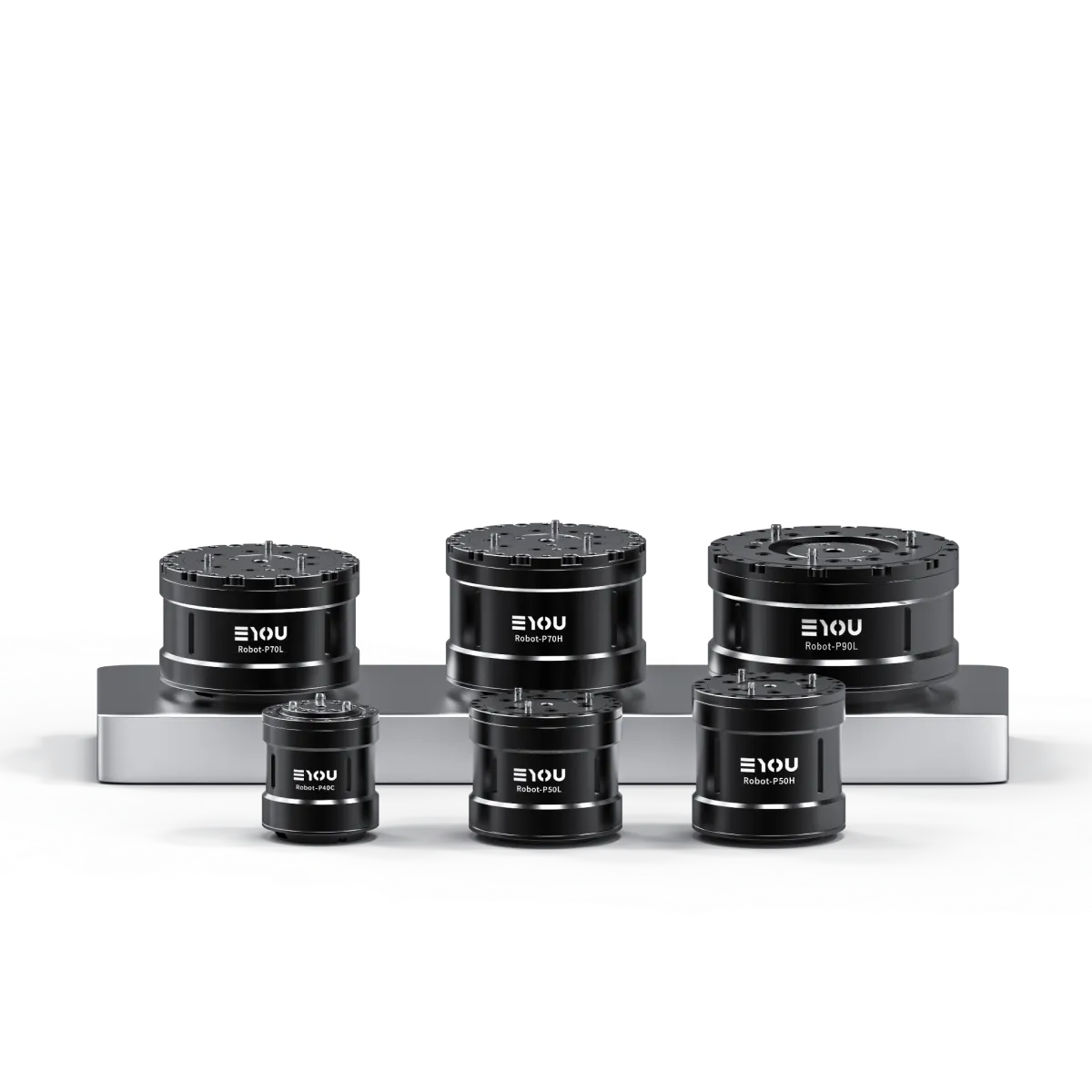
| Joint models used | RP40C, RP50C | RP40C, RP50H, RP70H, RP90L | RP50L, RP50H, RP70H, RP90L, RP90H | RHU-14L, RHU-17L, RHU-25L, RL50, RL150, RL300 |
| Typical applications | Home companion, university research, creator & IP toy projects | Home companion, commercial service, healthcare & elderly care | Healthcare & elderly care, home companion, tour guide | Commercial service, healthcare & elderly care, home companion, tour guide |
Every scheme runs on 48 VDC (±10%) across all joints. RP joints communicate over CANopen or CAN FD; the RHU+RL scheme uses EtherCAT/CANopen on the rotary joints and CANopen on the linear modules.
0.8m Bipedal Scheme: 12KG, 23 DOF
The 0.8m scheme is the lightest of the three. Two joint models cover the whole body: RP40C ×14 for the arms and smaller leg positions, and RP50C ×9 for the load-bearing leg joints. Leg peak torque tops out at 36 N.m, arm peak torque at 6 N.m, and the arms carry up to 1 kg.
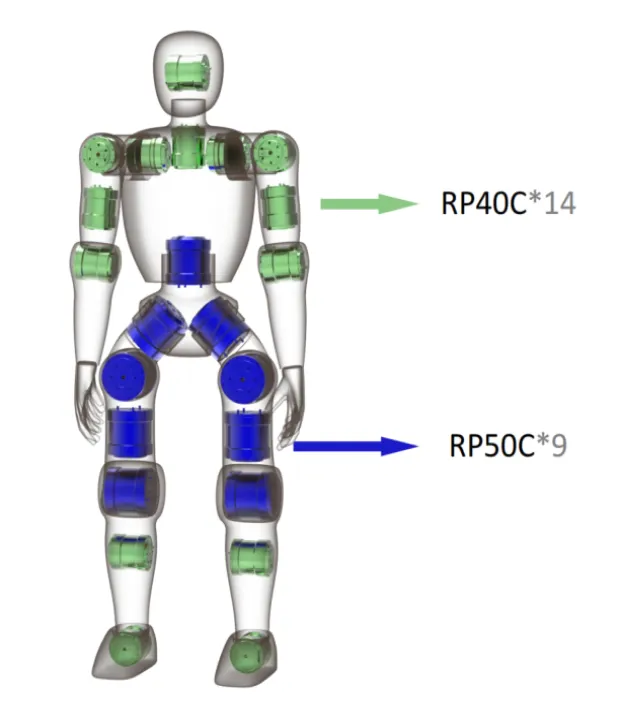
| Joint model | RP40C | RP50C |
|---|---|---|
| Reducer type | Planetary | Planetary |
| Reduction ratio | 25.0 | 22.06 |
| Rated torque (N.m) | 2 | 10 |
| Peak torque (N.m) | 6 | 36 |
| Rated power (W) | 25 | 157 |
| Rated / peak speed (rpm) | 120 / 145 | 150 / 180 |
| Size OD × length (mm) | Φ45 × 52 | Φ59 × 55.3 |
| Weight (g) | 225 | 450 |
| Hollow bore (mm) | 4 | 5 |
At 12 kg total weight with 23 degrees of freedom, this size fits home companion robots, university research platforms, and creator or IP toy projects where cost and simplicity matter more than payload. (RP50C currently links to the RP series page.)
1.3m Bipedal Scheme: 30KG, 31 DOF
The 1.3m scheme steps up to 31 degrees of freedom and a 2 kg arm payload. Four models split the work: RP50H ×10, RP40C ×8, RP90L ×7, and RP70H ×6. Leg peak torque reaches 120 N.m at the RP90L positions, and arm peak torque reaches 30 N.m.
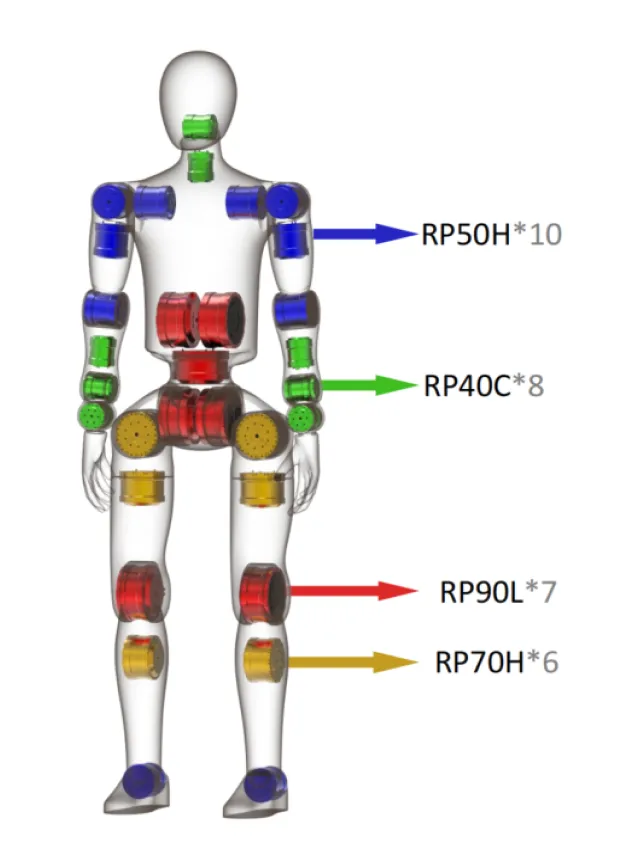
| Joint model | RP40C | RP50H | RP70H | RP90L |
|---|---|---|---|---|
| Reducer type | Planetary | Planetary | Planetary | Planetary |
| Reduction ratio | 25.0 | 19.53 | 20.0 | 21.91 |
| Rated torque (N.m) | 2 | 10 | 20 | 40 |
| Peak torque (N.m) | 6 | 30 | 60 | 120 |
| Rated power (W) | 25 | 157 | 262 | 482 |
| Rated / peak speed (rpm) | 120 / 145 | 150 / 180 | 125 / 160 | 115 / 140 |
| Size OD × length (mm) | Φ45 × 52 | Φ59 × 59 | Φ77 × 58.3 | Φ96.5 × 56 |
| Weight (g) | 195 | 445 | 785 | 1050 |
| Hollow bore (mm) | 4 | 5 | 6 | 8 |
At 30 kg, this is the mainstream size for home companion, commercial service, and healthcare robots: big enough to be useful, small enough to stay safe around people.
1.7m Bipedal Scheme: 60KG, 31 DOF
The full-size bipedal scheme also uses 31 degrees of freedom but doubles the leg demand: leg peak torque reaches 200 N.m at the RP90H positions. The layout mixes five models: RP50L ×8, RP90H ×7, RP70H ×4, RP50H ×6, and RP90L ×6. Arm peak torque rises to 60 N.m with the same 2 kg payload class.
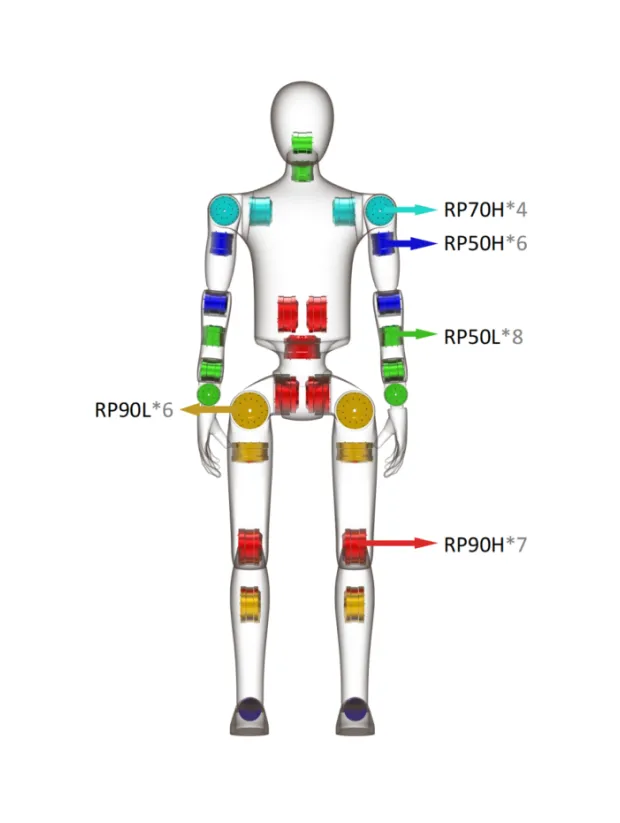
| Joint model | RP50L | RP50H | RP70H | RP90L | RP90H |
|---|---|---|---|---|---|
| Reducer type | Planetary | Planetary | Planetary | Planetary | Planetary |
| Reduction ratio | 19.53 | 19.53 | 20.0 | 21.91 | 21.91 |
| Rated torque (N.m) | 5 | 10 | 20 | 40 | 60 |
| Peak torque (N.m) | 15 | 30 | 60 | 120 | 200 |
| Rated power (W) | 79 | 157 | 262 | 482 | 691 |
| Rated / peak speed (rpm) | 150 / 180 | 150 / 180 | 125 / 160 | 115 / 140 | 110 / 130 |
| Size OD × length (mm) | Φ59 × 53.5 | Φ59 × 59 | Φ77 × 58.3 | Φ96.5 × 56 | Φ96.5 × 66 |
| Weight (g) | 410 | 445 | 785 | 1050 | 1300 |
| Hollow bore (mm) | 4 | 5 | 6 | 8 | 8 |
This 60 kg class targets healthcare and elderly care, home companion, and tour guide robots that need human-height presence and real walking ability. (RP90H currently links to the RP series page.)
Alternative for 1.7m: RHU+RL Linear Hybrid Scheme, 70KG, 32 DOF
There is a second way to build a 1.7m humanoid: keep harmonic rotary joints in the upper body and drive the legs with linear actuators. This RHU+RL scheme pairs RHU humanoid harmonic joints with RL inverted-roller-screw linear modules: RL50 ×6, RL150 ×4, RHU-14L ×5, RHU-17L ×6, RL300 ×4, and RHU-25L ×7, for 32 degrees of freedom in total.
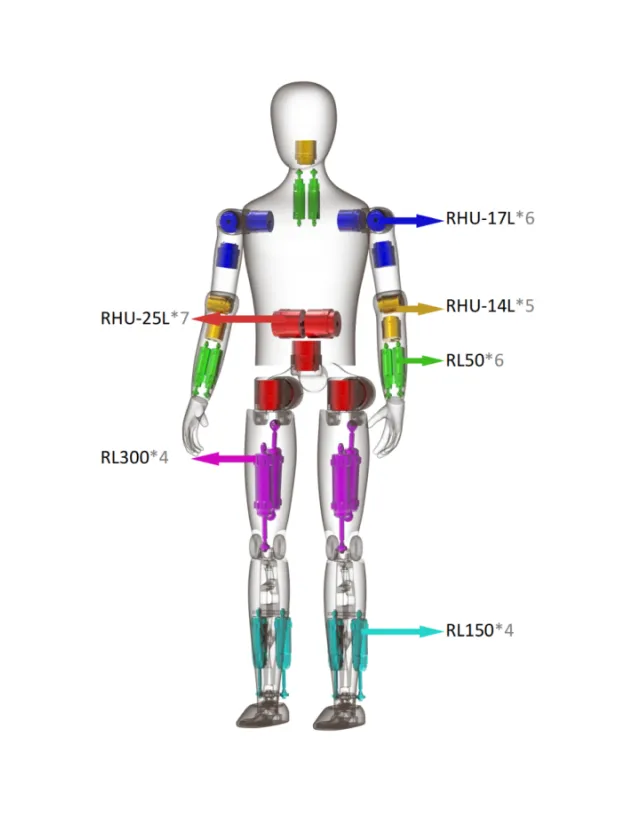
Instead of leg peak torque, the legs are rated by peak thrust: the RL300 modules deliver up to 3000 N each. Arm peak torque is 61 N.m with the same 2 kg payload.
| Rotary joint | RHU-14L | RHU-17L | RHU-25L |
|---|---|---|---|
| Reducer type | Harmonic | Harmonic | Harmonic |
| Reduction ratio | 50 / 80 / 100 | 50 / 80 / 100 | 50 / 80 / 100 |
| Rated torque (N.m) | 4.8 / 7.7 / 7.7 | 18 / 19 / 27 | 38 / 60 / 75 |
| Peak torque (N.m) | 24 / 35 / 35 | 48 / 61 / 71 | 127 / 179 / 184 |
| Size OD × length (mm) | Φ52 × 65 | Φ60 × 66 | Φ80 × 80.5 |
| Weight (kg, B/N) | 0.397 / 0.382 | 0.538 / 0.521 | 1.294 / 1.266 |
| Hollow bore (mm) | 8 | 10 | 18 |
| Linear module | RL50-S35-C-F | RL150-S50-C-F | RL300-S70-C-F |
|---|---|---|---|
| Screw type | Inverted roller screw | Inverted roller screw | Inverted roller screw |
| Stroke (mm) | 35 | 50 | 70 |
| Peak thrust (N) | 500 | 1500 | 3000 |
| Max linear speed (mm/s) | 70 | 300 | 300 |
| Size OD × length (mm) | Φ32 × 134.4 | Φ51 × 169.5 | Φ56 × 203.5 |
| Weight (kg) | 0.255 | 0.845 | 1.43 |
The hybrid scheme suits commercial service, healthcare, home companion, and tour guide robots where designers want harmonic precision in the arms and high linear thrust density in the legs.
How to Select Robot Joints for Your Bipedal Build
Whether you use our schemes or design your own layout, the selection logic is the same. Five steps:
- Fix the robot's height and weight class first. Joint demand scales with body mass far more than with any other factor. A 12 kg robot needs 36 N.m leg joints; a 60 kg robot needs 200 N.m. Pick the size class before comparing any single joint spec.
- Count your degrees of freedom. A practical biped humanoid lands between 23 and 32 DOF. Fewer than 23 limits motion; more than 32 adds weight and cost faster than capability.
- Assign peak torque by joint group, not by average. Arms in these schemes need only 6 to 61 N.m peak; legs need 36 to 200 N.m, or up to 3000 N of thrust if you go linear. Size the knee and hip for the worst case of stepping and crouching, not for standing still.
- Match the reducer type to the position. Planetary joints absorb leg impact; harmonic joints give the arms precision; linear modules give the legs thrust density. Mixing types across the body is normal practice, not a compromise.
- Lock the electrical interface last. All schemes here run 48 VDC. Check protocol (CANopen, CAN FD, or EtherCAT) against your controller, and check hollow bore diameter (4 to 18 mm across these models) against your cable count before freezing the design.
EYOU Bipedal Robot Joint Solution
EYOU Robot builds the full joint lineup these schemes draw from: the RP humanoid planetary series for impact-bearing legs, the RHU humanoid harmonic series for precision upper limbs, and RL linear modules for hybrid leg designs. In 2025 we delivered 95,000 joint units, produced on China's first automated robot joint production line, so every scheme above is backed by mass-production supply rather than prototype availability.
For a complete full-body layout, see our humanoid robot joint solution. To go deeper on joint fundamentals, read Types of Robot Joint Actuators and What Is a Robot Joint Actuator and How to Choose. Tell us your robot's target height and weight, and we will map it to a concrete joint list.
FAQ
A practical biped humanoid robot needs 23 to 32 joint actuators. EYOU's 0.8m scheme uses 23 (RP40C ×14 + RP50C ×9), the 1.3m and 1.7m planetary schemes use 31 each, and the 1.7m RHU+RL hybrid scheme uses 32. The exact count depends on how many arm, waist, neck, and leg degrees of freedom the design calls for.
It scales with body weight: about 36 N.m for a 12 kg / 0.8m robot, 120 N.m for a 30 kg / 1.3m robot, and 200 N.m for a 60 kg / 1.7m robot. If the legs are driven by linear actuators instead, the equivalent figure is peak thrust, up to 3000 N per module in the RHU+RL scheme. Always size for stepping and crouching loads, not standing still.
Because leg joints absorb ground impact at every step, and planetary reducers tolerate repeated impact loads far better than harmonic drives. A harmonic flexspline deforms elastically every revolution and fatigues faster under impact; planetary gears transmit through rigid tooth meshing and handle shock well. That is why bipedal legs use planetary joints while arms can stay harmonic for precision.
Yes, and EYOU's 1.7m RHU+RL scheme does exactly that. RL inverted-roller-screw linear modules replace the rotary hip and knee actuators, delivering 500 to 3000 N of peak thrust at 35 to 70 mm stroke. The trade-off is a different mechanical layout and slightly higher total weight (70 kg vs 60 kg for the planetary scheme), in exchange for high thrust density and harmonic precision in the upper body.
All schemes run on 48 VDC (±10%) across every joint. RP planetary joints support CANopen and CAN FD; RHU harmonic joints support EtherCAT and CANopen; RL linear modules use CANopen. Check your main controller's protocol support before freezing the joint list.