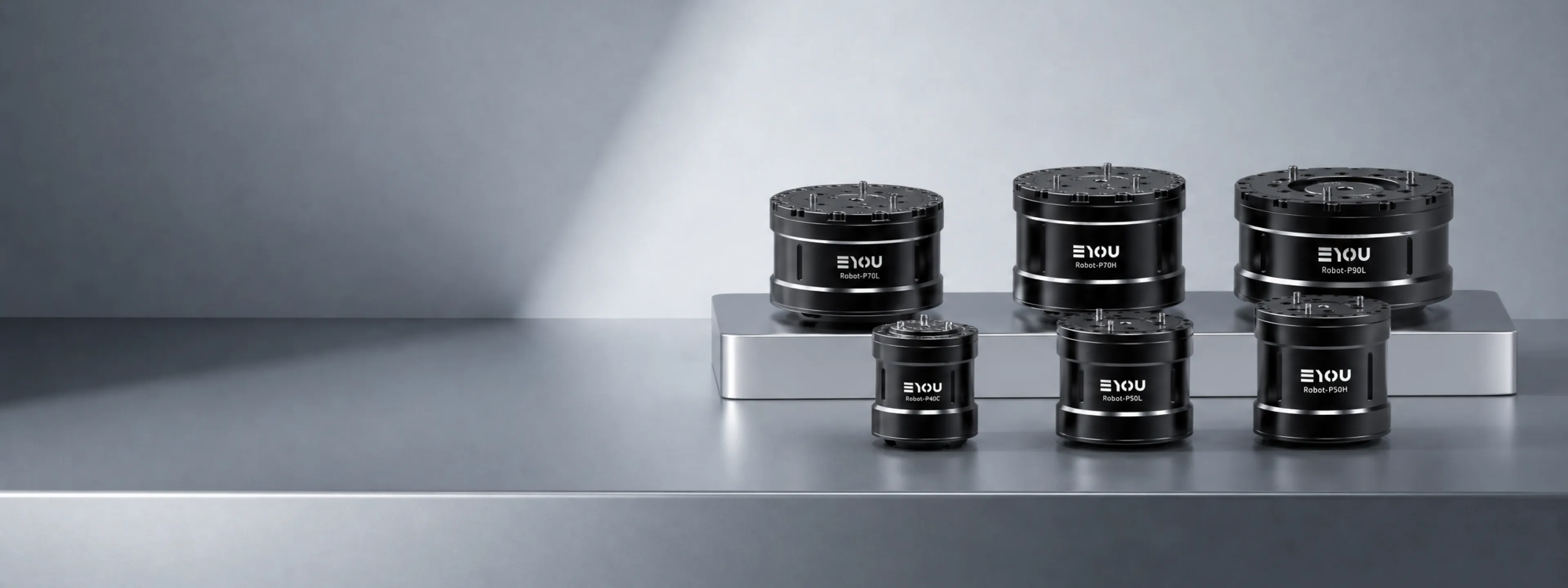
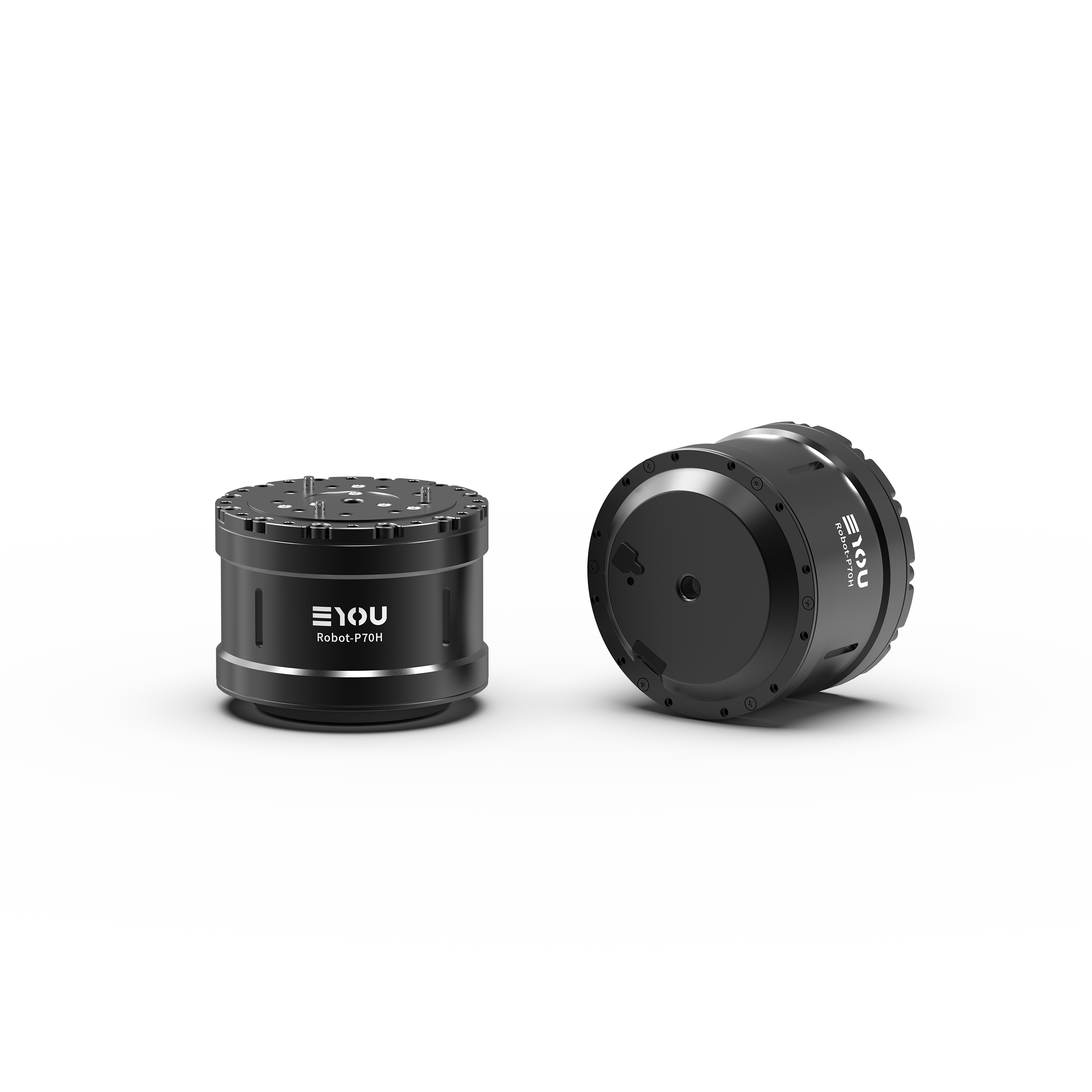
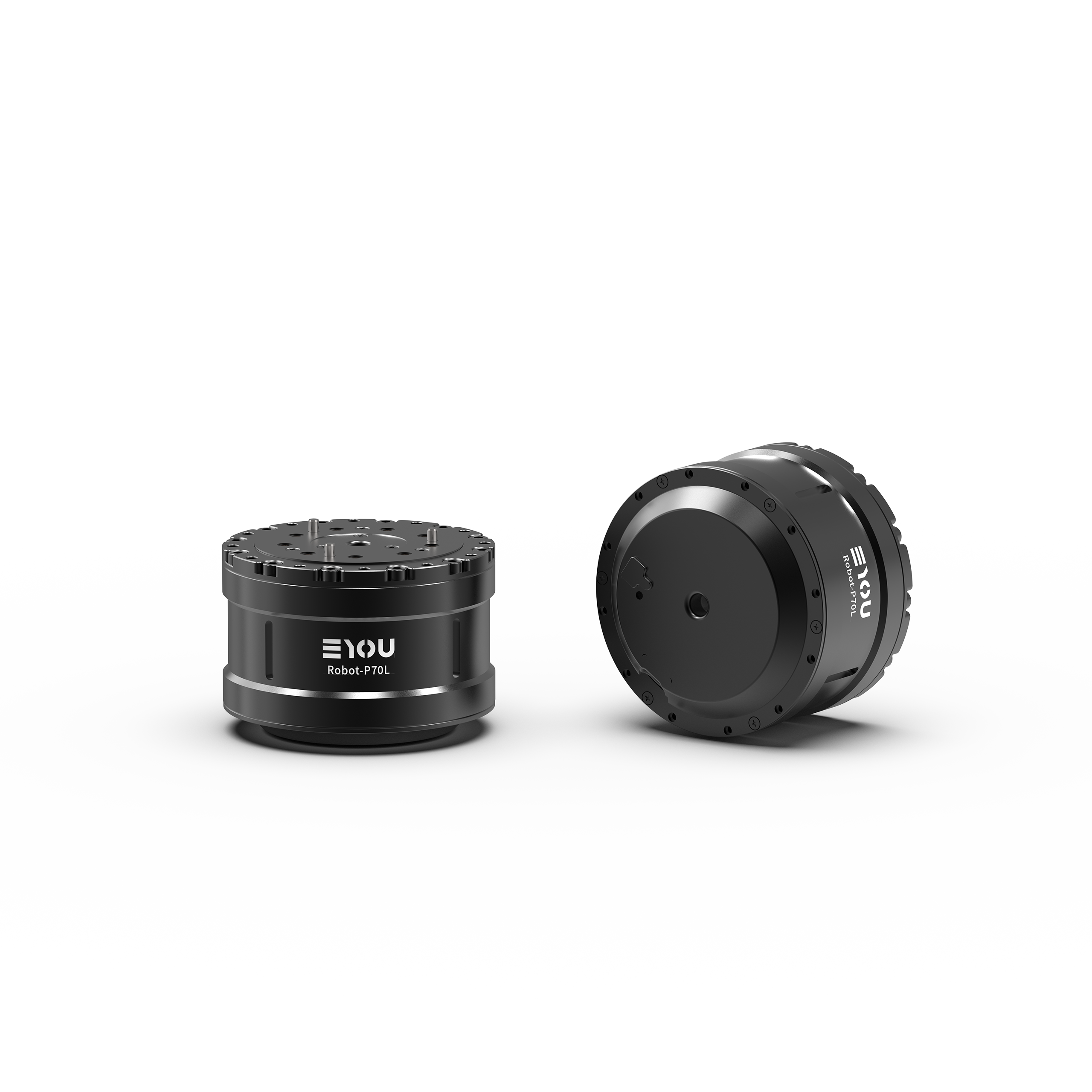
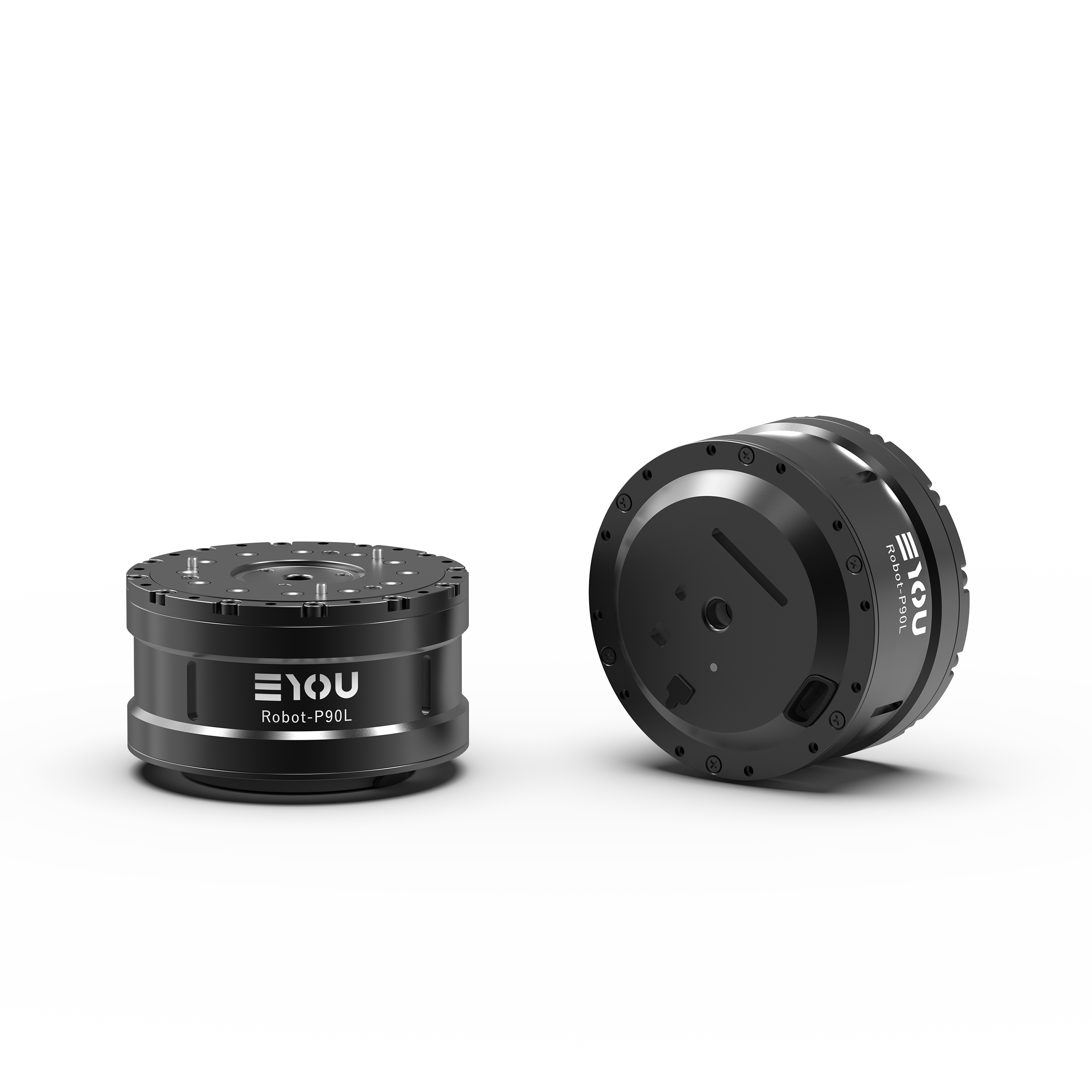
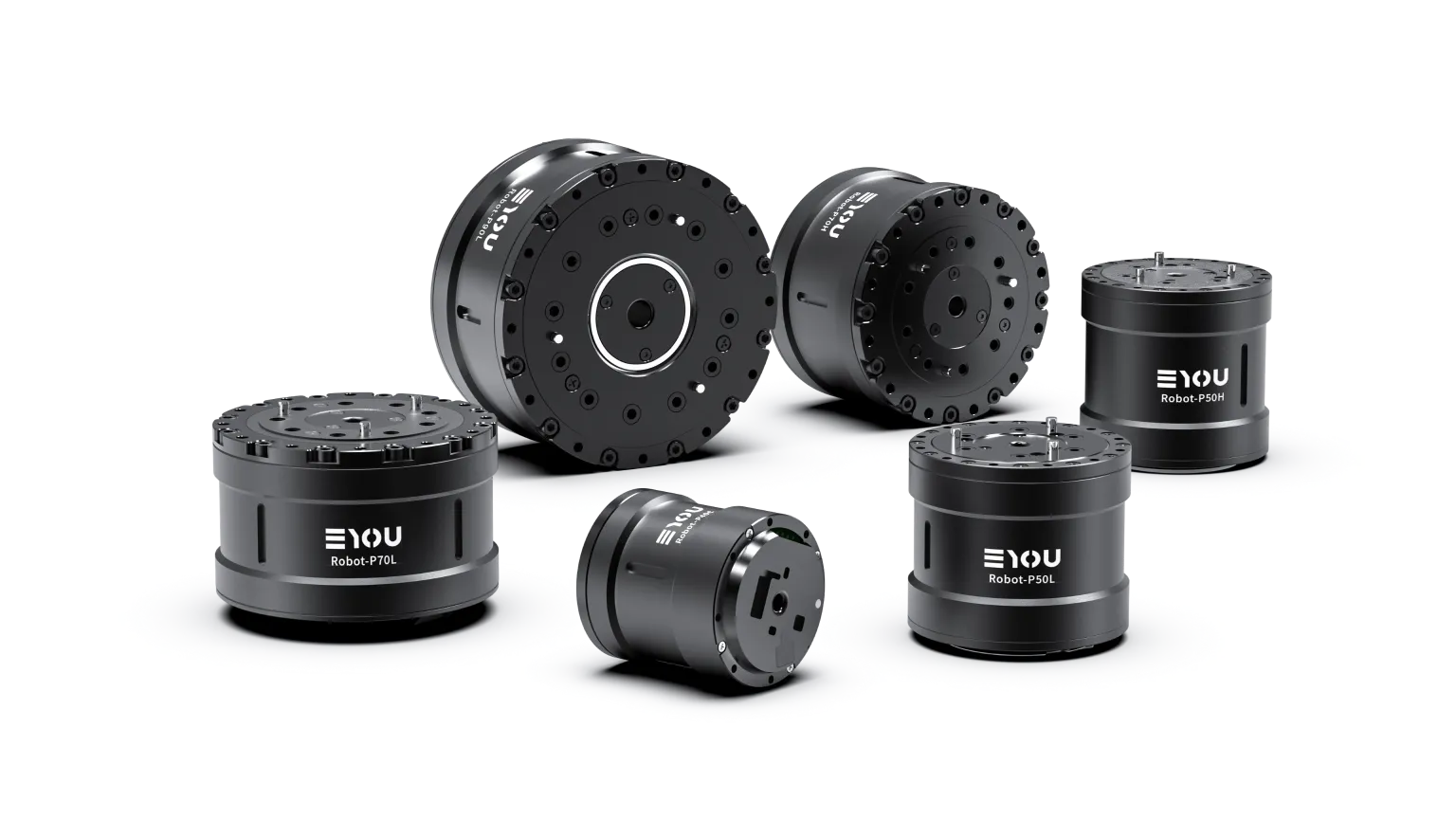
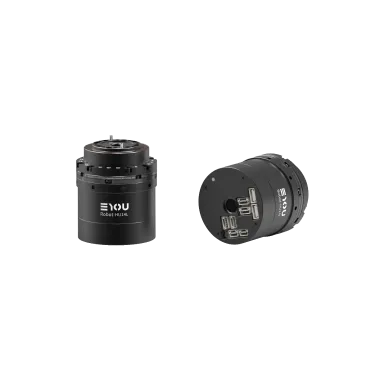
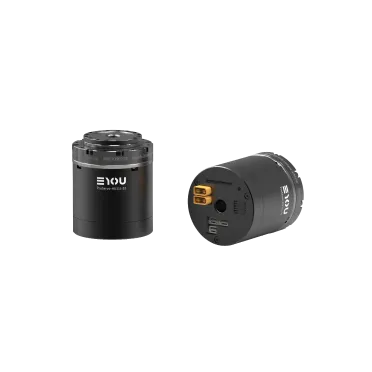
EYOU Robot RP Humanoid Planetary Robot Actuator Full Product Lineup

RP Humanoid Planetary Robot Actuator

Product Overview

The RP series is a competition-grade planetary joint module developed for high-dynamic motion scenarios. Drawing on the planetary reducer's high load capacity, high precision, and impact resistance, it maintains stable output under high-speed start-stop, frequent movement, and complex motion conditions. It is widely suited to entertainment performance and competitive scenarios, giving robots precise, smooth, and expressive motion capability.

Models & Specifications

Key Specifications

Operating Voltage48VEncoder TypeInductive Absolute
Backlash≤12 arcminEncoder Accuracy17-bit input / 19-bit output
Operating Temperature-20~45℃Service Life>3,000h
Operating Noise<65dBCommunication ProtocolCANopen/CAN FD

Extreme Reliability and Durability

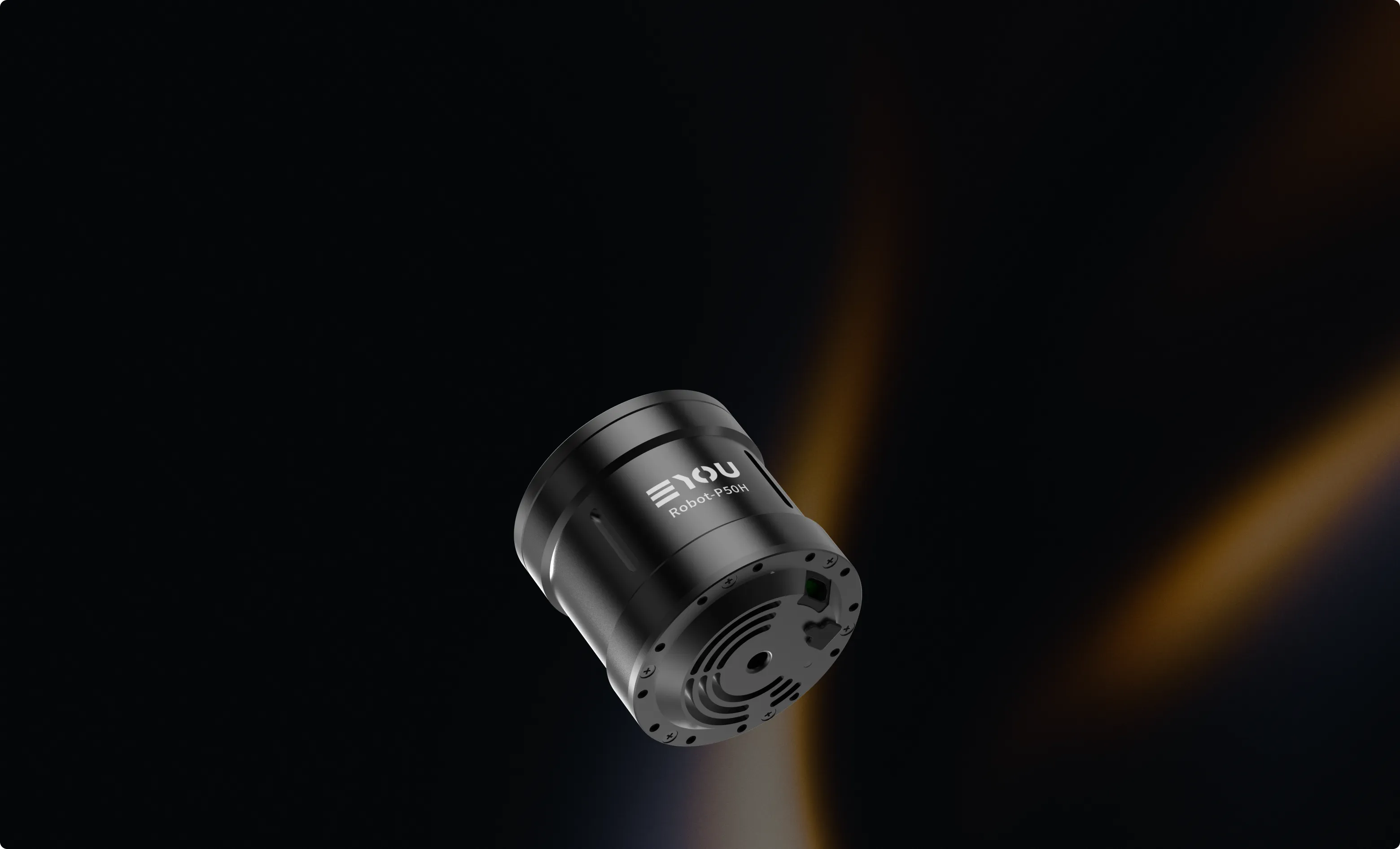
Crossed-roller bearings and a clamp-style mount provide high-rigidity output support and significantly reduce deformation risk. The hollow anti-tangle design supports 360° cable routing, balancing freedom of movement with long-term reliability and maintaining stable output under high-frequency impact.

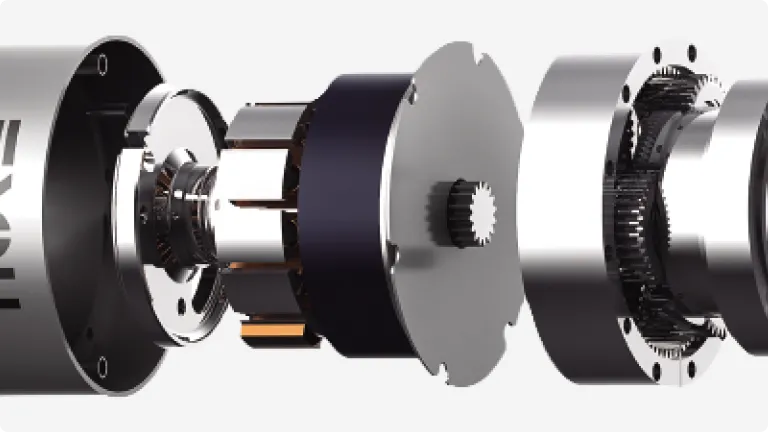
RP Humanoid Planetary Joint Module High-Precision Planetary Reducer and Dual Encoders

High-Precision Transmission and Feedback

A high-precision planetary reducer paired with 19-bit dual absolute encoders ensures low backlash, low noise (<60dB), and motion consistency, providing accurate, reliable position feedback for high-dynamic balance, fine manipulation, and complex trajectory motion — meeting the high-precision execution needs of complex movements.

RP Humanoid Planetary Joint Module Flexible Communication and Control Modes

Flexible Communication and Control Modes

Equipped with the CANopen protocol and a customizable CAN FD interface for high-speed, high-bandwidth, low-latency real-time data exchange, meeting the strict demands of complex control scenarios. It fully supports current control, torque control, position control, and MIT hybrid control, flexibly adapting to dynamic loads and precise collaborative tasks across all joints.

FAQ

Planetary actuators use multiple planet gears meshing around a sun gear to distribute load. They deliver higher torque density and better impact resistance, with backlash typically around 12 arcmin. Harmonic actuators use a flexspline deformed by a wave generator for near-zero backlash (≤15 arcsec) and higher positioning accuracy, but are more sensitive to sustained impact loads. In humanoid robots, planetary actuators (like the RP series) are typically used for lower-body power joints (hips, knees, ankles) that face repeated ground impact, while harmonic actuators (PHU/RHU) are used for upper-body precision joints (shoulders, elbows, wrists) that need fine positioning.

The RP series is optimized for humanoid robot locomotion scenarios. Key design choices include: 48V operating voltage for high-power output during dynamic movement; rated speeds of 115–150 rpm to match the fast leg swing frequencies of walking and running gaits; inductive absolute encoders that are resistant to dust, vibration, and the mechanical shocks common in legged locomotion; and CAN FD support for low-latency multi-joint coordination across 6–12 lower-body actuators.

The RP series uses two separate encoders with different resolutions. The 17-bit input encoder (131,072 counts/rev) is on the motor shaft, providing precise rotor position for FOC commutation and speed control. The 19-bit output encoder (524,288 counts/rev) is on the output side after the planetary reducer, measuring the actual joint angle with higher resolution. This dual-encoder setup enables accurate closed-loop position control at the joint output while maintaining fast motor-side commutation, and it compensates for gear backlash by tracking position on both sides of the reducer independently.

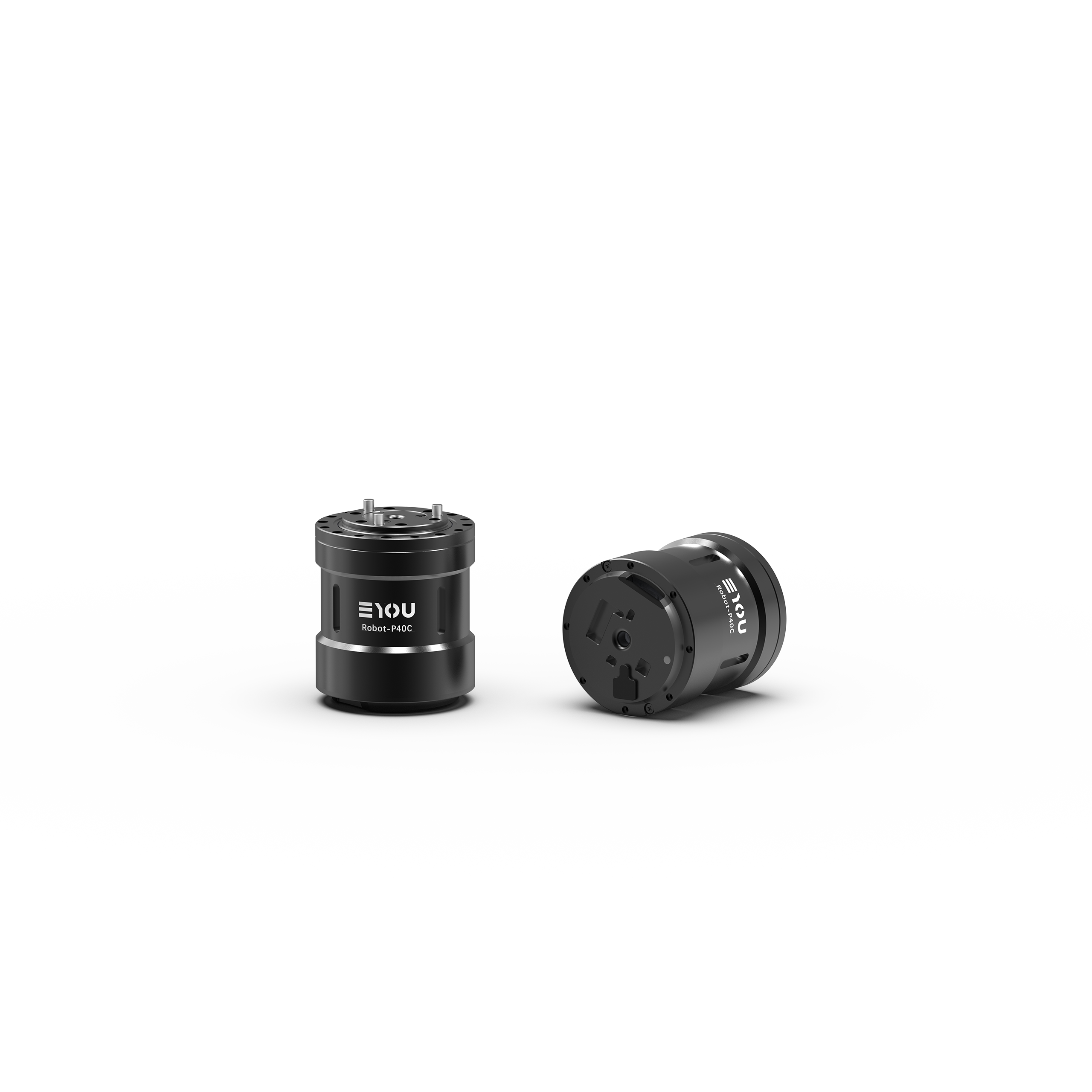
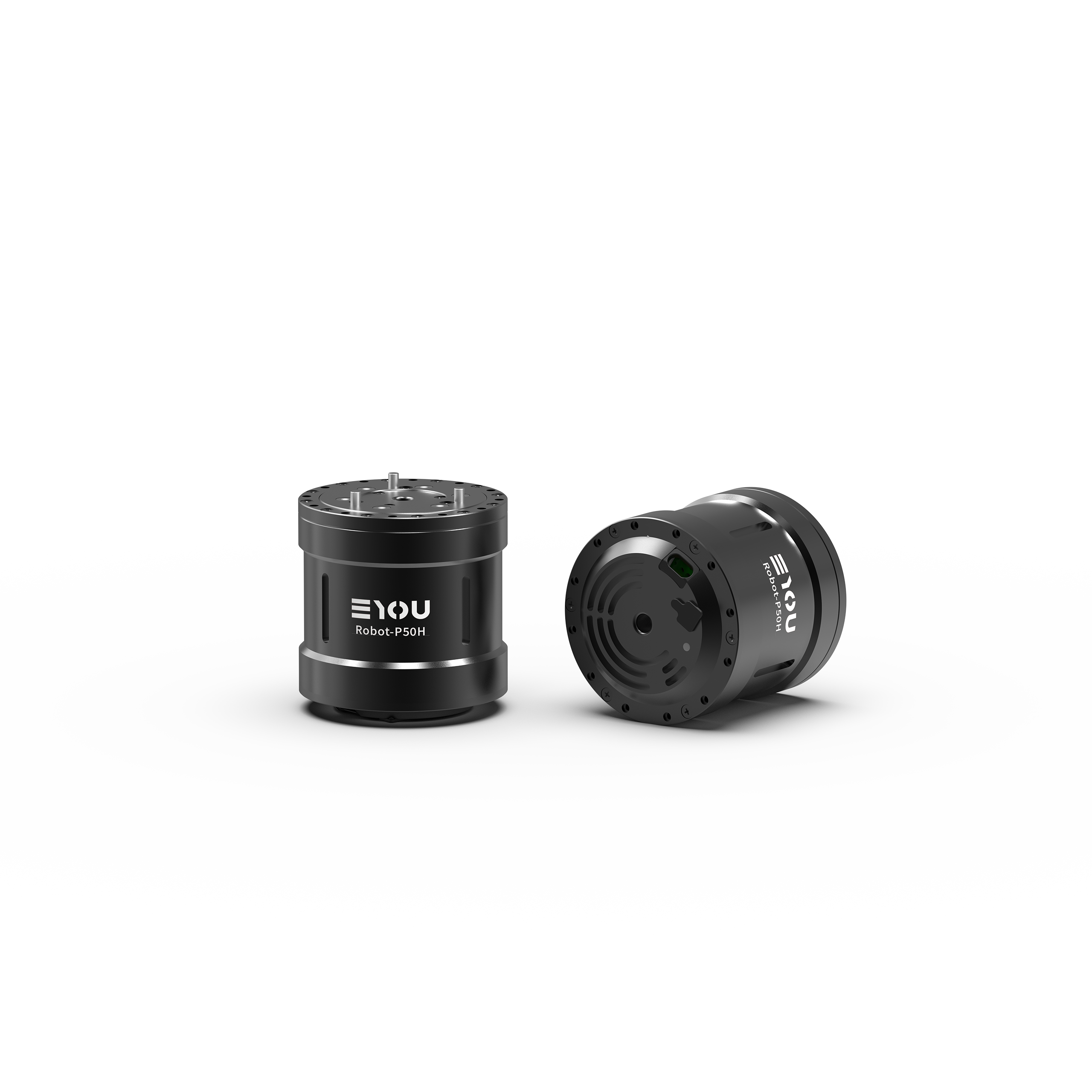
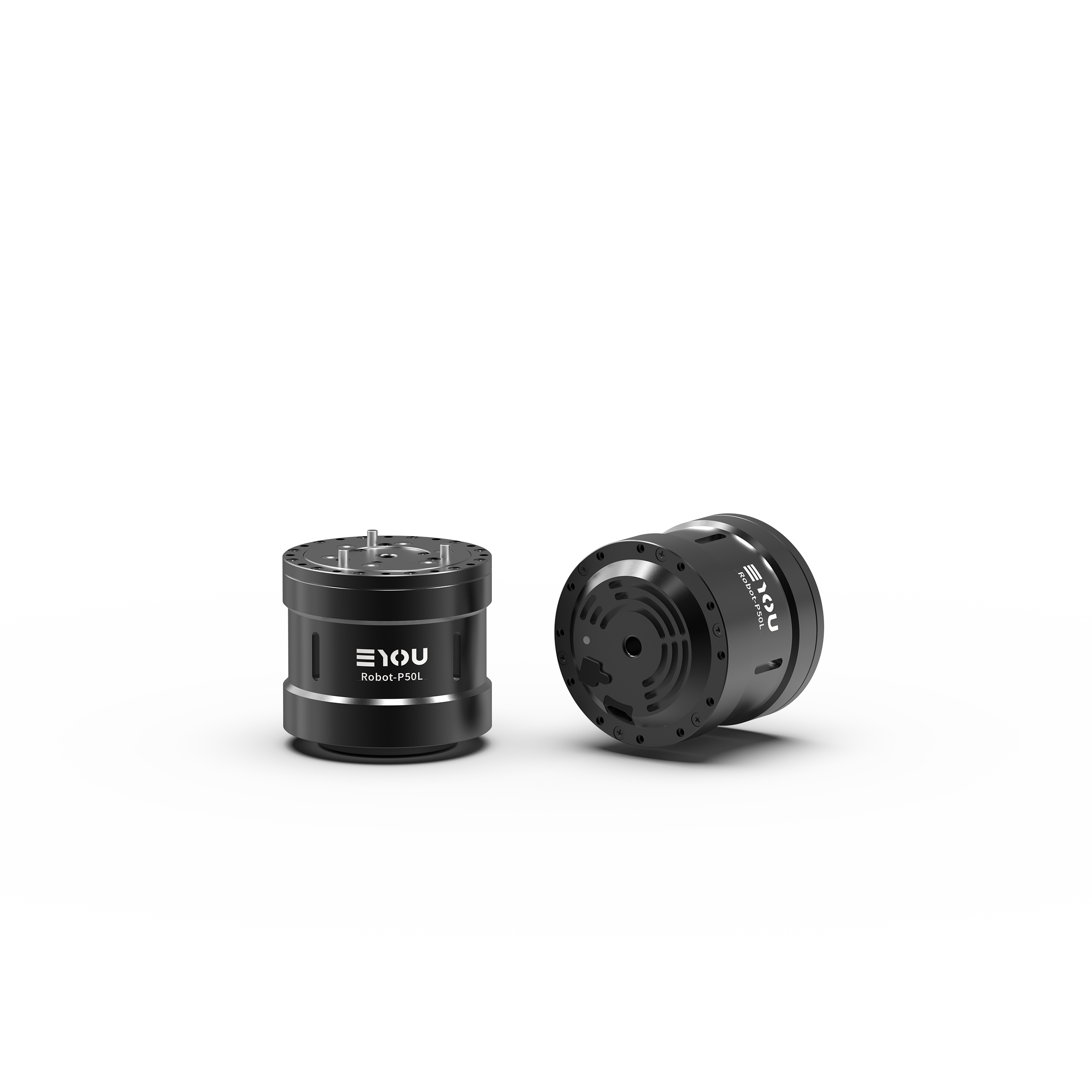
The RP series includes 6 models. RP40S: φ45mm, 195g, 2 N.m rated / 6 N.m peak. RP50L: φ59mm, 380g, 5 N.m / 15 N.m. RP50H: φ59mm, 445g, 10 N.m / 30 N.m. RP70L: φ77mm, 645g, 12 N.m / 36 N.m. RP70H: φ77mm, 785g, 20 N.m / 60 N.m. RP90S: φ96.5mm, 1,050g, 40 N.m / 120 N.m. All operate at 48V with reduction ratios from 19.53:1 to 25:1.

CAN FD extends the data frame from 8 bytes (CAN 2.0) to 64 bytes, with data domain baud rates up to 5MHz versus 1MHz for traditional CAN. In a humanoid robot with 6–12 lower-body joints on the same bus, this means: more data per frame (position, velocity, torque commands can fit in a single message), faster bus cycle times, and reduced queuing delays. The result is tighter synchronization between joints — critical for coordinated walking gaits where timing mismatches as small as 1–2ms between hip and knee actuators can cause instability.

The RP series has a rated service life exceeding 3,000 hours. The primary wear components in planetary actuators are the gear teeth and planet carrier bearings. Factors that reduce life include: sustained operation above rated torque, high-frequency impact loads without proper deceleration profiles, inadequate lubrication, and operating above the rated temperature range (-20°C to 45°C). Compared to harmonic joints (8,000–10,000h rated life), planetary joints have shorter rated life because planetary gears operate under higher contact stress. However, their superior impact tolerance makes them the appropriate choice for lower-body joints where shock loads are unavoidable.

Planetary Gear Actuators in Humanoid Robots: Engineering Trade-Offs for Lower-Body Joints

Why Lower-Body Joints Are Different from Upper-Body Joints

Upper-body joints on a humanoid robot — shoulders, elbows, wrists — operate in relatively predictable motion profiles. They position tools, manipulate objects, and perform gestures. The loads are moderate, speeds are low, and the dominant requirement is positioning accuracy.

Lower-body joints face a fundamentally different challenge. During walking, the knee joint experiences torque spikes every time the foot strikes the ground. During running, these spikes can reach 3–5x the static load. During stair climbing, the hip joint must produce sustained high torque while simultaneously rotating through a large angle. These joints must absorb repeated mechanical shocks without degrading, maintain stable torque output under rapidly changing loads, and do all of this thousands of times per hour.

This is why humanoid robot engineers consistently choose planetary gear actuators for lower-body joints and harmonic gear actuators for upper-body joints. The two gear types have complementary strengths.

Planetary vs Harmonic: A Side-by-Side Comparison for Robot Joints

ParameterPlanetary (RP Series)Harmonic (PHU/RHU Series)
Backlash≤12 arcmin≤15 arcsec
Torque densityHigher (multi-tooth load sharing)Lower per unit weight
Impact resistanceExcellent (distributed load)Moderate (flexspline stress concentration)
Positioning accuracyModerateVery high
Rated service life>3,000h>8,000–10,000h
Noise<65dB<60dB
Typical joint applicationHip, knee, ankleShoulder, elbow, wrist

Neither type is universally better. The right choice depends on the joint’s specific demands. Many humanoid robot designs use both: EYOU Robot’s RP planetary series for lower-body power joints and PHU/RHU harmonic series for upper-body precision joints.

Understanding Reduction Ratio in Planetary Actuators

The RP series uses relatively low reduction ratios (19.53:1 to 25:1) compared to harmonic joints (50:1 to 160:1). This is a deliberate design choice for humanoid locomotion:

  • Higher output speed: Lower ratios allow higher joint angular velocity, essential for fast leg swings during walking and running. The RP series achieves 115–150 rpm at the output — significantly faster than harmonic joints at comparable motor speeds.
  • Better backdrivability: Lower ratios mean less mechanical resistance to external forces. If a humanoid robot trips or is pushed, a more backdrivable leg joint can yield to the external force rather than transmitting the full shock load to the gear train. This protects both the gear mechanism and the robot’s structural frame.
  • Trade-off — lower torque multiplication: Less gear reduction means the motor itself must produce more torque. The RP series compensates with 48V high-power motors optimized for high continuous current.

Ground Reaction Force and Joint Torque Demand

When a humanoid robot’s foot strikes the ground during walking, the ground reaction force (GRF) creates torque demands at every lower-body joint. The magnitude depends on walking speed, robot mass, and gait profile. A rough engineering estimate for a 50kg humanoid robot walking at 1.2 m/s:

JointPeak Torque During WalkingPeak Torque During RunningRP Model
Hip (sagittal)25–35 N.m50–70 N.mRP70H / RP90S
Knee15–25 N.m40–60 N.mRP70L / RP70H
Ankle20–30 N.m35–50 N.mRP70L / RP70H

These are approximate values and vary significantly with gait design, foot geometry, and control strategy. The key takeaway: lower-body joints must handle peak torques that are 2–3x the rated torque during dynamic motion. This is why the RP series specifies peak torque ratings (up to 120 N.m on RP90S) that are 3x the rated torque — the actuator must survive these transient spikes without gear damage.

Thermal Considerations at 48V

The RP series operates at 48V — higher than the 24–36V range common in many lightweight actuators. Higher voltage enables higher power delivery at lower current, reducing I²R copper losses in the motor windings. This is important for lower-body joints that run at high duty cycles during locomotion.

However, the RP series has a tighter operating temperature range (-20°C to 45°C) compared to harmonic series (-20°C to 60°C). This is because planetary gear sets generate more heat from tooth friction at high speeds than harmonic drives. Engineers should account for the thermal environment inside the robot’s leg structure — particularly when multiple RP actuators are stacked in close proximity at the hip-knee-ankle chain — and ensure adequate heat dissipation paths to the outer housing or structural frame.