Volume Deployment Advantage
Manufacturing processes and quality control systems proven in large-scale mass production ensure batch-to-batch consistency, providing cost-effective and stable supply assurance.

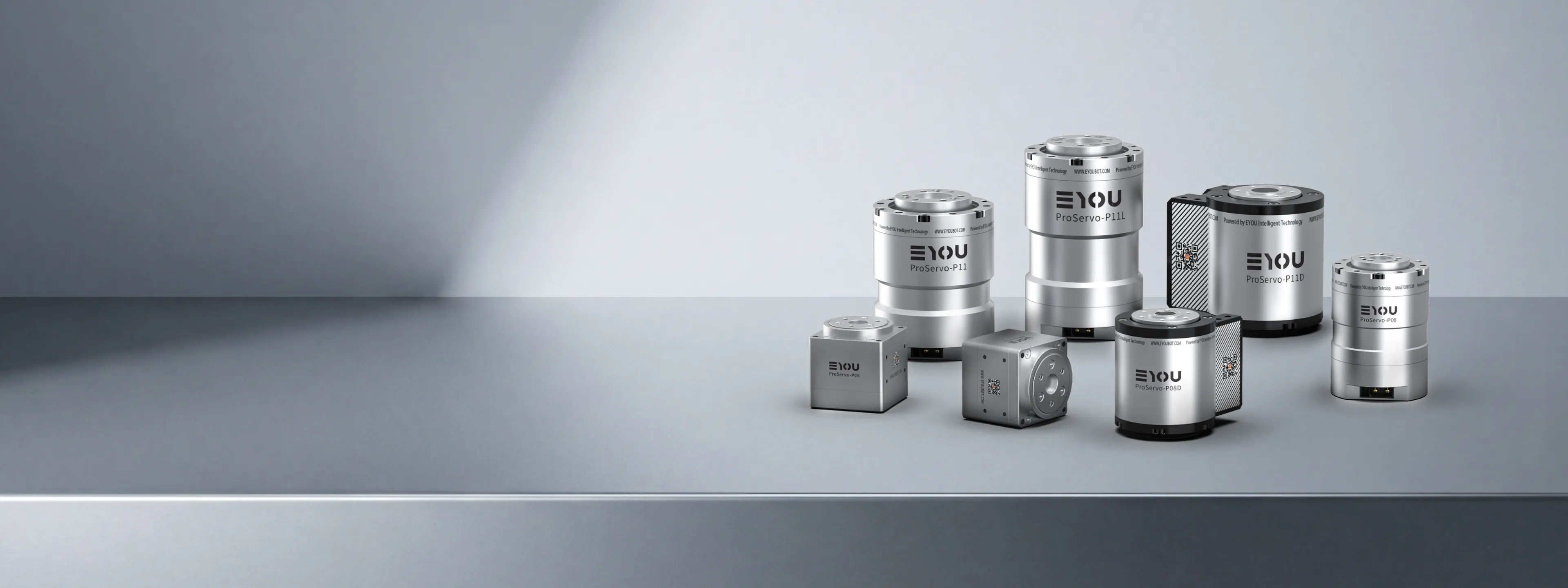
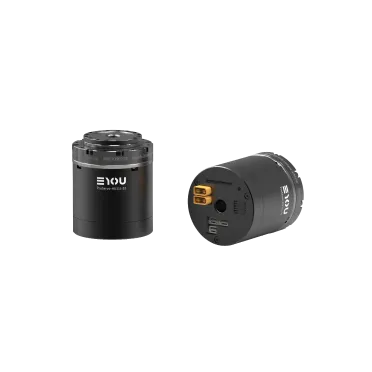
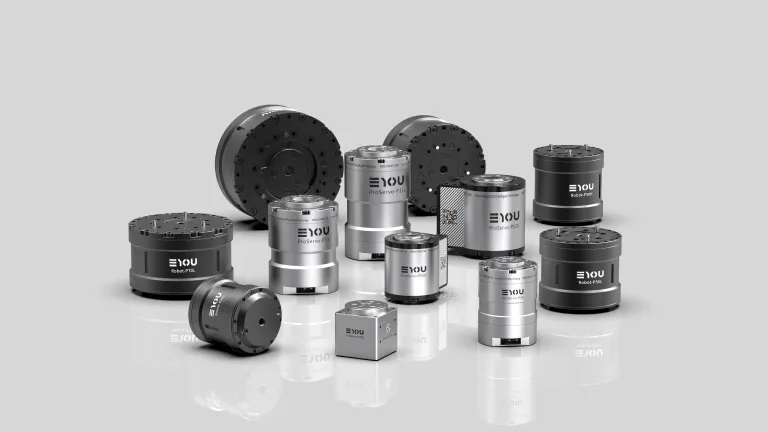
The PP Planetary Joint Module is a mature power solution for multi-joint combined applications such as bionic robots and educational robotic arms. With a precision planetary transmission structure and excellent torque capacity, it provides stable, reliable joint output, and its high cost-effectiveness makes it a preferred choice for volume deployment.
| Motor Type | Brushless Torque Motor | Encoder Type | Dual Absolute Encoder |
|---|---|---|---|
| Operating Noise | <60dB @ 1m | Operating Voltage | 24V |
| Operating Temperature | -20~80℃ | Protection Rating | IP54 |
| Backlash | ≤12 arcmin | Communication Protocol | CAN |
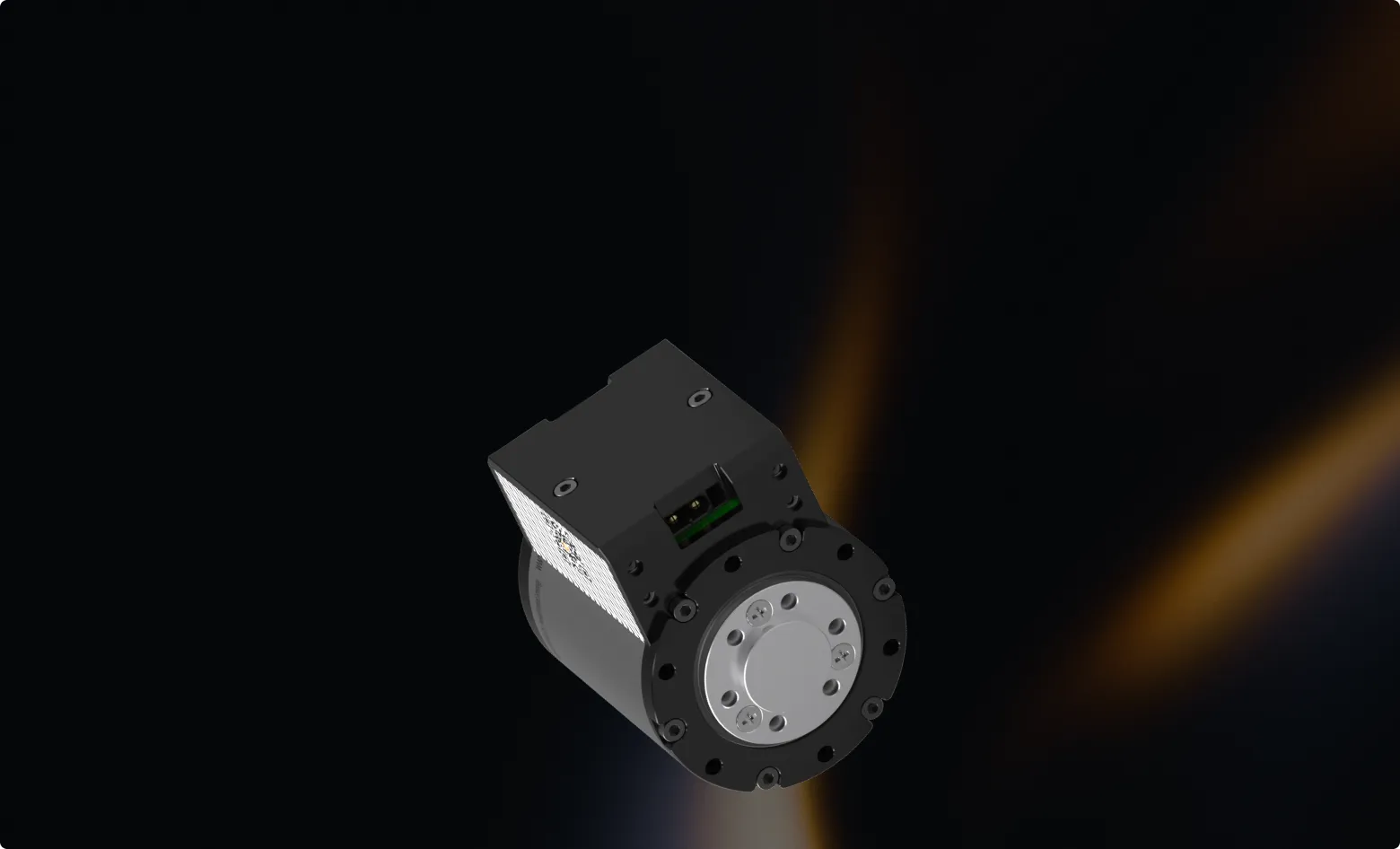
It tightly integrates a precision planetary reducer, torque motor, and professional servo driver, greatly reducing system volume and external wiring complexity. The highly integrated modular design lowers the barrier to whole-machine assembly and significantly improves system reliability and maintenance efficiency.
Manufacturing processes and quality control systems proven in large-scale mass production ensure batch-to-batch consistency, providing cost-effective and stable supply assurance.
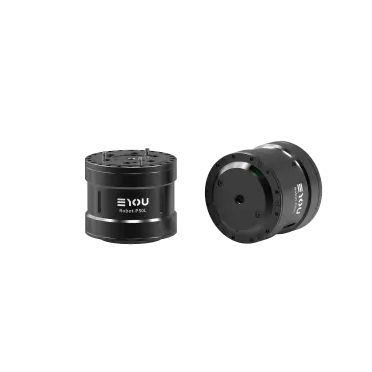
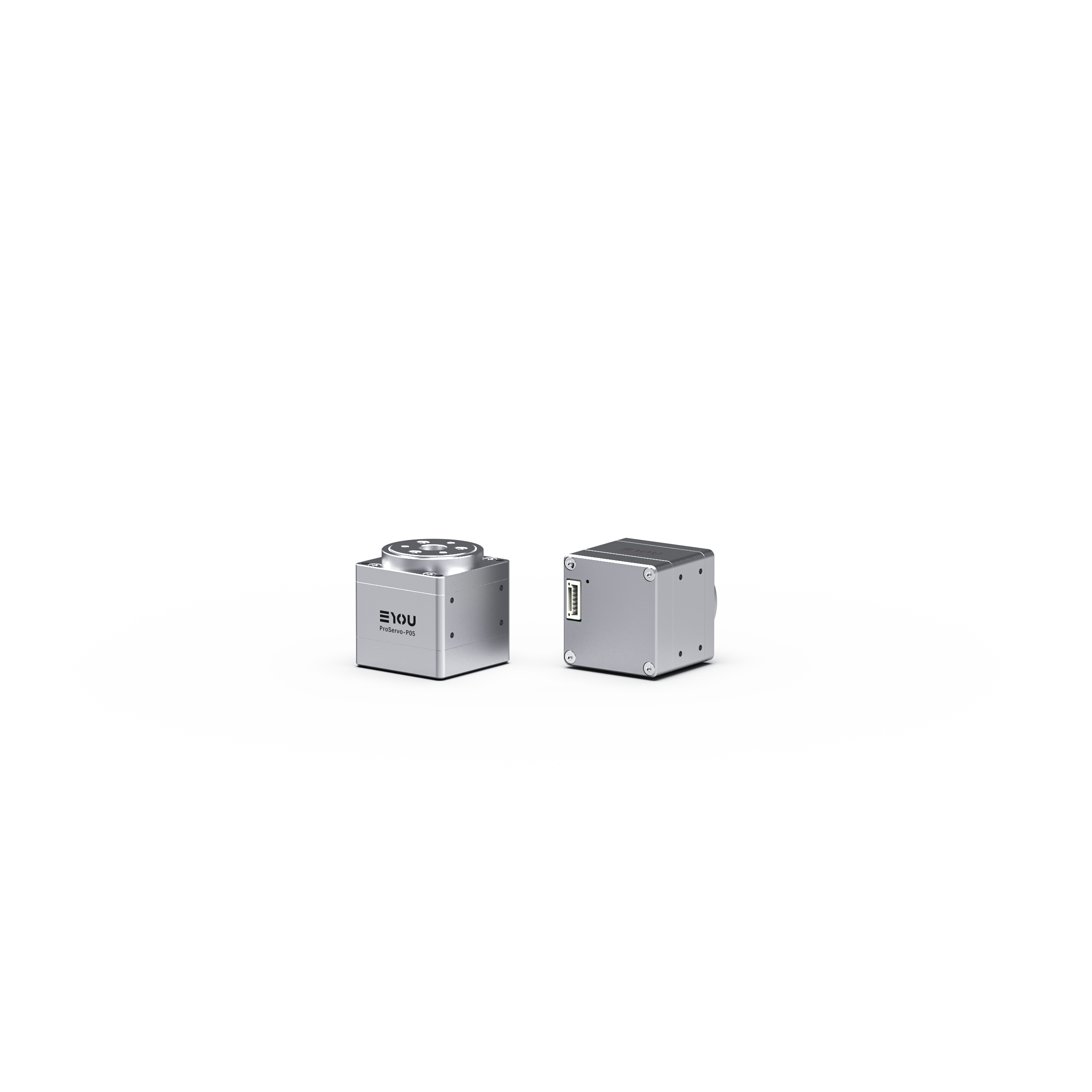
The PP05 is the smallest model: 32mm outer diameter, 33.4mm axial length, 86g weight, with 0.2 N.m rated torque and 0.48 N.m peak torque. It is designed for micro-joints such as wrist rotation and facial expression actuators on lifelike humanoid robots. Despite its small size, it integrates a brushless torque motor, planetary reducer, dual absolute encoder, and servo driver in a single unit.
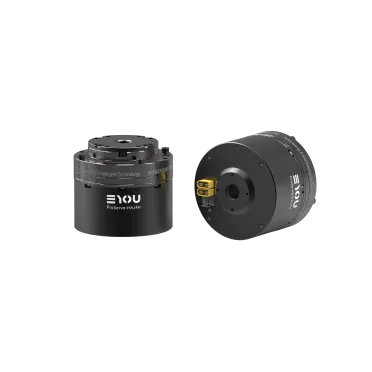
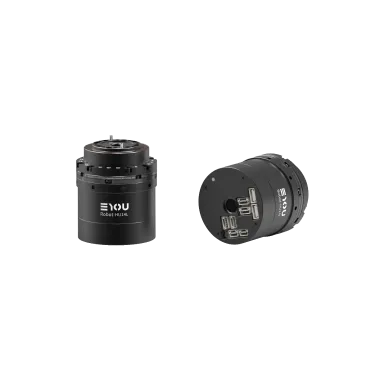
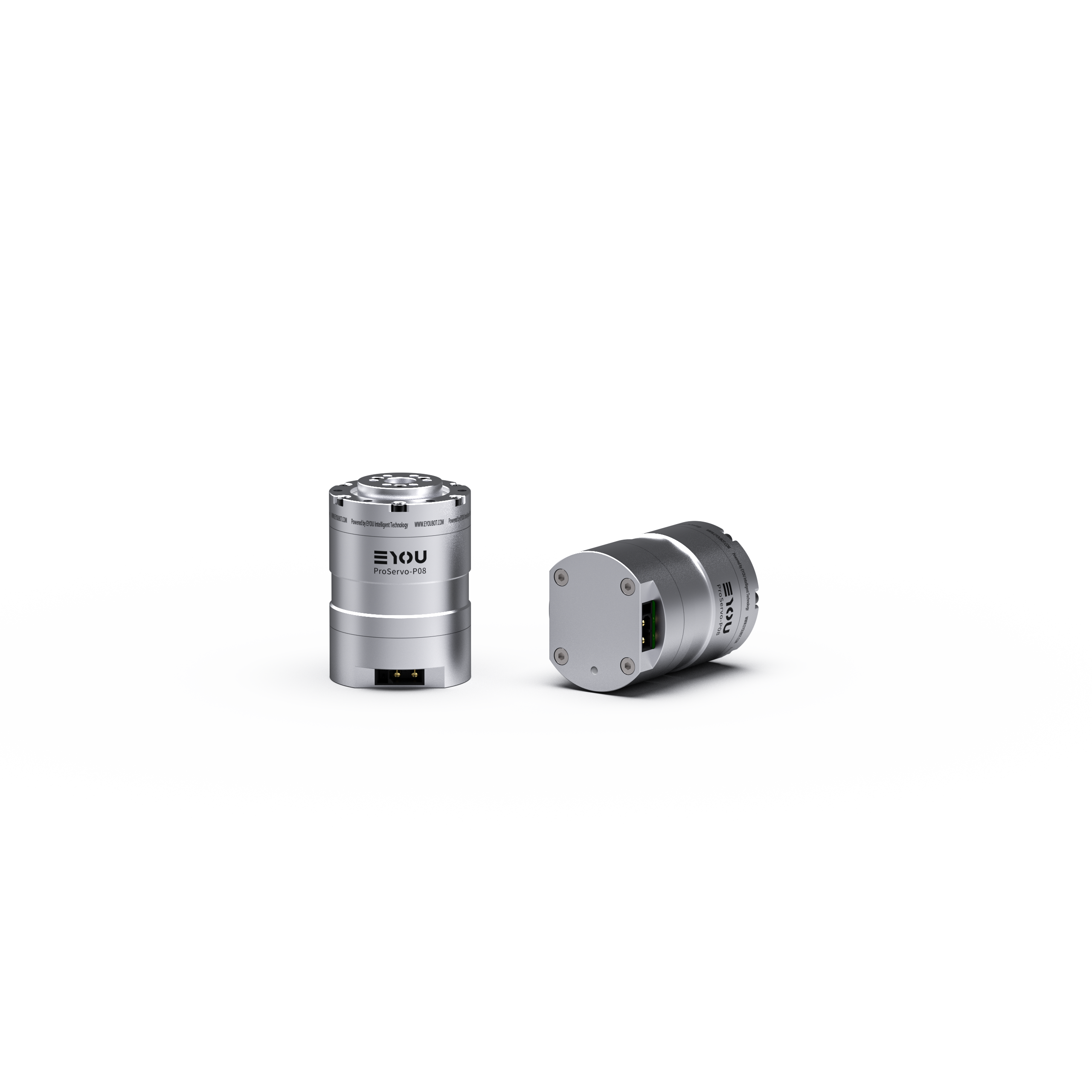
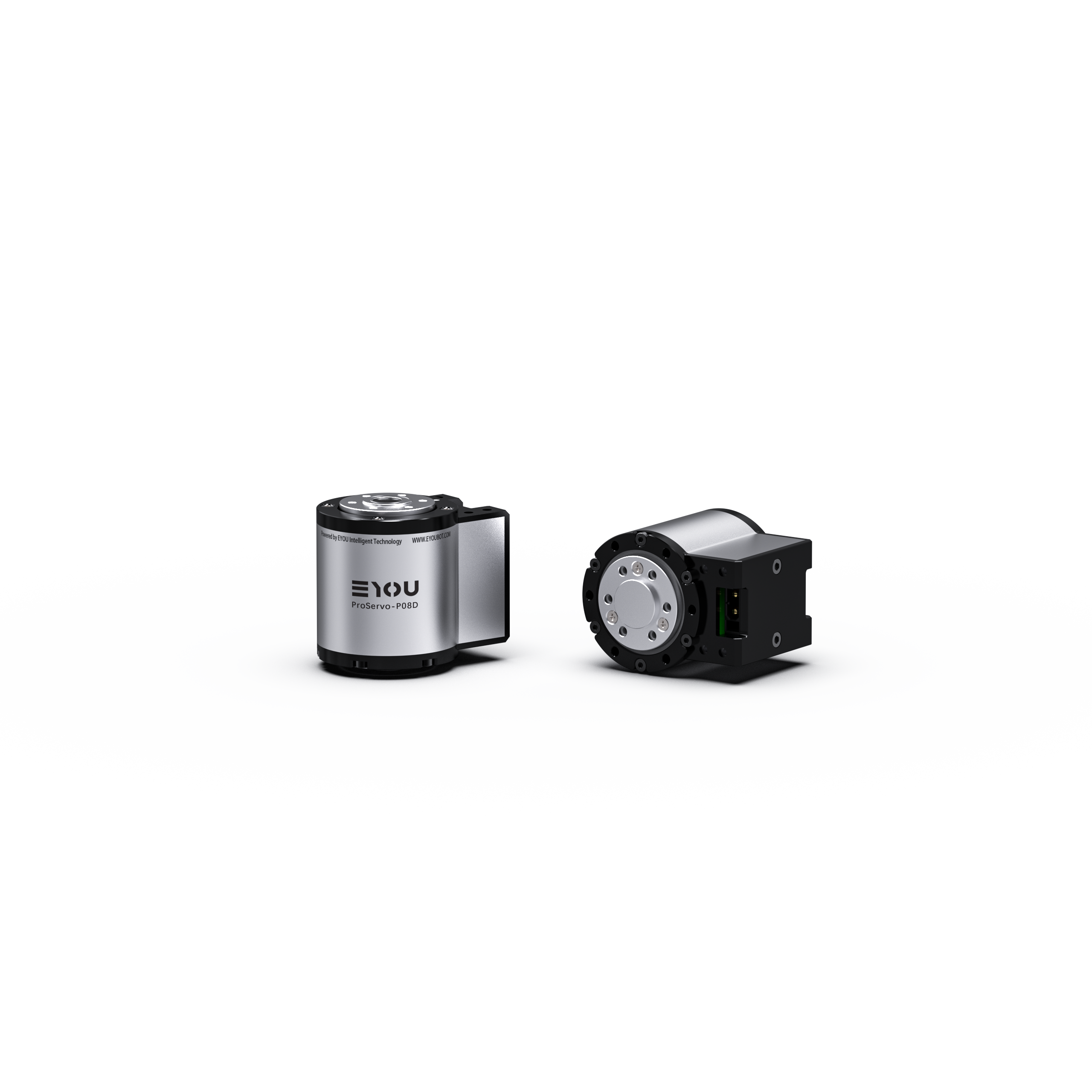
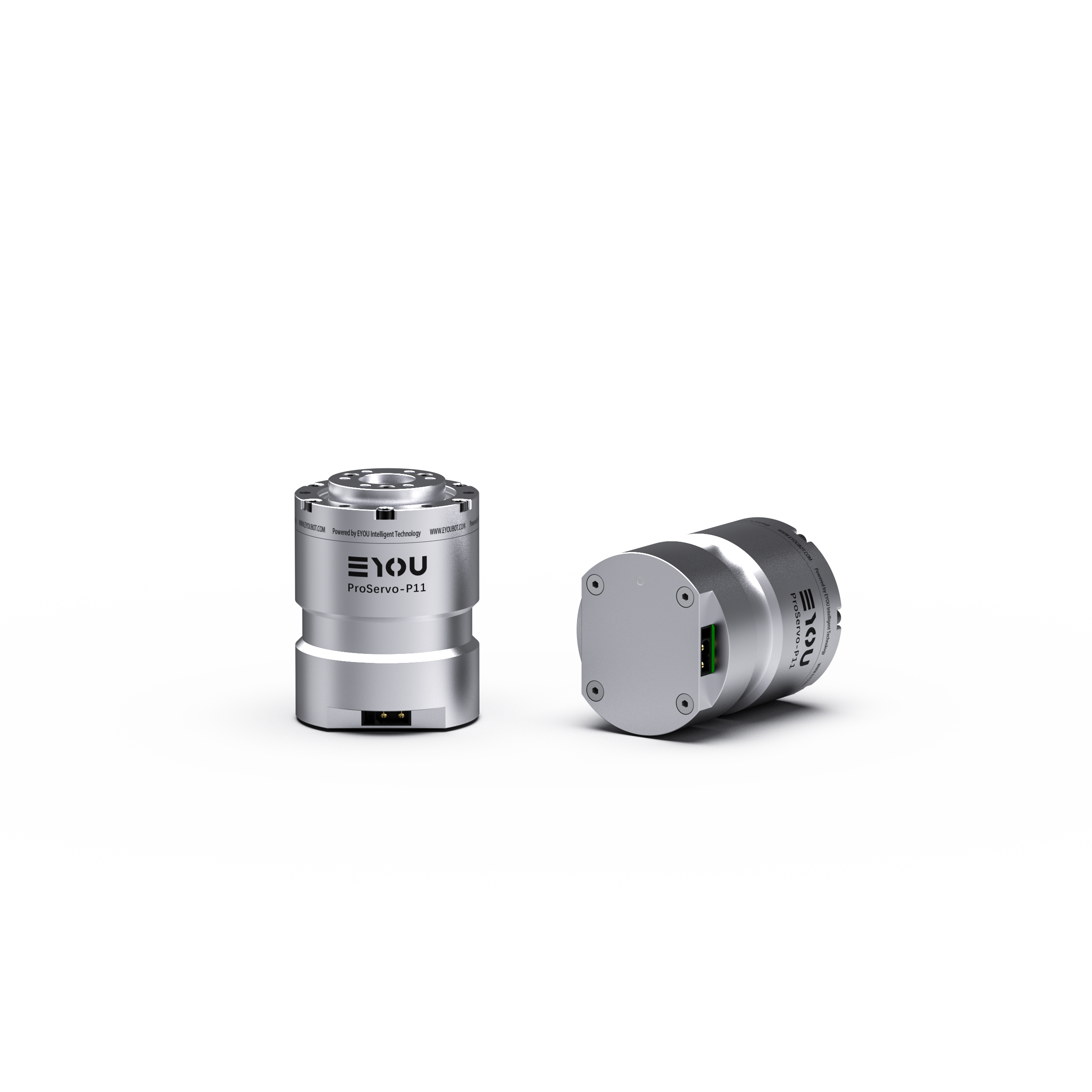
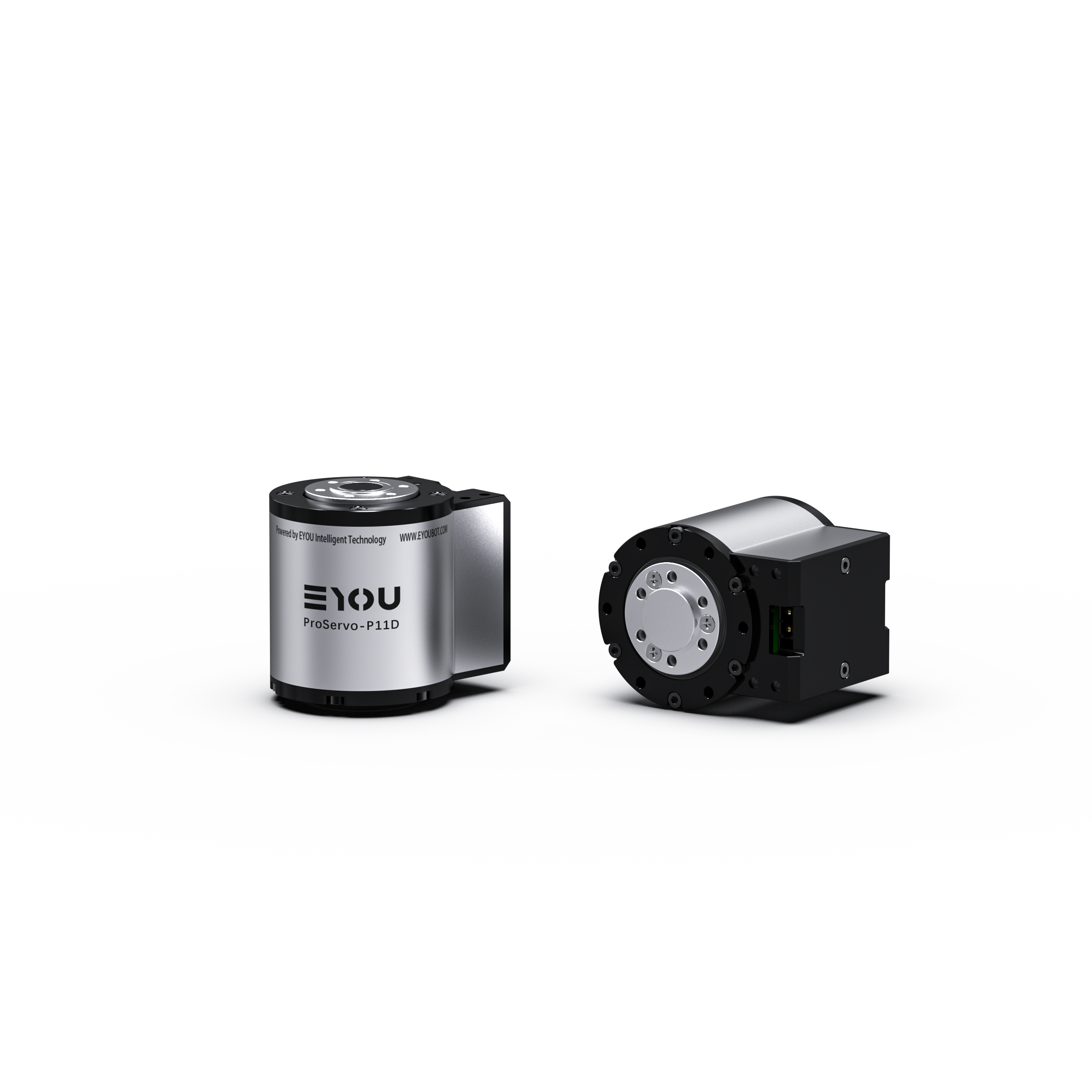
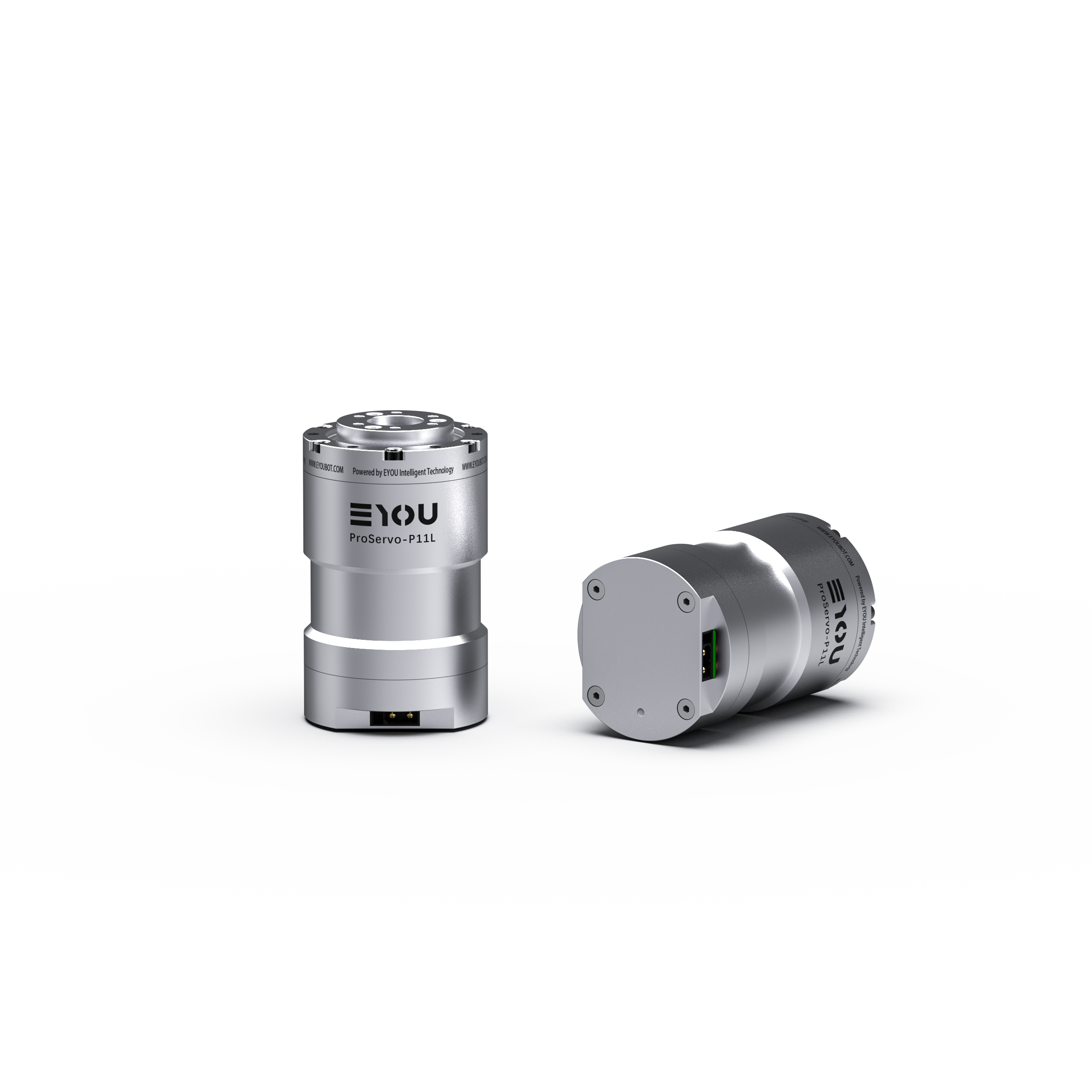
Single-shaft models (PP05, PP08, PP11) have one output shaft. Dual-shaft models (PP08D, PP11D) have an output shaft on one end and a dummy shaft on the other. The dual-shaft design allows the actuator to be fixed at both ends, providing more stable mounting for joints that benefit from bilateral support — such as elbow joints, neck joints, or ankle joints. The extended model PP11L is single-shaft but with a longer axial length (82mm) for higher torque output (10 N.m rated, 18 N.m peak).
The PP series uses CAN (CAN 2.0A) communication protocol at up to 1MHz bus speed. This is simpler and more cost-effective than the EtherCAT or CANopen protocols used in the PHU, RHU, and RP series. For lifelike humanoid robots and educational platforms where real-time synchronization requirements are moderate, CAN provides sufficient performance. All PP models on a single robot can be daisy-chained on one CAN bus. EYOU Robot provides Ubuntu and Windows host software plus a C/C++ SDK for CAN-based control integration.
Yes. The PP series has an IP54 protection rating (dust-protected and splash-resistant) and an operating temperature range of -20°C to 80°C — the widest temperature range across all EYOU Robot actuator series. This makes the PP suitable for controlled industrial environments, indoor service robots, and outdoor applications within the temperature spec. For harsh outdoor conditions with heavy water or dust exposure beyond IP54, additional enclosure protection may be needed.
A typical full-body lifelike humanoid robot uses 12–20 PP actuators depending on the design. A common configuration: 2× PP05 (wrists or facial expression), 2× PP08 or PP08D (elbows, neck), 2× PP11 or PP11D (shoulders, thighs), plus additional joints for knees, ankles, and waist. The exact count depends on the robot’s degree-of-freedom design. PP’s unified 24V/CAN architecture simplifies wiring and system integration when deploying this many actuators on a single platform.
The number of joints depends on how much expressiveness and mobility the robot requires. A minimal upper-body-only design might use 6–8 actuators. A full-body lifelike robot with facial expressions, arms, torso, and legs typically needs 16–24 joints. Here is a representative layout:
| Body Region | Joint Function | Typical Count | PP Model |
|---|---|---|---|
| Face | Eyebrow, mouth, eye movement | 2–4 | PP05 |
| Neck | Pan, tilt, rotation | 2–3 | PP08 / PP08D |
| Shoulder | Flexion, abduction, rotation | 2–3 per side | PP11 / PP11D |
| Elbow | Flexion/extension | 1 per side | PP08 / PP08D |
| Wrist | Rotation | 1 per side | PP05 |
| Waist | Rotation, tilt | 1–2 | PP11L |
| Hip | Flexion, abduction | 2 per side | PP11 / PP11D |
| Knee | Flexion/extension | 1 per side | PP11D |
| Ankle | Dorsiflexion, rotation | 1–2 per side | PP08D |
This layout totals roughly 20 actuators. Performance-oriented lifelike robots (theme park animatronics, exhibition robots) may add more facial joints and finger actuators.
Lifelike robots differ from industrial humanoids in their load profile. They rarely carry heavy payloads or perform dynamic locomotion. The primary loads are:
For most lifelike robot joints, selecting an actuator whose rated torque covers the gravity compensation load with 30–50% margin is sufficient. The PP series’ rated torque range of 0.2–10 N.m covers the full spectrum of lifelike robot joint requirements.
The PP series uses CAN 2.0A protocol. All actuators on a robot connect to a single CAN bus in a daisy-chain topology. Key wiring considerations:
For a 20-joint robot, a single CAN bus is typically sufficient. If bus load becomes a concern (excessive SDO traffic), split into two bus segments or use PDO auto-reporting mode to reduce per-joint polling overhead.
EYOU Robot provides multiple software integration options for PP-based systems:
The cost advantage of the PP series in multi-joint deployments comes from several factors:
For a 20-joint lifelike robot, the system-level cost savings from eliminating external drivers, simplifying wiring, and standardizing software can be as significant as the per-unit actuator price itself.