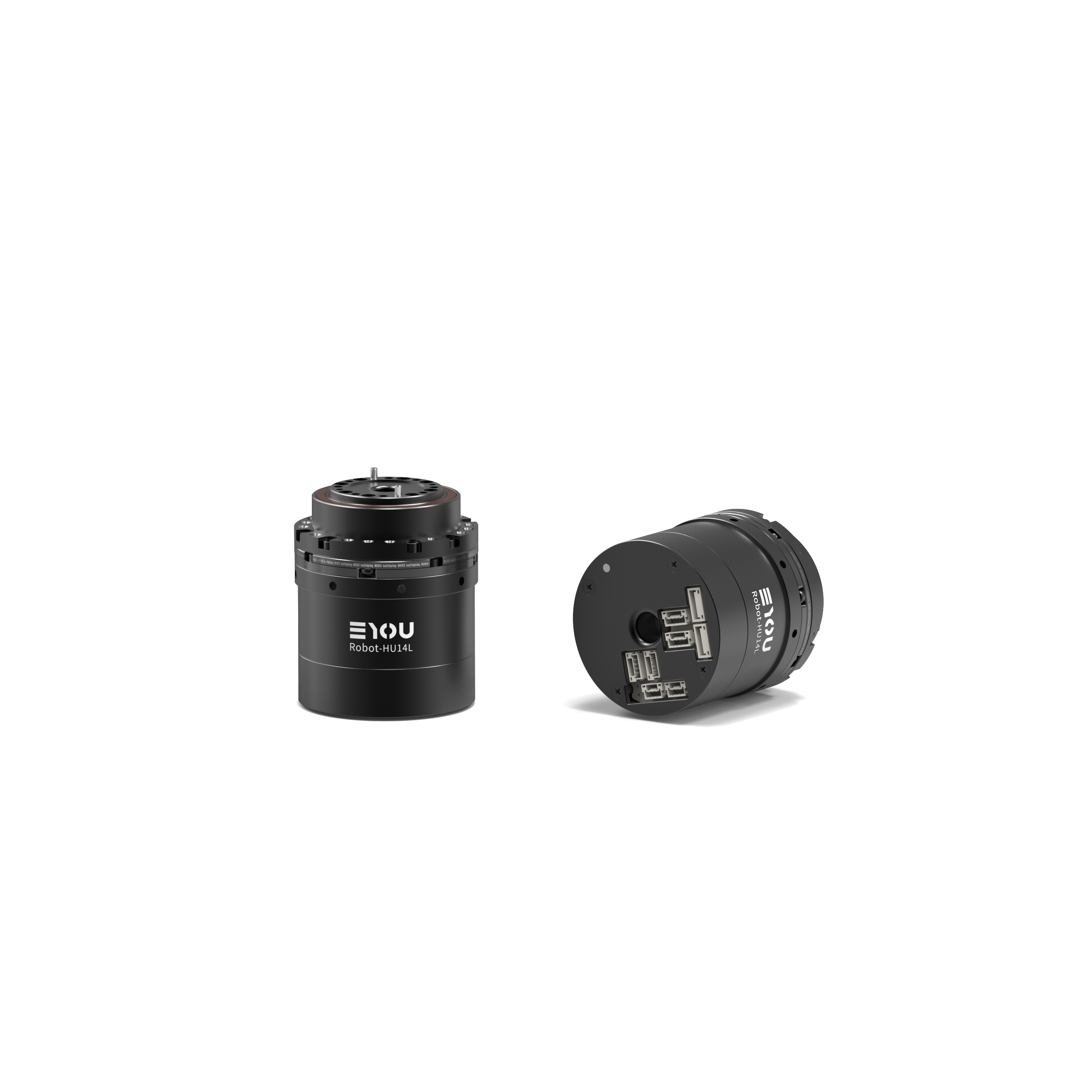
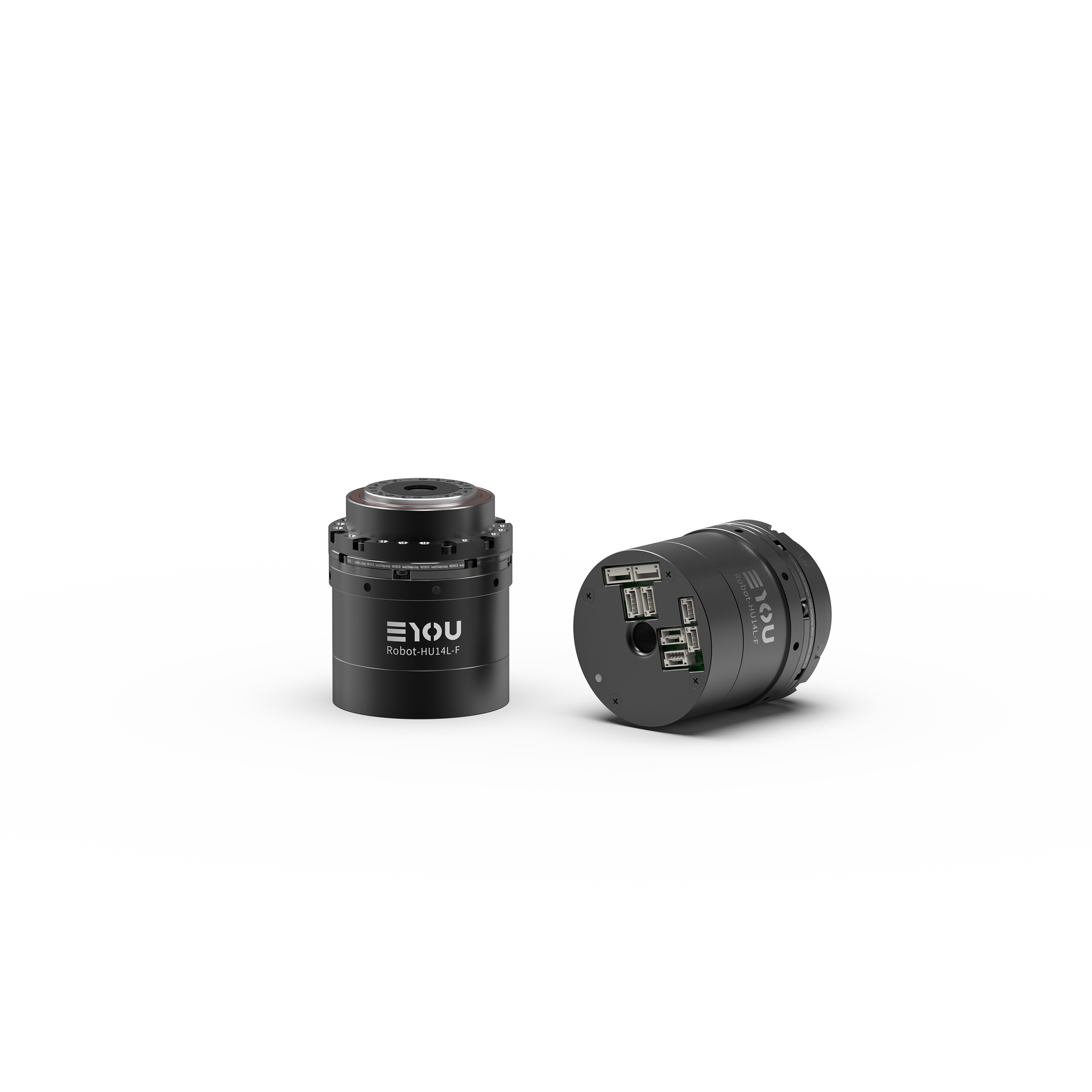
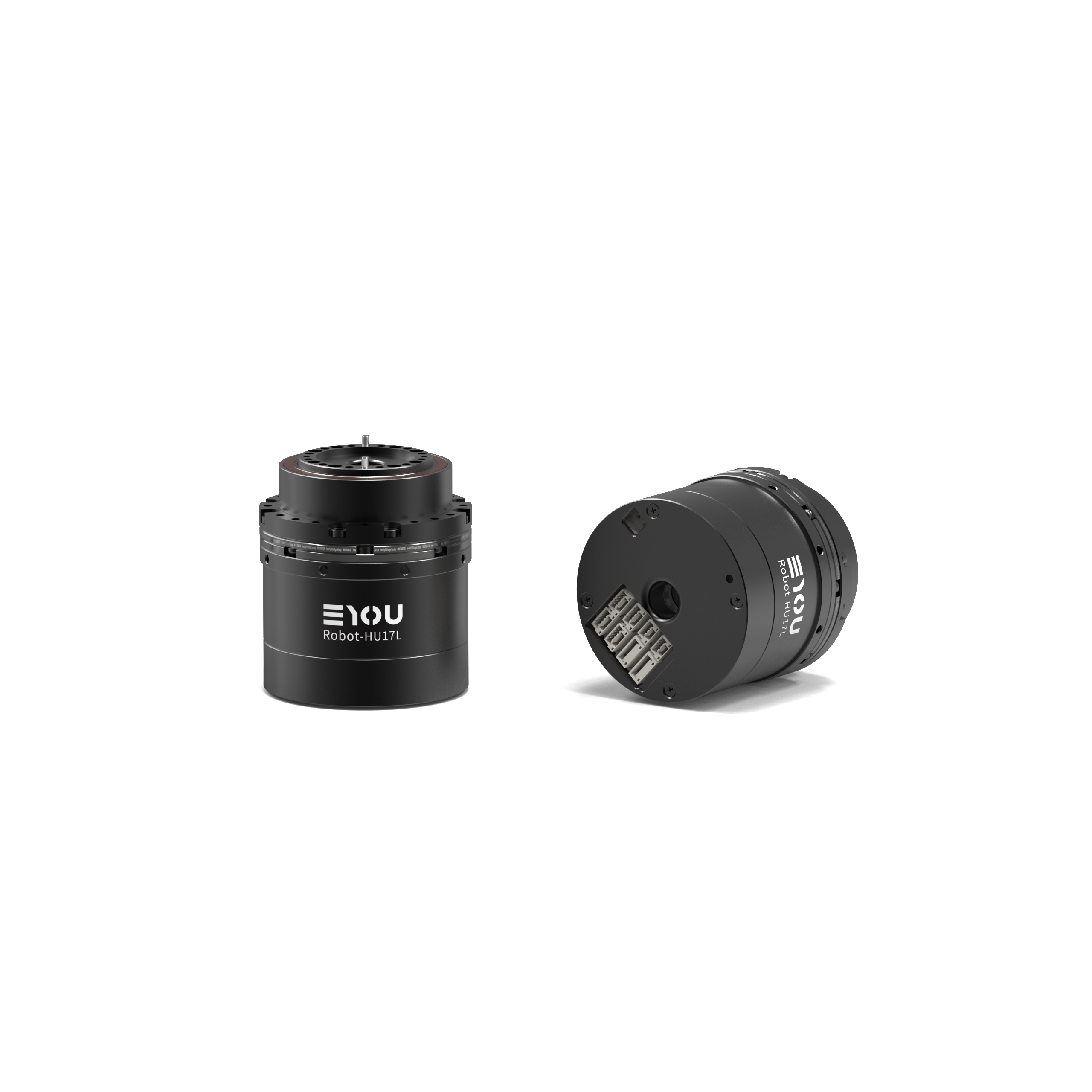
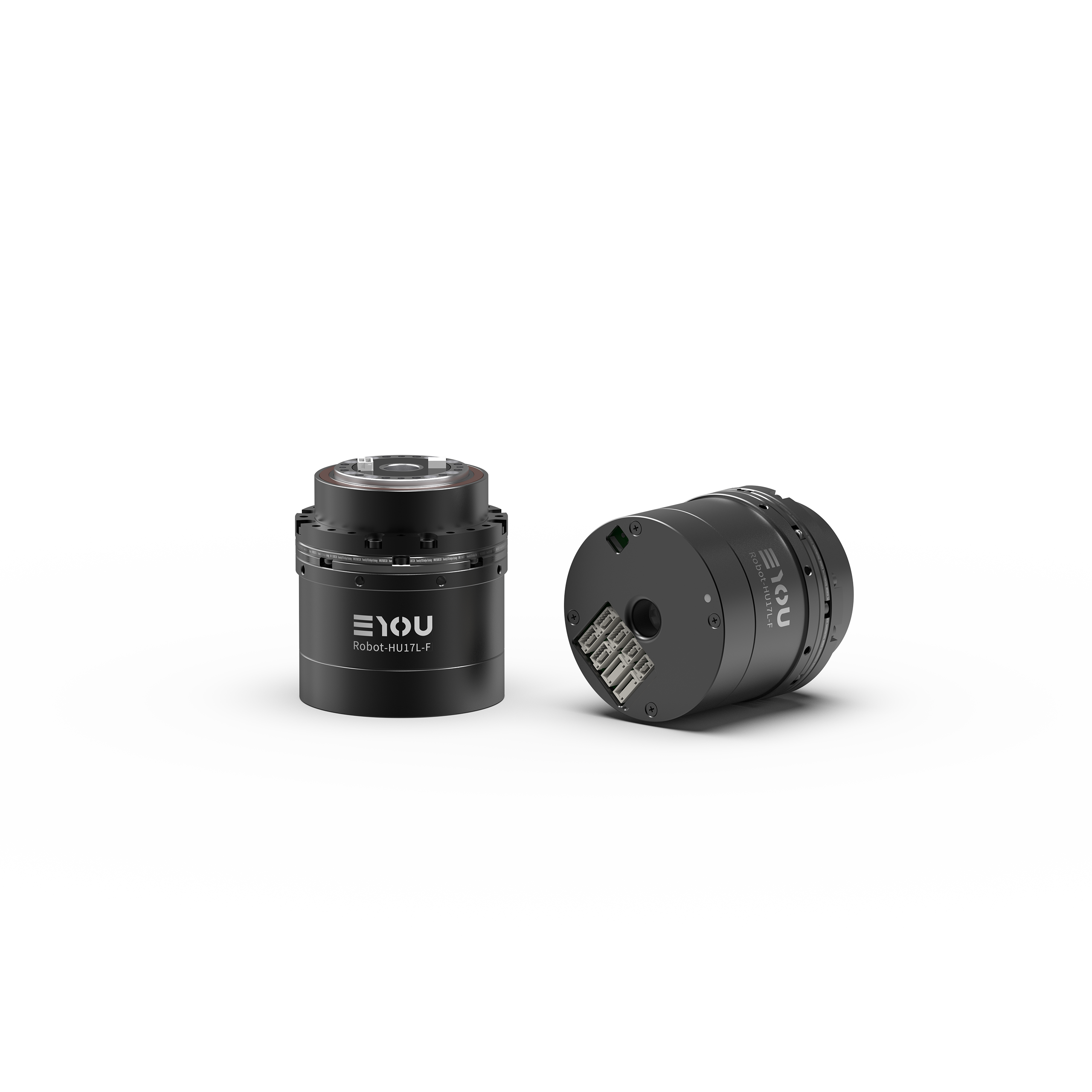
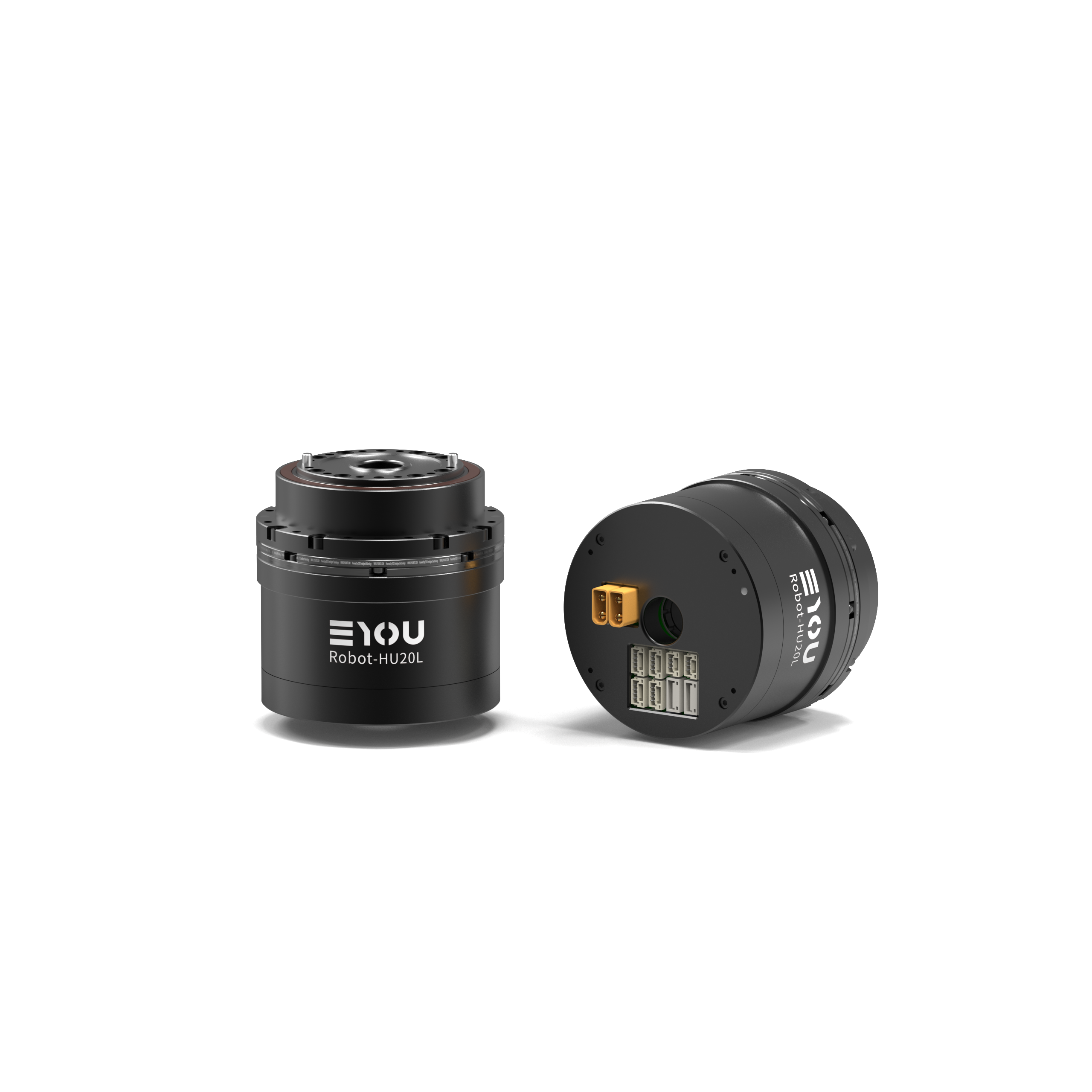
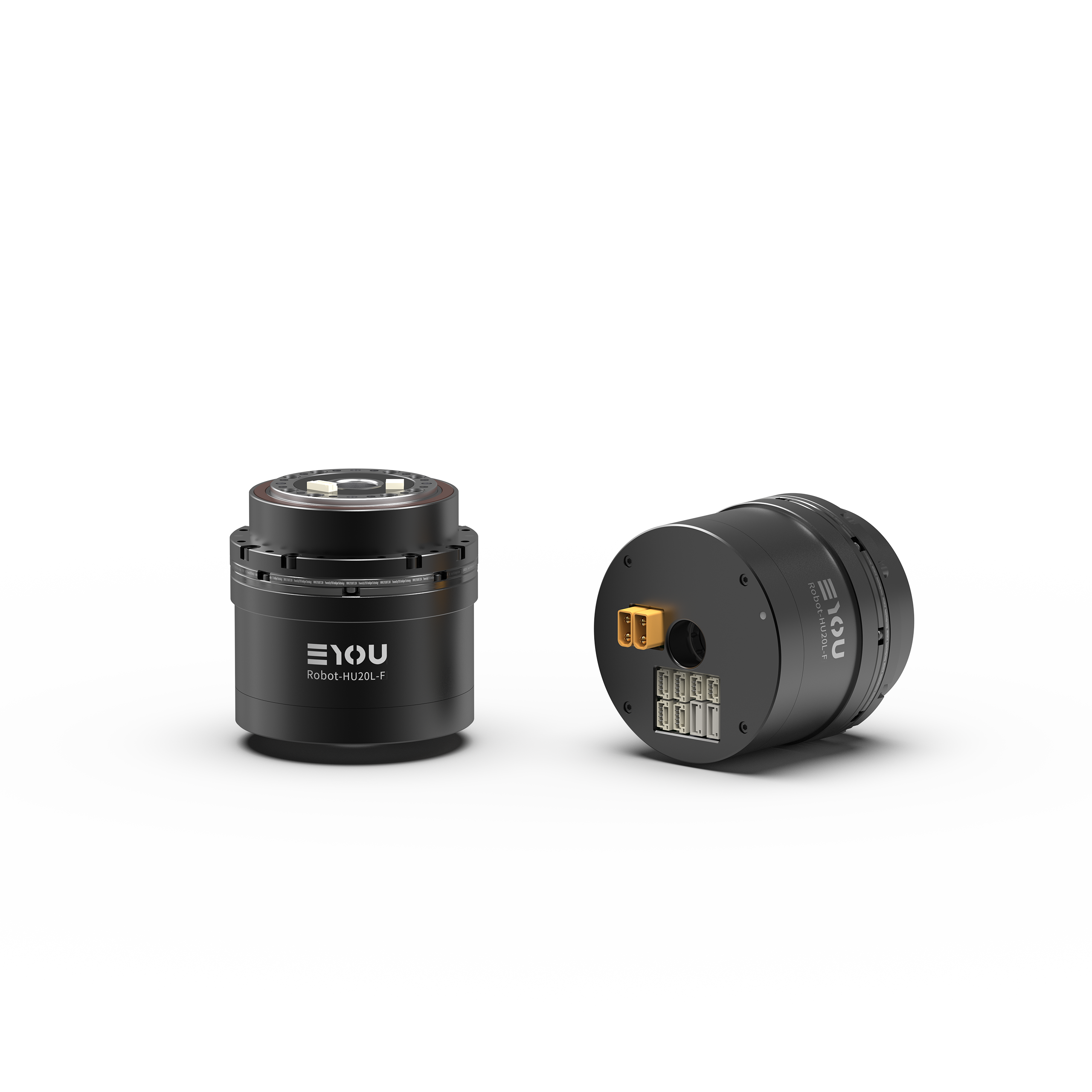
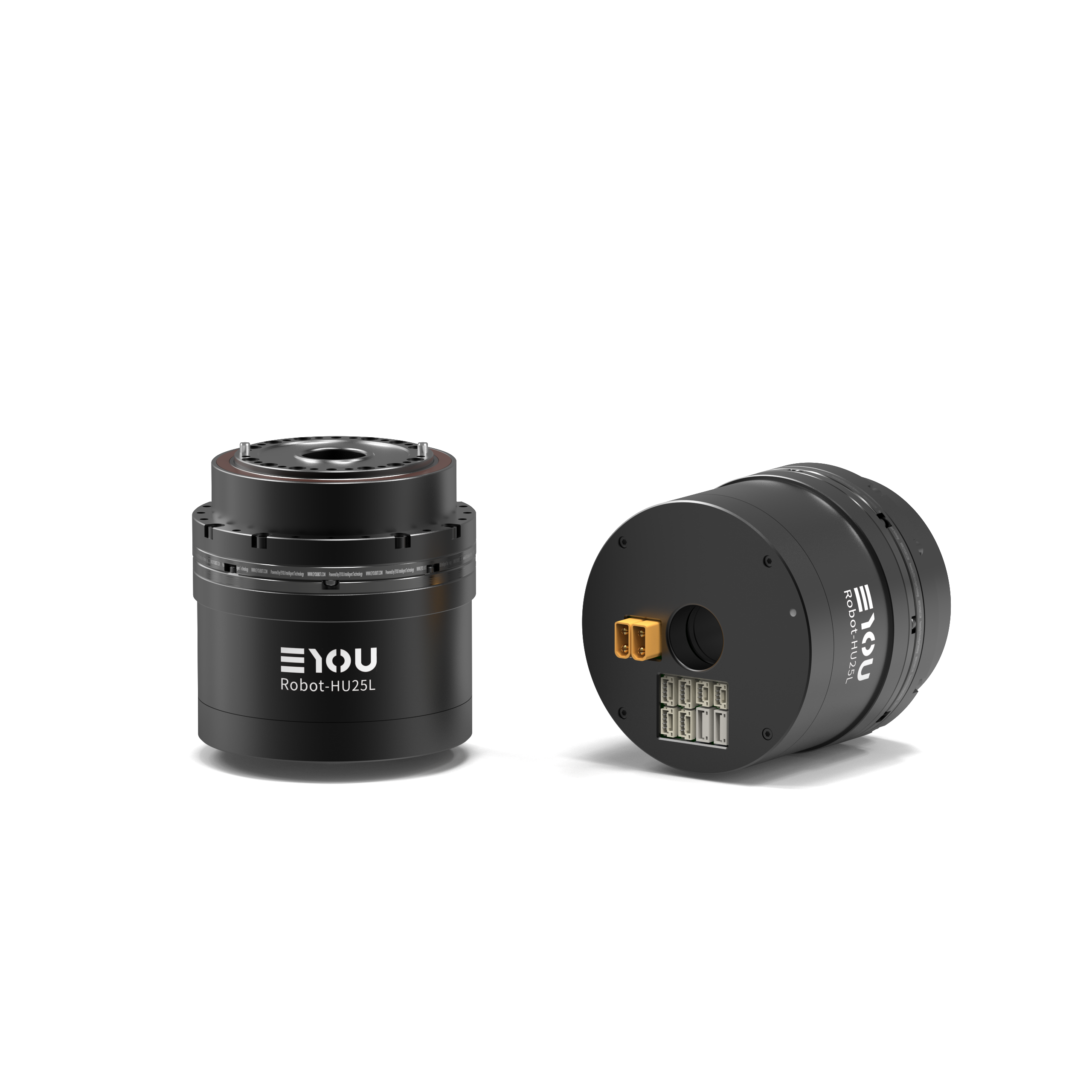
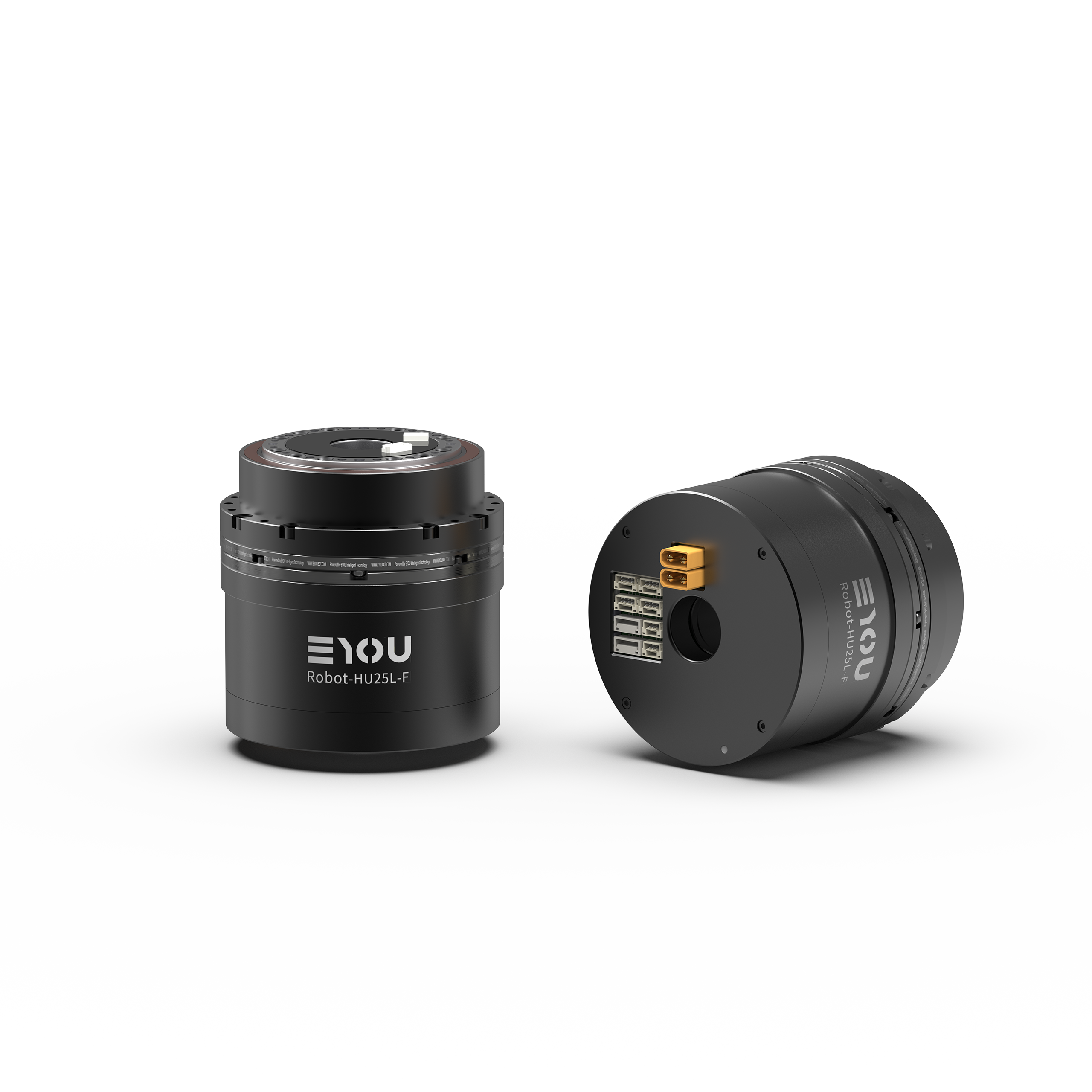
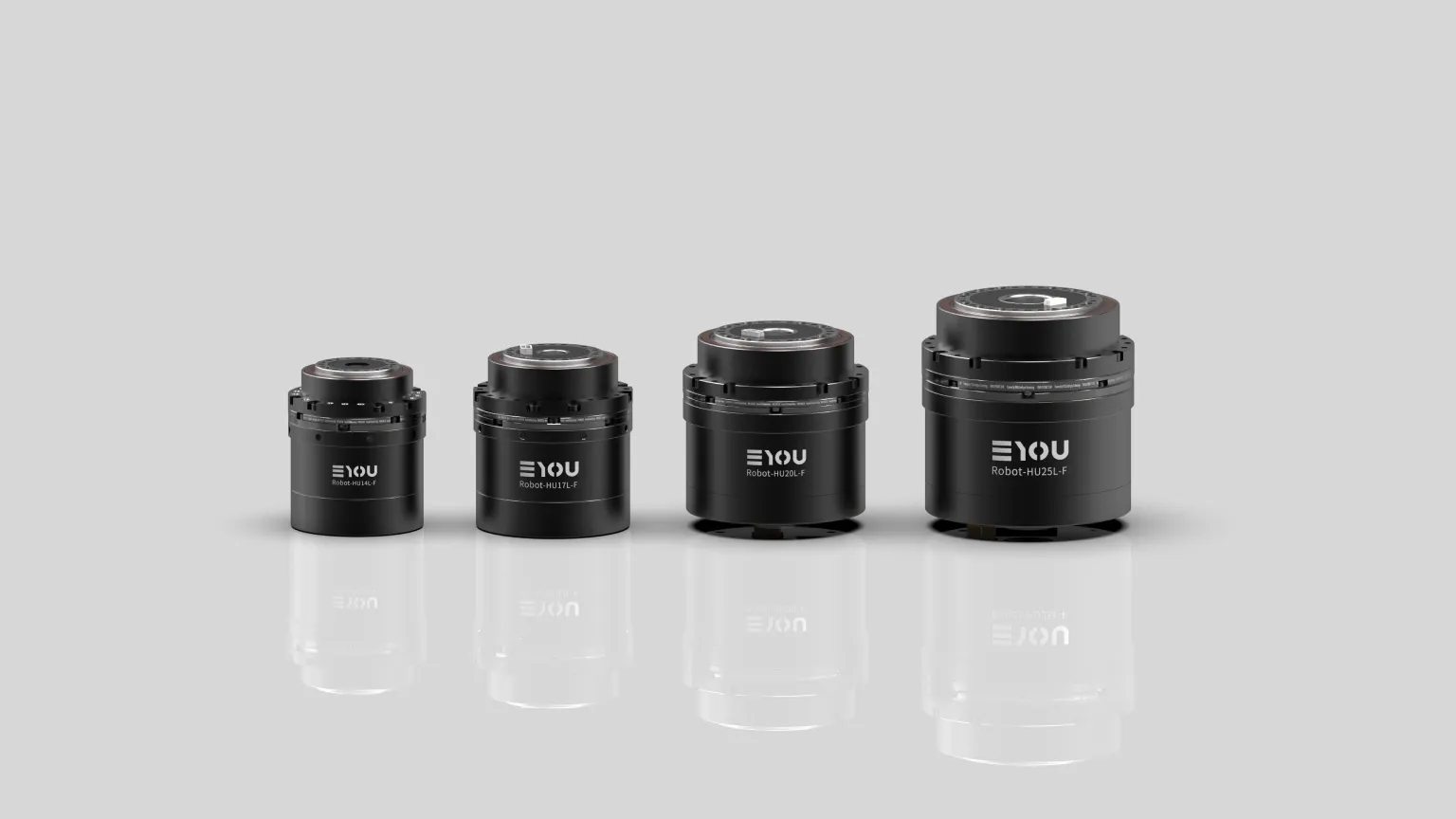
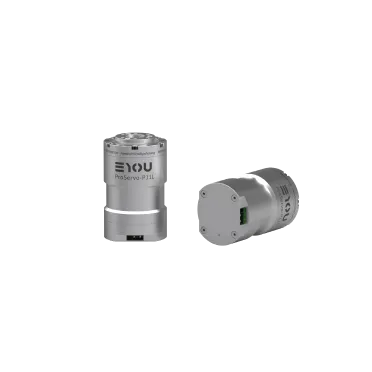
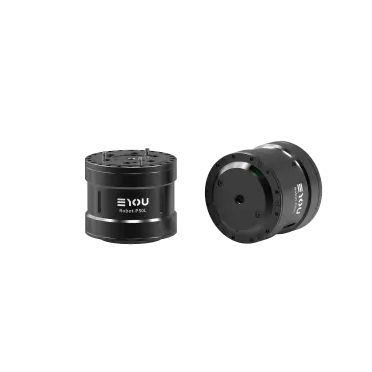
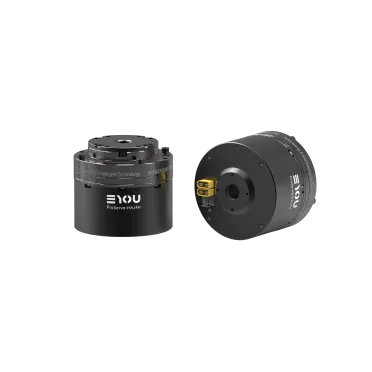
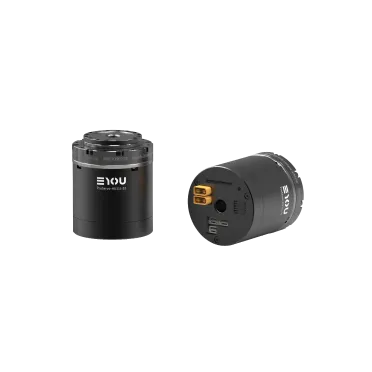
EYOU Robot RHU Humanoid Harmonic Drive Robot Actuator Full Product Lineup

RHU Humanoid Harmonic Drive Robot Actuator

Product Overview

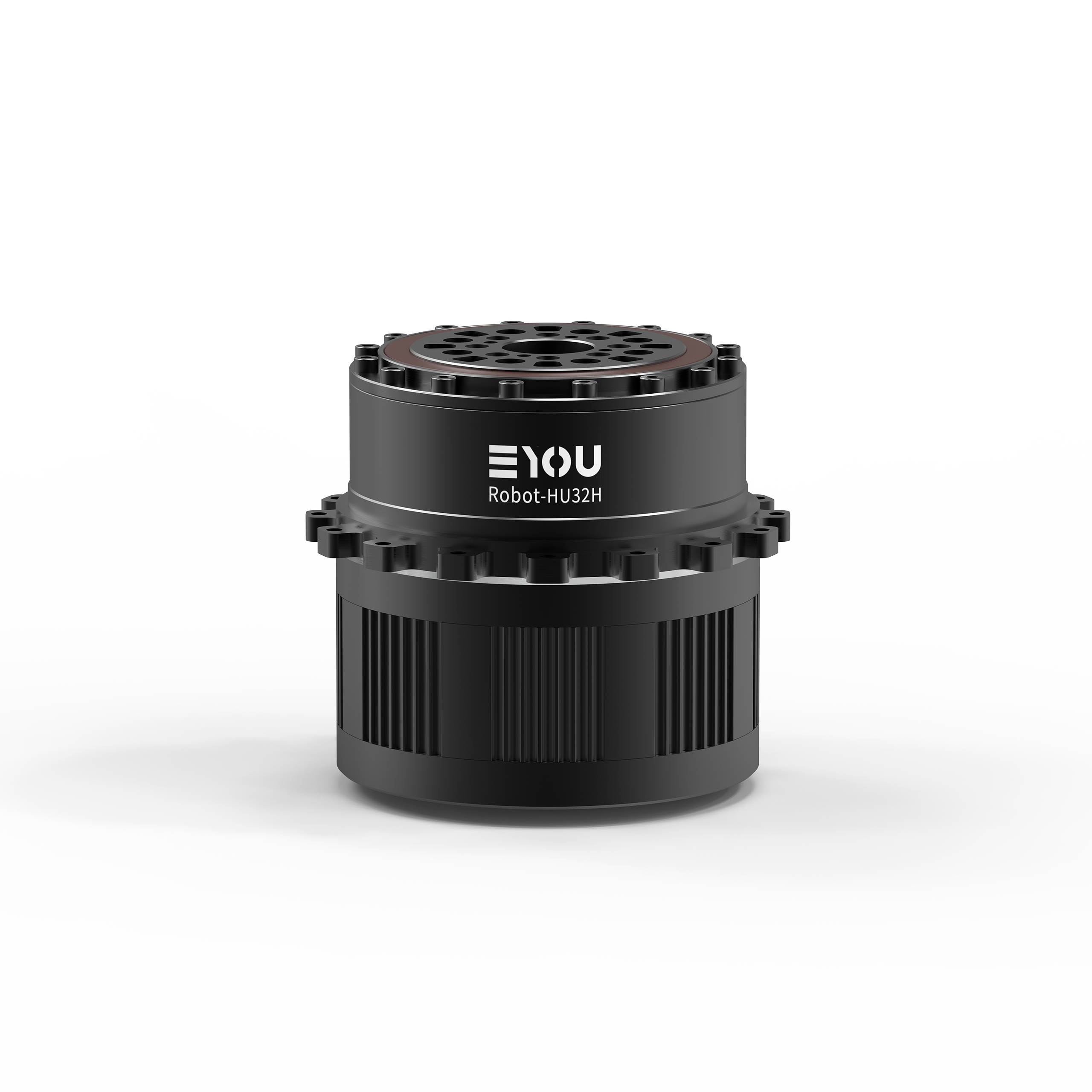
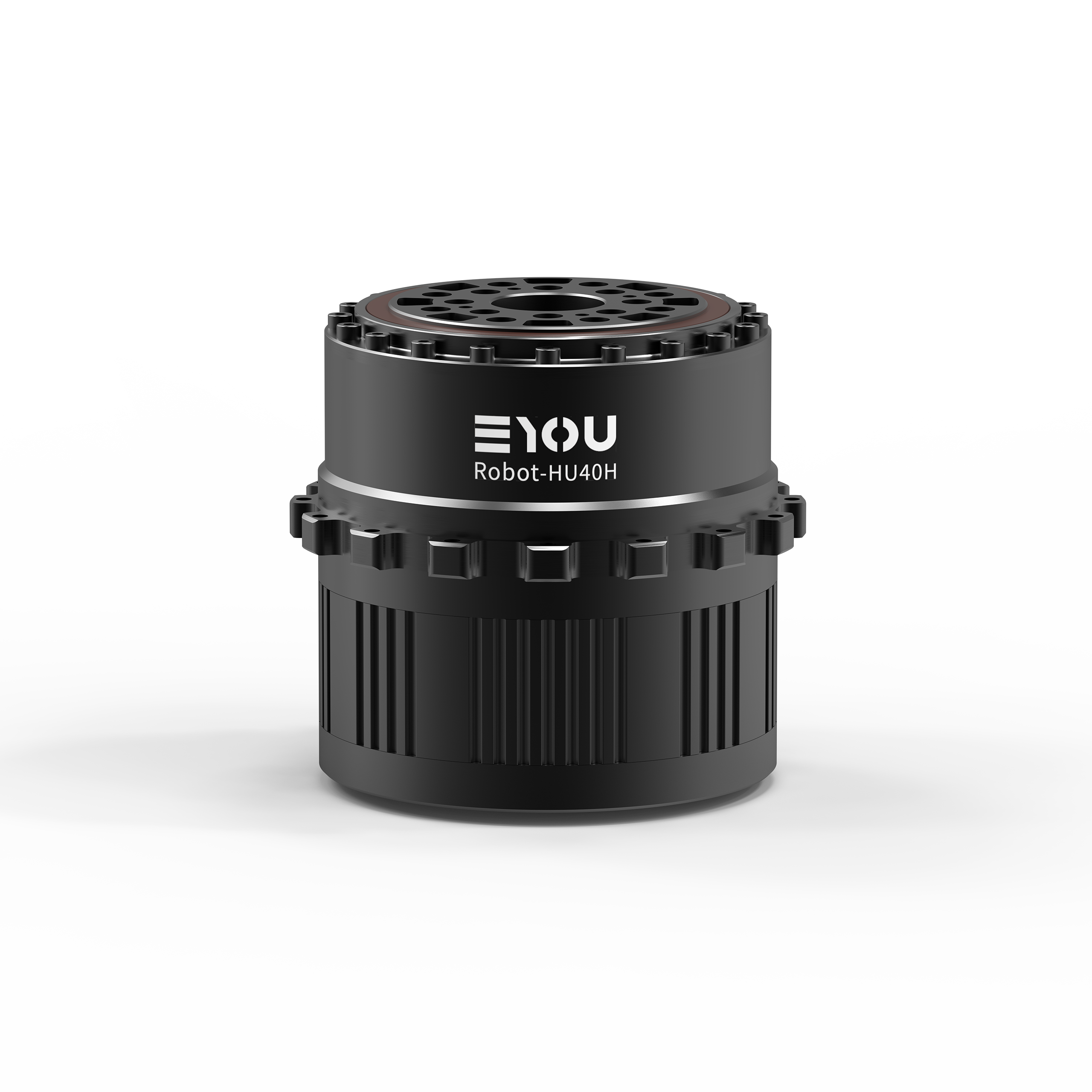
The RHU series is built specifically for the bionic joints of humanoid robots, focusing on light-load, high-frequency commercial scenarios. With an ultra-compact structure and high power density at its core, it delivers strong power output and flexible motion control in limited space, helping robots achieve a lighter body structure, more natural movement, and more stable operation — providing efficient, reliable power for the new generation of humanoid robots.

Key Specifications

Operating Voltage24–48VEncoder TypeDual Absolute
Operating Noise<60dBEncoder Accuracy19-bit
Operating Temperature-20~60℃Power-off BrakeOptional
Service Life>10,000hCommunication ProtocolEtherCAT/CANopen

Humanoid-Specific Architecture

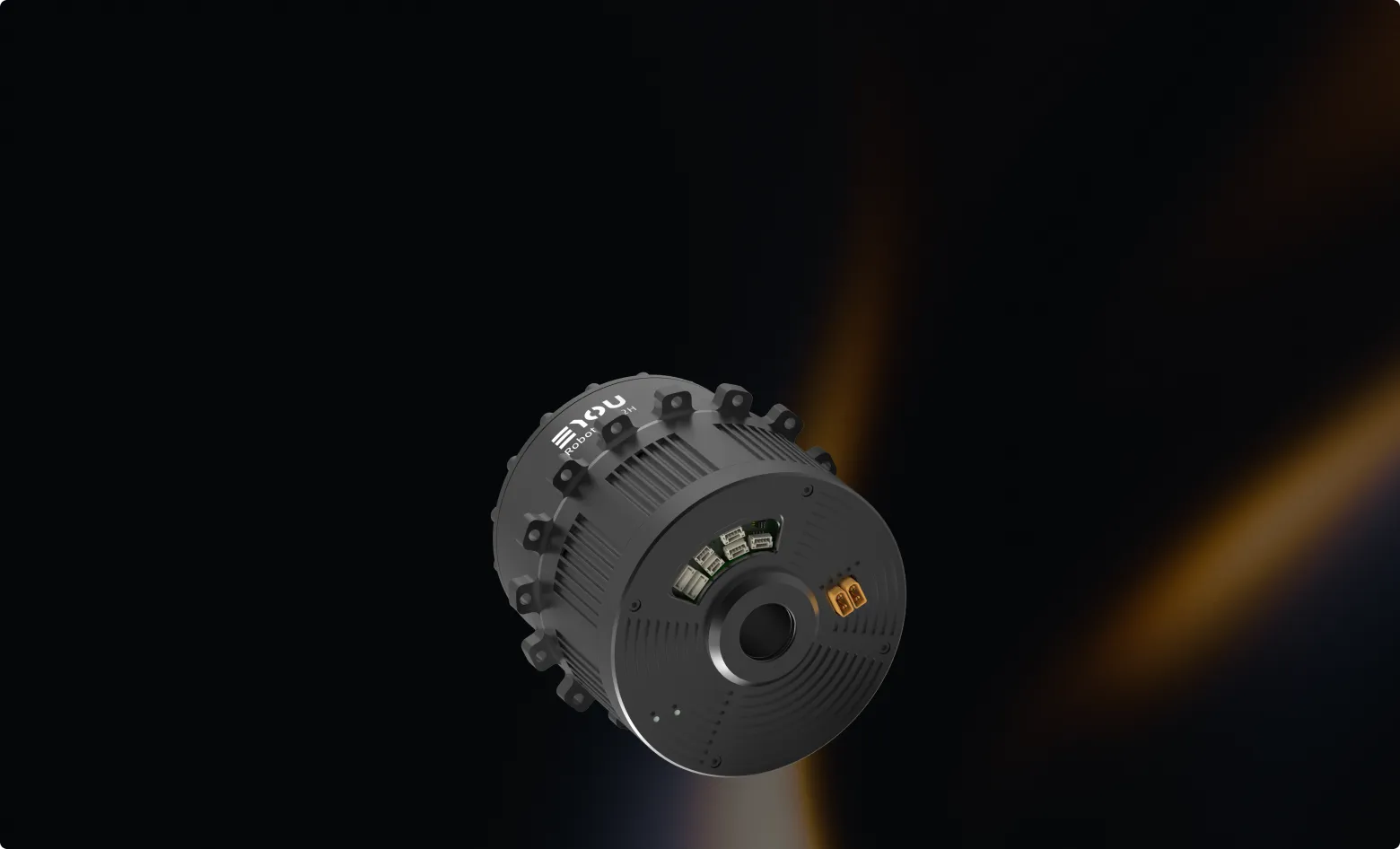
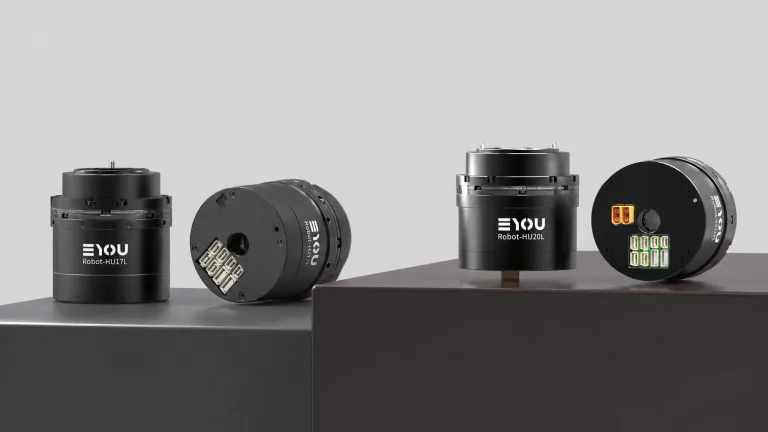
It offers both terminal-block and flying-lead standard interfaces, supporting flexible electrical integration of the joint module and meeting the dual demands for wiring freedom and connection reliability inside the compact joints of humanoid robots.

RHU Humanoid Harmonic Joint Module Extreme Power Density

Extreme Power Density

Very high torque output from a small body, with a clear lead in power density. It helps robot joints achieve lighter weight and smaller size, providing stronger power in limited space and improving overall motion performance and endurance.

RHU Humanoid Harmonic Joint Module Dual Safety Protection

Dual Safety Protection

It integrates a standards-compliant Safety Torque Off (STO) function and an electromagnetic brake, together forming a dual safety system for humanoid robot joints — comprehensive protection from the signal layer to the physical layer.

FAQ

The RHU series is purpose-designed for humanoid robots, while the PHU series is a general-purpose enhanced harmonic joint for humanoid robots, collaborative arms, and industrial automation. The key hardware differences are: RHU offers a much larger hollow bore (up to 22mm vs 13mm on PHU), longer rated service life (10,000h vs 8,000h), and the RHU-F variant integrates a torque sensor for force control. The RHU uses EtherCAT/CANopen protocols, while the PHU uses EtherCAT/CAN FD. Choose RHU when the application is a humanoid robot requiring dense cable routing and force-controlled interaction; choose PHU for broader applications where CAN FD support and a wider model range are needed.

The RHU32H and RHU40H models offer a 22mm hollow bore — the largest in the RHU lineup. This matters because humanoid robots route a large number of cables through each joint: power lines, EtherCAT communication cables, encoder wires, torque sensor signals, and sometimes pneumatic tubing. A 22mm bore can accommodate all of these simultaneously, eliminating external cable routing that would otherwise restrict joint range of motion, add weight, and create interference risks during dynamic movement.

The RHU-F is a force-control variant that adds a high-precision torque sensor integrated at the harmonic reducer output. Key specs: torque accuracy ≤0.5% FS, sensor resolution 0.1% FS, sampling frequency ≥5kHz. It supports EtherCAT and CAN FD protocols. Four models are available: RHU14L-F, RHU17L-F, RHU20L-F, and RHU25L-F. The RHU-F enables force-controlled interaction, compliant motion, impedance control, and collision detection — capabilities critical for humanoid robots operating in human environments.

The standard RHU series supports EtherCAT and CANopen. The RHU-F force-control variant supports EtherCAT and CAN FD. EtherCAT provides real-time, high-speed, synchronized multi-axis control required by professional humanoid robot platforms. CANopen is suitable for multi-joint daisy-chain setups. Protocol switching between CANopen and CAN custom is available by contacting the manufacturer.

The RHU series includes 6 standard models. Outer diameters range from 52mm (RHU14L) to 130mm (RHU40H). Reduction ratios span 50:1 to 160:1. Rated torque at 2000rpm ranges from 3.7 N.m (RHU14L-52) to 363 N.m (RHU40H-130). Peak torque reaches up to 1,458 N.m on the largest model. Weight ranges from 382g (RHU14L without brake) to 6,150g (RHU40H with brake). Hollow bore diameters are 8mm, 10mm, 13mm, 18mm, and 22mm across the range.

While the RHU is optimized for humanoid robots, its large hollow bore and long service life make it suitable for any application requiring dense internal cable routing and extended operational cycles. Potential applications outside humanoid robots include collaborative robot arms with force feedback, medical rehabilitation robots, teleoperation platforms, and service robots that require force-controlled human interaction.

Force Control in Humanoid Robot Joints: Why It Matters and How It Works

From Position Control to Force Control

Most robot joints operate in position control mode — the controller commands a target angle, and the actuator moves to it. This works for repetitive industrial tasks where the environment is predictable. But humanoid robots operate in unstructured environments alongside people. A position-controlled arm that collides with a person will keep pushing until it reaches its target angle, regardless of the force applied. Force control solves this by making the joint aware of — and responsive to — the forces acting on it.

Torque Sensing Approaches: Sensor-Based vs Sensorless

There are two main methods for estimating joint torque:

MethodHow It WorksAccuracyCostTypical Use
Current-based (sensorless)Estimates torque from motor phase current using KT calibration±5–10%No additional hardwareBasic collision detection, cost-sensitive applications
Torque sensor (sensor-based)Measures actual output torque via strain gauge or other sensor at the reducer output≤0.5% FSHigher (sensor + signal conditioning)Compliant manipulation, human-robot interaction, precision force tasks

Current-based estimation is simpler and cheaper — the EYOU PH series with KT calibration achieves ±5% accuracy, sufficient for basic safety functions. But for applications requiring precise force modulation — like handing objects to a person, wiping a surface with controlled pressure, or performing physical therapy — a dedicated torque sensor is necessary. The RHU-F integrates this sensor at the harmonic reducer output, providing ≤0.5% FS accuracy at ≥5kHz sampling.

Impedance Control: Making Joints Feel Like Springs

Force-sensing joints enable impedance control, where the joint behaves like a virtual spring-damper system. Two parameters define the behavior:

  • Stiffness (K): How much the joint resists displacement. High K = rigid; low K = compliant.
  • Damping (D): How much the joint resists velocity. High D = slow, controlled movement; low D = quick, bouncy response.

By adjusting K and D in software hundreds of times per second, a single physical actuator can behave like a rigid strut when supporting weight, then instantly become compliant to absorb an unexpected bump. This is how humanoid robots achieve natural-feeling physical interaction without dedicated mechanical compliance mechanisms.

Joint-Level Force Control Architecture in Humanoid Robots

In a typical humanoid robot, force control operates at multiple levels:

  • Joint level: Each actuator runs its own torque control loop at high frequency (≥1kHz). The RHU-F’s 5kHz sensor sampling supports this.
  • Limb level: A limb controller coordinates multiple joints to achieve a desired end-effector force or compliance behavior (e.g., Cartesian impedance control).
  • Whole-body level: A central controller balances all joints to maintain posture while interacting with external forces (e.g., standing while being pushed).

The joint-level torque loop is the foundation. If the torque sensor is slow, inaccurate, or introduces lag, the higher-level controllers cannot achieve stable force control. This is why sensor specifications like sampling frequency and accuracy matter at the actuator level — they set the ceiling for what the robot can achieve in force-controlled tasks.

Practical Applications of Force-Controlled Humanoid Joints

  • Safe human-robot interaction: Detecting and limiting contact forces when operating near people
  • Object handover: Sensing grip force and releasing when the person pulls
  • Surface contact tasks: Wiping, polishing, or assembly with controlled contact pressure
  • Physical therapy and rehabilitation: Providing adjustable resistance during exercises
  • Teleoperation with force feedback: Transmitting contact forces back to the operator for remote manipulation

These applications share a common requirement: the joint must sense real-time output torque accurately enough to modulate its behavior based on external forces. This is the core value proposition of the RHU-F force-control variant within the humanoid robot joint actuator ecosystem.