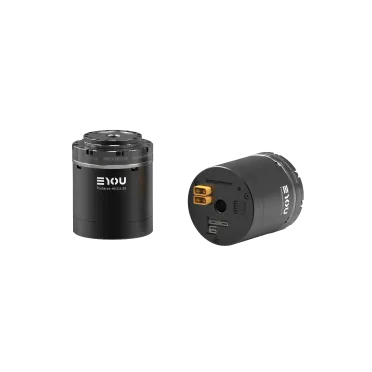
What Is a Robot Joint Actuator and How to Choose the Right One
The most expensive mistake in a robot design review is rarely a wrong structural calculation. It is a wrong joint actuator. The torque rating looks fine on the datasheet, but the housing turns out to be 10 mm too wide for the space you reserved. Or the module bolts in perfectly and then refuses to talk to your controller because the protocol does not match, and system integration stalls for weeks. Pick the wrong robot joint actuator and the frame, the wiring harness, and the control software all have to change with it. This guide explains what a robot joint actuator is, what sits inside one, which specifications matter, and how to choose, so you can clear the pitfalls before placing the order.
What Is a Robot Joint Actuator?
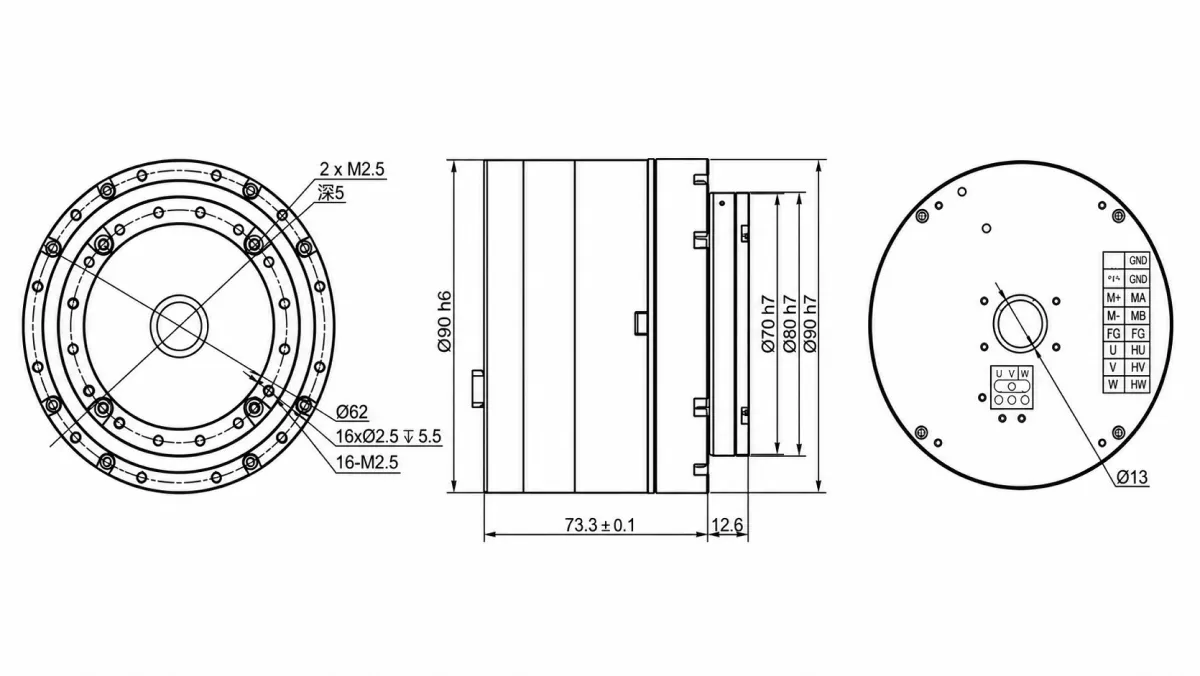
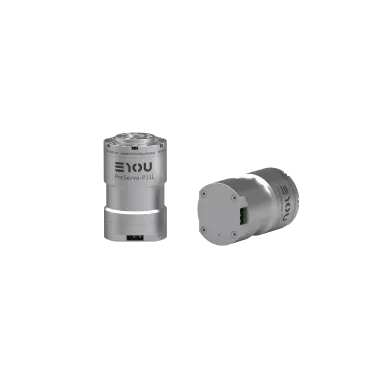
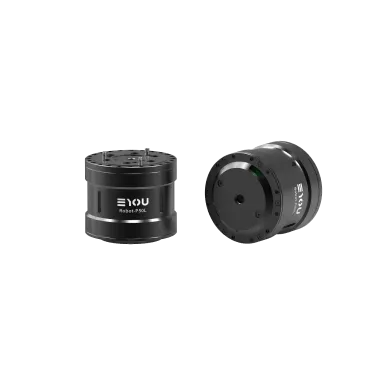
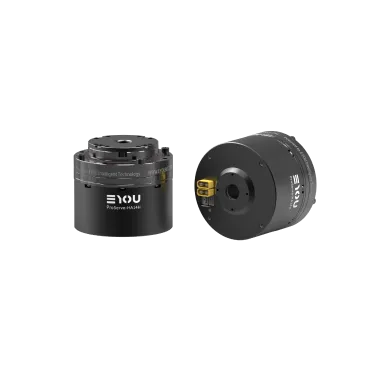
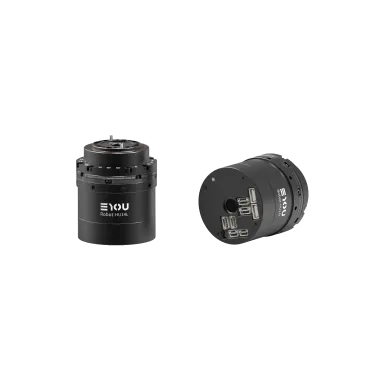
A robot joint actuator is an integrated module that packs a motor, a gear reducer, encoders, and drive electronics into a single housing to drive one robot joint. Bolt it into the robot structure, connect power and communication, and it handles everything from torque output to position feedback. The gear reducer inside defines the actuator's mechanical character, which makes it the first fork in any selection decision.
Open up a typical joint actuator and you will find five building blocks:
- Frameless torque motor. The power source. With no housing or output shaft of its own, it sits directly inside the joint structure, which buys torque density and shortens the axial length.
- Gear reducer. The torque multiplier. Harmonic and planetary designs dominate the market, and a later section compares them in detail.
- Encoders. Position feedback. Higher-end joints use dual absolute encoders, one on the motor side and one on the output side. The output-side unit measures the real angle after the gearbox, so transmission error stays inside the control loop.
- Drive electronics. Runs FOC control and communicates with the host controller over EtherCAT or CANopen.
- Holding brake (optional). Locks the joint when power is off, so an arm or leg does not drop under gravity.
An integrated module saves three jobs compared with sourcing a motor and gearbox separately: component matching, concentricity control during assembly, and drive tuning. Consistency matters just as much. EYOU Robot runs China's first automated joint production line and delivered 95,000 joint modules in 2025, so unit-to-unit variation is controlled by the production process, with assembly craftsmanship removed from the equation.
One practical tip: learn to read the model naming rule. On EYOU's current lineup, a name like PH-60-11L-B/N-101-C/E encodes the outer diameter (60 mm), torque tier (11L), brake option, reduction ratio (101), and communication protocol (CANopen or EtherCAT). Once you can decode the name, you can shortlist candidates from a catalog page in minutes.
Which Specifications Matter When Choosing a Robot Joint Actuator?
Seven specifications decide whether a robot joint actuator fits your joint, in priority order: rated and peak torque, reduction ratio, backlash, encoder resolution, communication protocol, dimensions and hollow bore, and supply voltage. In practice, use peak torque to frame the candidate range first, then verify the other six line by line.
| Specification | Why it matters | Reference benchmark |
|---|---|---|
| Rated / peak torque | Rated torque sets sustainable working capacity; peak torque covers start-stop and shock margins | Size rated torque by load RMS torque, verify peak against worst cases |
| Reduction ratio | Sets torque multiplication and output speed ceiling together | Harmonic: 50-160 single stage; planetary: around 20-25 |
| Backlash | Drives positioning accuracy and bidirectional dead zone | Harmonic can reach ≤15 arcsec; planetary is typically ≤12 arcmin |
| Encoder resolution | Caps position control resolution | Dual absolute 19-bit is now common on high-end humanoid joints |
| Communication protocol | Determines whether the joint fits your control architecture | EtherCAT for tight multi-axis synchronization; CANopen for simpler wiring |
| Size and hollow bore | Decides whether the unit fits the structure; the bore carries cables and air lines | Humanoid cable routing drives bore sizes up to 22 mm |
| Supply voltage | Must match the robot power bus | 24-48 V is the mainstream range |
Harmonic vs Planetary: Which Robot Joint Actuator Type Fits Your Joint?
The short rule: choose harmonic actuators for precise upper-body joints and planetary actuators for impact-heavy lower-body joints. A harmonic drive uses elastic deformation of a flexspline to achieve near-zero backlash in a compact package. A planetary drive uses rigid multi-point gear meshing to deliver impact tolerance and torque density.
| Dimension | Harmonic joint actuator | Planetary joint actuator |
|---|---|---|
| Transmission | Flexspline elastic meshing | Rigid multi-point gear meshing |
| Backlash | Near zero, ≤15 arcsec | ≤12 arcmin |
| Reduction ratio | 50-160, single stage | Around 20-25 |
| Size and weight at same torque | Smaller and lighter | Larger and heavier |
| Shock tolerance | Flexspline is sensitive to sustained shock | Strong, suits landing impacts |
| Efficiency | Moderate | High |
| Service life | >8,000-10,000 hours | Long, wear-resistant gears |
| Typical positions | Shoulder, elbow, wrist | Hip, knee, ankle |
Turn that table into a decision list:
- Precision manipulation or tight positioning requirements: harmonic.
- Landing impacts and frequent high-load starts and stops: planetary.
- Tight space plus heavy cable routing needs: harmonic with a large hollow bore, up to 22 mm on humanoid-dedicated models.
- Moderate accuracy requirements with cost pressure: planetary.
How Different Robots Combine Joint Actuators
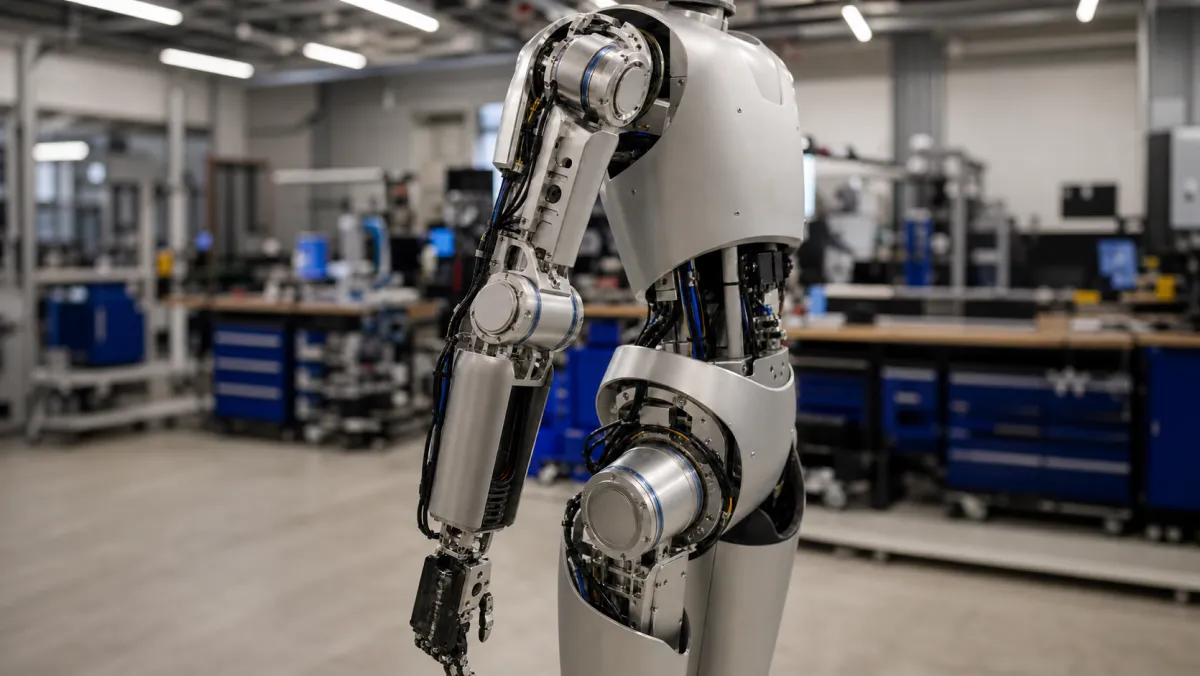
The mainstream layout for full-size humanoids is harmonic actuators in the upper body and planetary actuators in the legs. Collaborative arms run harmonic actuators at nearly every joint. Dexterous hands and small robotic arms use compact planetary modules starting from 32 mm outer diameter. Torque demand varies widely with robot form factor. The real configuration data below comes from EYOU's whole-robot joint selection plans (v1.2):
| Robot configuration | Peak arm joint torque | Peak leg joint torque | Joint type |
|---|---|---|---|
| 0.8 m biped, ~12 kg | 6 N·m | 36 N·m | Planetary |
| 1.3 m biped, ~30 kg | 30 N·m | 120 N·m | Planetary |
| 1.7 m biped, ~60 kg | 60 N·m | 200 N·m | Planetary |
| 1.75 m wheeled, 5 kg arm payload, ~150 kg | 182 N·m | 1,458 N·m | Harmonic |
Two things stand out. First, leg joints on the same machine need roughly an order of magnitude more torque than arm joints. Second, a payload-carrying wheeled chassis pushes leg joint torque far beyond anything a biped of similar height requires. There is also a hybrid route: some 1.7 m humanoids pair RHU harmonic joints in the upper body with RL inverted roller screw linear actuators in the legs, where peak thrust reaches 3,000 N.
For upper-body precision joints, see the PHU enhanced harmonic drive robot actuator series, covering ten models from φ40 to φ170 mm. For lower-body impact joints, the RP humanoid planetary robot actuator series runs on a 48 V platform designed for hip, knee, and ankle duty.
A Five-Step Selection Process You Can Reuse
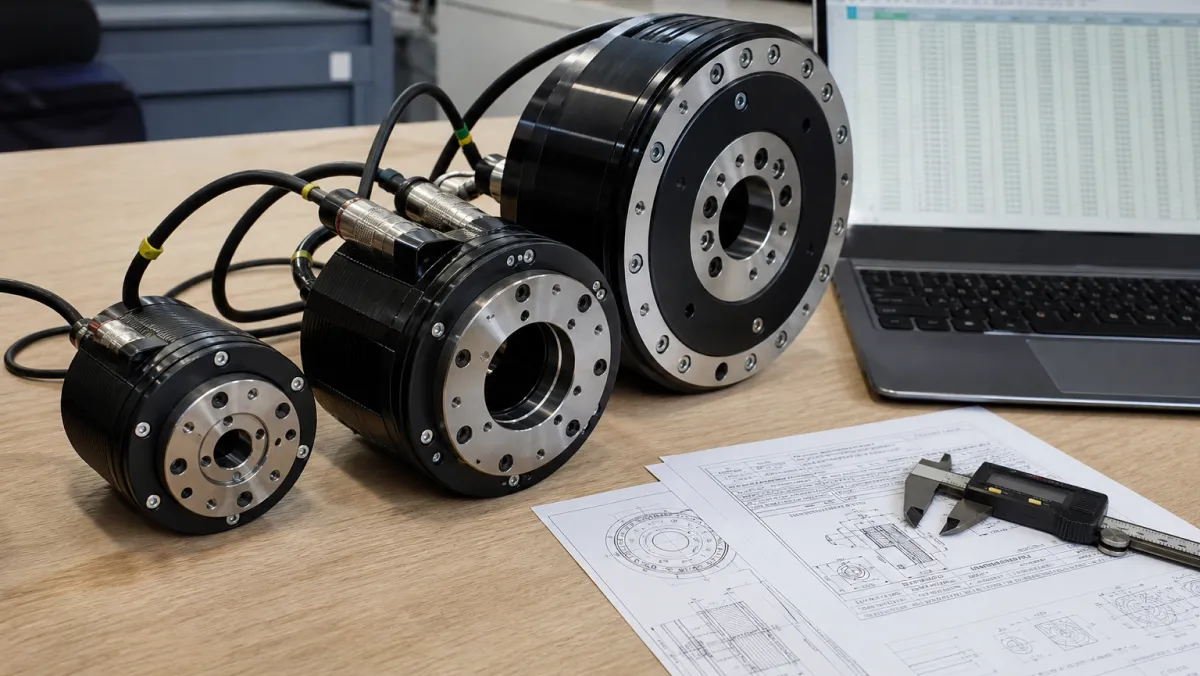
Selection works best as a fixed sequence: calculate the load, pick the reducer type, verify mechanical fit, verify electrical and protocol fit, then check lifetime and environment. Skip a step and you usually pay for it during integration.
- Calculate the load. List payload mass, center-of-mass distance, and maximum angular acceleration. Work out RMS torque and peak torque, then add a 20-30% safety margin to each.
- Pick the reducer type. Apply the harmonic-versus-planetary decision list above.
- Verify mechanical fit. Check outer diameter, axial length, weight, and hollow bore against the structure drawing. Remember that actuator weight becomes extra load for every upstream joint.
- Verify electrical and protocol fit. Match voltage to the power bus and protocol to the host controller (EtherCAT, CANopen, or CAN FD), and decide whether you need a holding brake.
- Check lifetime and environment. Operating temperature, noise, ingress protection, expected service life, and duty cycle.
Three mistakes show up repeatedly: sizing by peak torque alone while ignoring RMS torque; ignoring how actuator weight compounds along the kinematic chain; and leaving the protocol check until the integration phase.
Next Step
If you are selecting joints for a humanoid, a cobot arm, or another machine, send our application engineers the joint position, load, space envelope, and host protocol. You will get a model-level recommendation and the full parameter table for the right robot joint actuator. EYOU Robot covers every joint position from wrist to hip and ankle across harmonic and planetary product lines, with 95,000 modules delivered in 2025 and batch consistency secured by China's first automated joint production line.
FAQ
A servo motor is a motor with feedback control, and it is one component inside a joint actuator. The actuator adds the gear reducer, encoders, drive electronics, and housing, so it is ready to drive a joint out of the box without component matching or drive tuning.
Yes, and most full-size humanoid robots do exactly that: harmonic actuators in the upper body for manipulation precision, planetary actuators in the legs for impact tolerance during locomotion. EYOU supplies both families (PHU, RHU, PHA harmonic; RP, PP planetary), so a full-body joint set can come from a single supplier with unified protocols and tuning tools.
Check both, for different reasons. Rated torque maps to sustained working capacity and is verified against load RMS torque. Peak torque maps to starts, stops, and landing shocks and is verified against worst-case events. Sizing by peak torque alone usually produces an oversized, overweight joint.
A hollow bore routes cables and air lines through the center of the joint, so wiring does not flex and wear as the joint rotates. It is the standard routing method on humanoid robots. EYOU's RHU humanoid harmonic joints offer hollow bores up to 22 mm.
For tightly synchronized multi-axis systems, such as a humanoid coordinating 20 or more joints, EtherCAT is the safer choice. For fewer nodes, simpler wiring, and tighter budgets, CANopen works well. EYOU joints support both protocols with software switching, so the protocol choice does not have to lock the model decision.