Harmonic Drive Systems Explained: Working Principle and Engineering Deep Dive for Robot Actuators
Harmonic drive systems are the dominant reduction solution in precision robot joints, combining high single-stage ratios, near-zero backlash, and a compact structure. This article first summarizes the established working principle in brief, then focuses on engineering practice: what an integrated harmonic actuator adds around the reducer, how dual-encoder full closed-loop control works, how to read the torque ratings on a spec sheet, how service life is calculated, and when a harmonic reducer must be replaced.
What Is a Harmonic Drive System?
A harmonic drive — technically a strain wave gear — is a precision reducer that transmits motion through the controlled elastic deformation of a thin metal gear. It delivers reduction ratios from roughly 30:1 to 320:1 in a single compact stage, with almost no backlash. "Harmonic Drive" is a registered trademark of Harmonic Drive Systems Inc.; the strain wave gear itself was invented and patented by American engineer C. Walton Musser in 1955, and "harmonic" has since become the generic name for this class of reducer. (New to the fundamentals? Start with What Is a Harmonic Drive and Why Robots Use It.)
A complete harmonic drive system has only three core components:
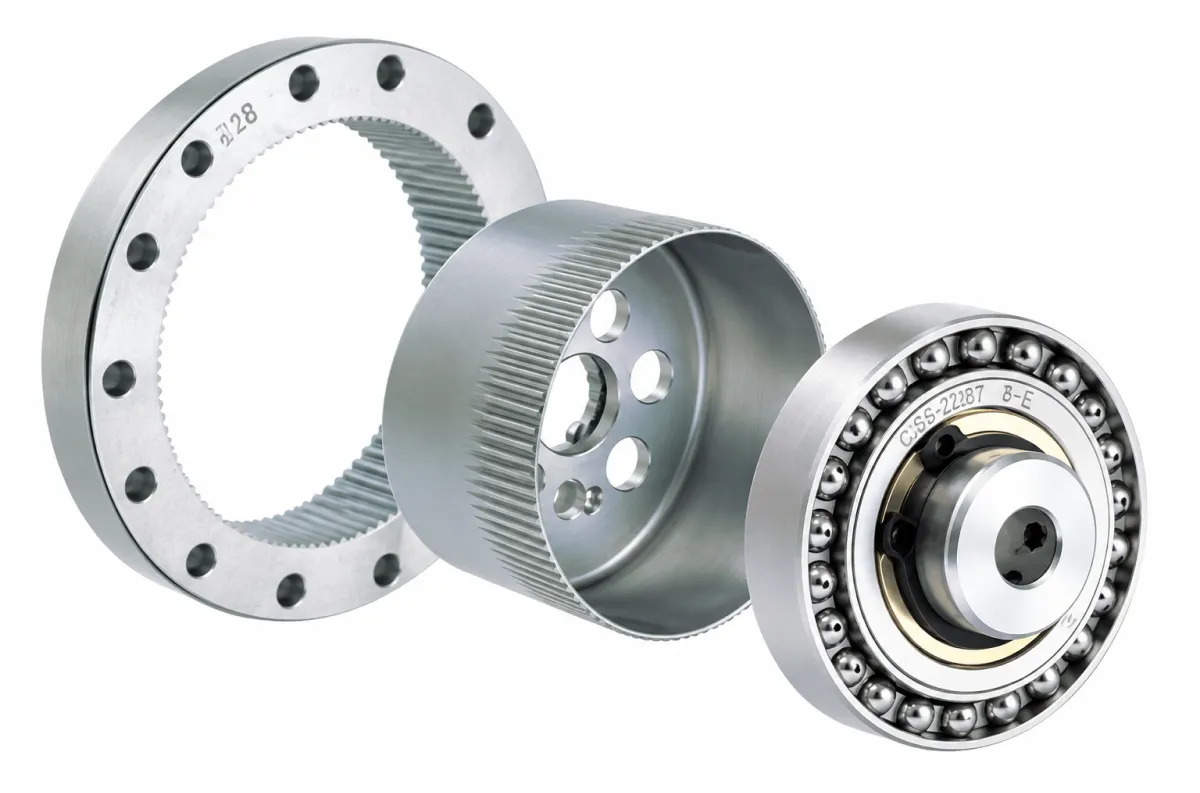
- Wave Generator — an elliptical hub fitted with a thin-section ball bearing. It connects to the motor shaft and serves as the input.
- Flexspline — a thin-walled flexible cup with external teeth at its open end, usually serving as the output.
- Circular Spline — a rigid ring with internal teeth, two more teeth than the flexspline, fixed to the housing.
How a Harmonic Drive Works
As the wave generator rotates, it forces the flexspline into an elliptical shape. The flexspline teeth mesh with the circular spline only at the two ends of the ellipse's major axis; along the minor axis they disengage completely. The tooth difference does the work: with two fewer teeth on the flexspline, every 180° of wave generator rotation advances the flexspline by just one tooth relative to the circular spline — one full input revolution moves the output by two teeth. With a 200-tooth flexspline, that is a 100:1 reduction in a single stage. The ratio is set by tooth counts, so different ratios can be achieved without changing the gear's size or weight.
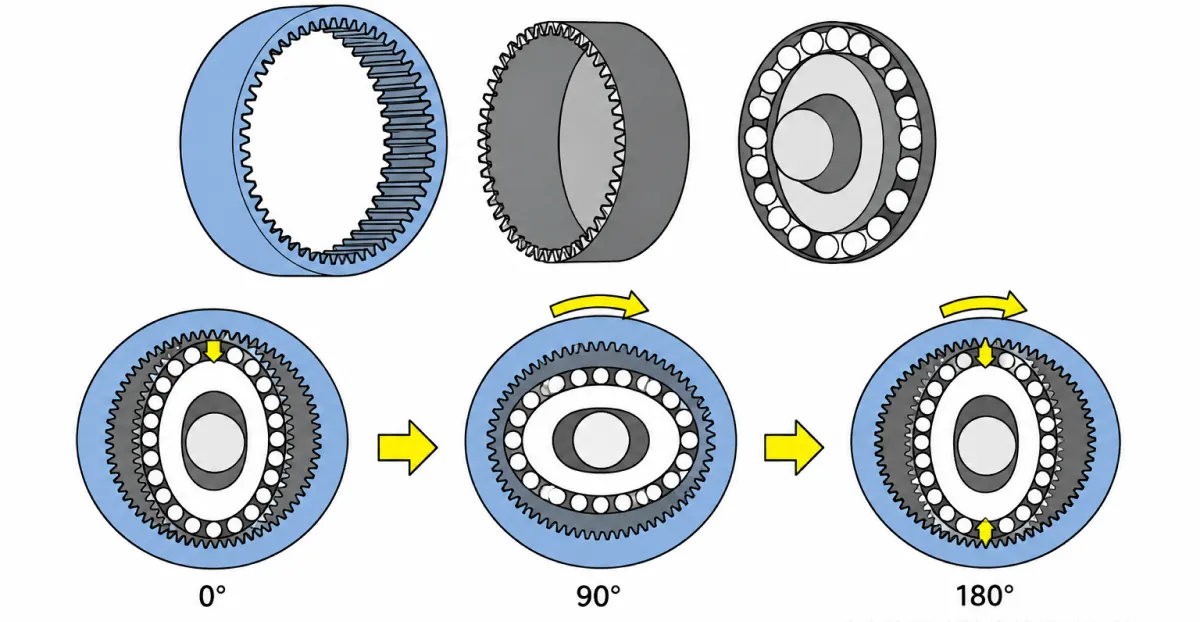
Because the teeth in the meshing zones stay fully engaged with no clearance between flanks, a harmonic drive is near-zero-backlash by design — the root of its positioning accuracy.
From Reducer to System: What an Integrated Harmonic Robot Actuator Adds
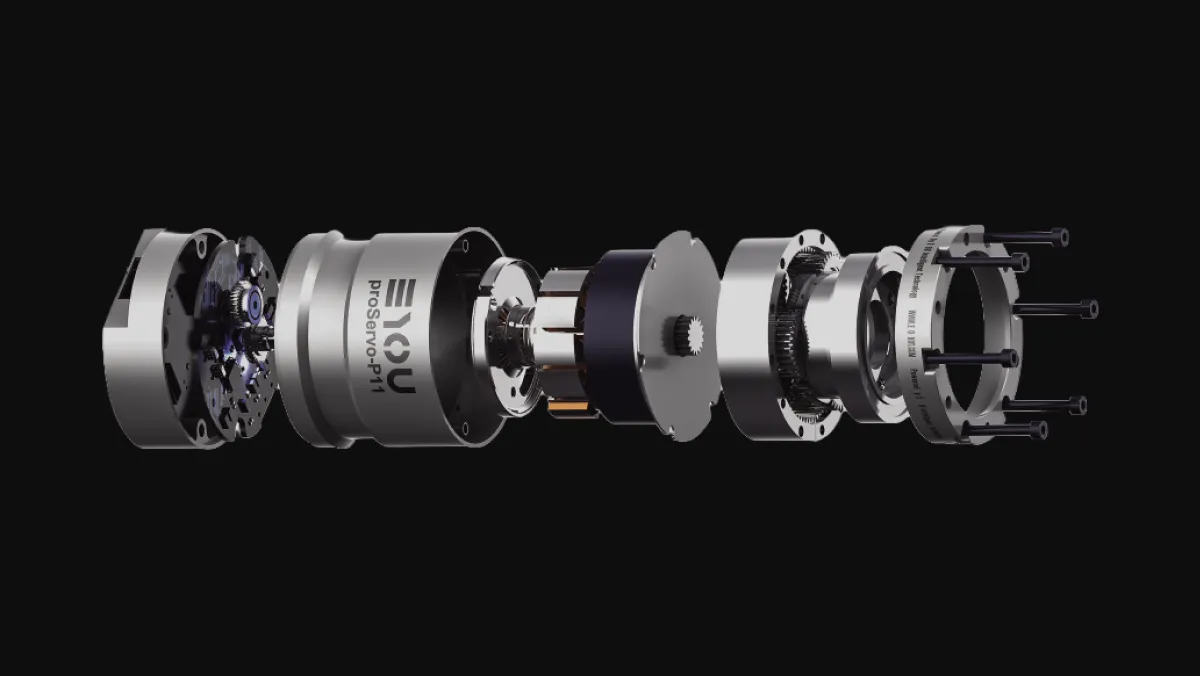
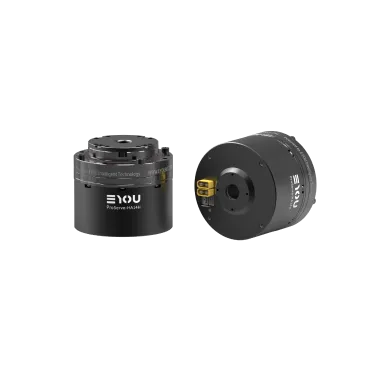
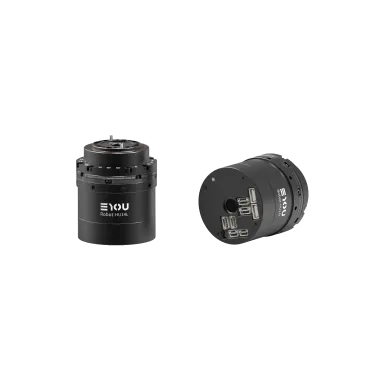
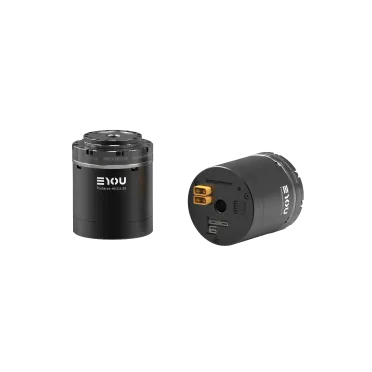
A bare harmonic reducer is only a torque multiplier. A robot needs a complete servo axis. An integrated harmonic actuator packs six subsystems into one housing:
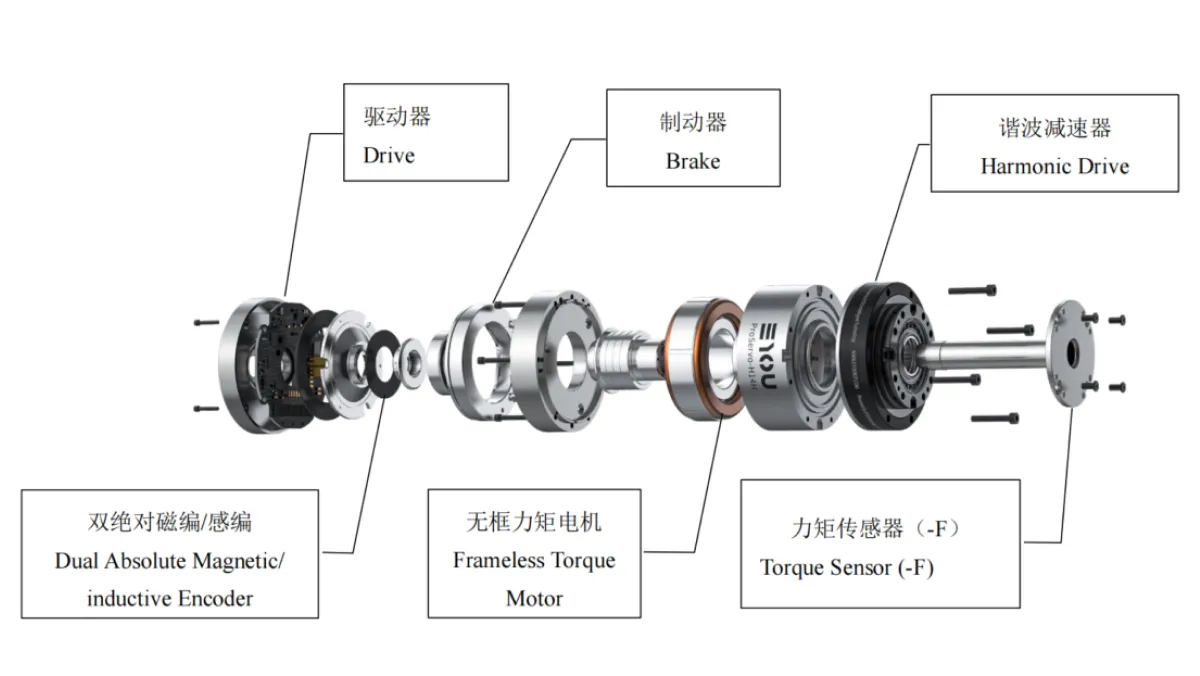
- Servo driver — the control core of the joint. It receives commands from the host controller, processes feedback, drives the motor, and continuously monitors current, position, temperature, and error codes.
- Frameless torque motor — rotor and stator embedded directly into the joint structure, deeply integrated with the harmonic reducer to deliver high torque in a compact envelope.
- Harmonic reducer — the single-stage, high-ratio torque multiplier described above.
- Dual absolute encoders — one on the motor side, one on the output side. They are the sensing foundation of full closed-loop control, covered in the next section.
- Electromagnetic brake (optional on most sizes) — engages automatically when power is off or the servo is disabled, holding the load statically. Rated for over 100,000 engage cycles.
- Torque sensor (force-control -F versions) — strain-gauge based, with 0.01 Nm force-feedback resolution and an 8 kHz torque sampling rate, upgrading the joint from a position actuator to a force-controlled actuator.
Integration eliminates couplings, alignment work, and external cabling. The PHU and RHU series support both CANopen and EtherCAT at the same frame size, switchable by software configuration — which considerably lowers the integration effort on the robot side.
Dual Encoders and Full Closed-Loop: Precision Is a System Property
A harmonic reducer has inherent elastic deformation and small hysteresis — they do not disappear in operation. The engineering answer is not to pretend they are absent, but to measure the output directly.
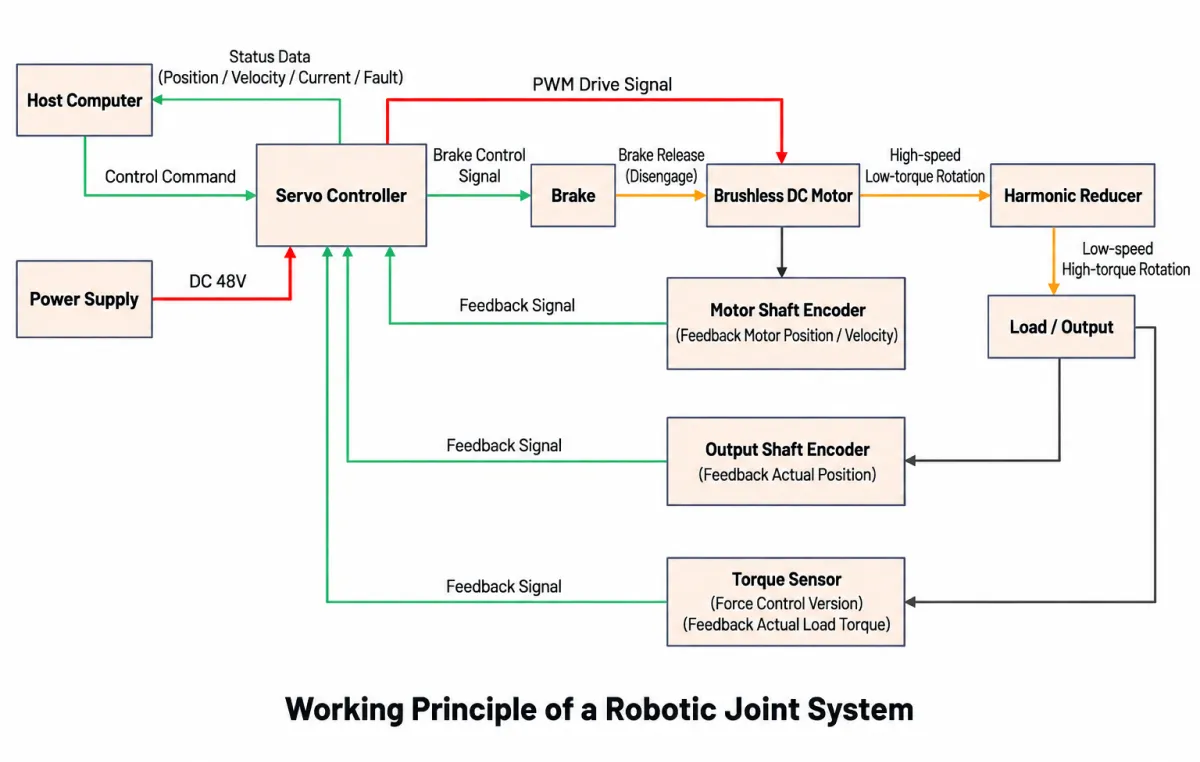
The motor-side encoder tracks rotor position and speed in real time, forming the inner loop (current and velocity) that guarantees motor control accuracy. The output-side encoder measures the actual position of the load directly, forming the outer position loop. Transmission error, backlash, and elastic deflection of the reducer are all measured and corrected by that outer loop — this is full closed-loop control, and it is why terminal positioning accuracy no longer suffers from drivetrain error.
EYOU harmonic joints use dual absolute encoders, and the 19-bit output-side encoder divides every revolution into 524,288 position steps. Two conversions worth keeping: position pulses ÷ 524,288 × 360° = current angle; speed pulses ÷ 524,288 × 60 = rpm. Position data survives power loss, so there is no homing routine at startup.
Reading a Harmonic Actuator Spec Sheet Like an Engineer
Torque on a harmonic actuator datasheet is not one number — it is four levels, and confusing them is the most common source of selection errors:
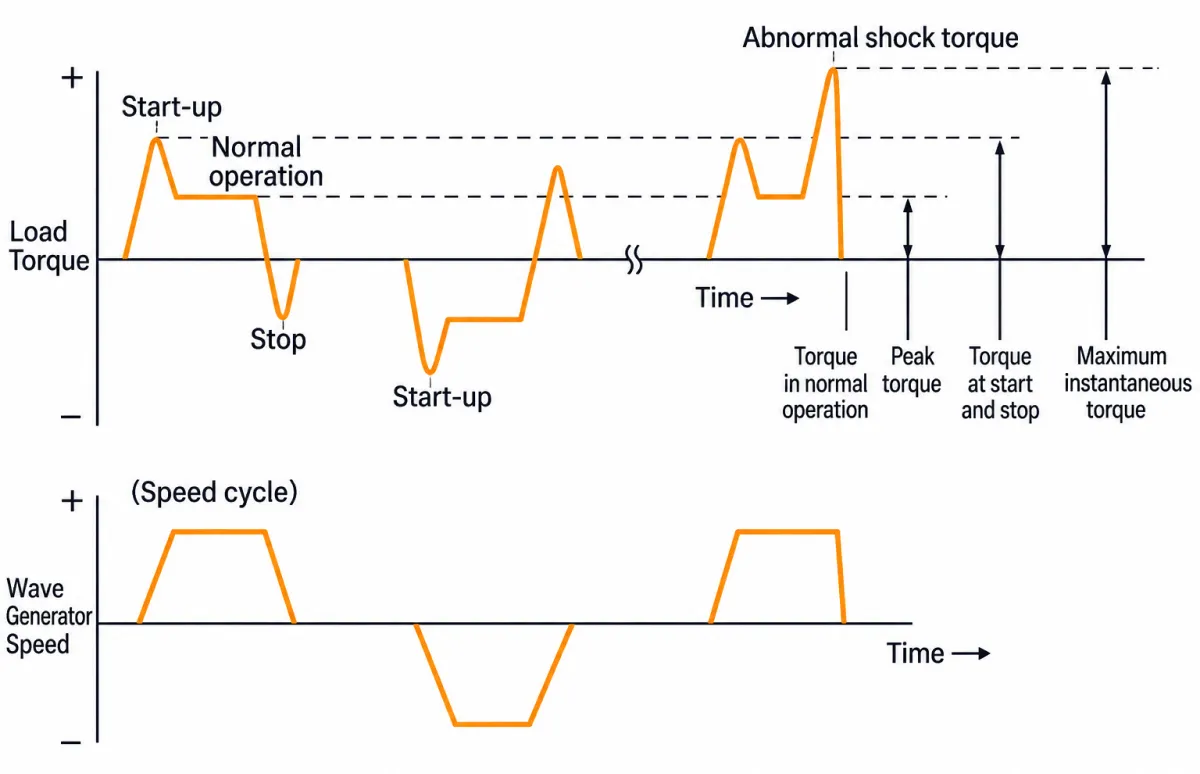
- Rated torque (at 2,000 rpm input) — the maximum torque the output shaft can carry continuously, with the wave generator running at a constant 2,000 rpm under standard temperature and adequate lubrication.
- Permissible average load torque — when load or speed varies, the mean load torque must be calculated separately. Exceeding it degrades the lubricant early and accelerates gear wear.
- Start-stop peak torque — load inertia produces higher torque during acceleration and deceleration; the datasheet value is the permissible peak for those moments.
- Maximum instantaneous torque — the ceiling for unexpected external shock torque, which must never be exceeded.
Two more parameters are frequently misread. Backlash is defined as hysteresis per the Chinese national standard GB/T 35089—2018: with the joint braked, the angular difference at the output under ±3% of rated torque. EYOU harmonic joints hold backlash to 15 arc-seconds. Torsional rigidity is the windup measured at the output when the wave generator is locked and torque is applied — it determines how the joint tracks alternating loads. On the mechanical side, check the radial and axial dynamic/static load ratings and the allowable moment load, verified as Mmax = Fr×(Lr+R) + Fa×La against the permissible static moment (Fr: maximum radial load, Fa: maximum axial load, R: offset).
How Long Does a Harmonic Drive Last in a Robot Joint?
The service life of a joint module is determined by its harmonic reducer, and the reducer's life is determined by the wave generator bearing — which can be calculated like any rolling bearing, from speed and load torque. The service life under actual operating conditions is:
Lh = Ln × (TrTavg)3 × NrNavg
- Lh: service life under actual conditions; Ln: rated life (L10 for 10% failure probability, L50 for average life)
- Tr: rated torque of the reducer; Nr: rated test speed at the motor end for torque measurement (typically 2,000 rpm)
- Tavg: average load torque at the reducer output; Navg: average speed at the reducer input (motor output)
Note the cubic relationship: running 20% below rated torque roughly doubles the life — keeping load torque low is the single most effective way to extend harmonic joint life. EYOU's PHU series is rated for over 10,000 hours under rated conditions, and the RHU humanoid series for 8,000 hours.
One fact should be stated plainly: a harmonic reducer is a wear part, even with perfect maintenance. Plan replacement when any of the following appears: positioning accuracy degrades beyond what the control system can compensate; backlash exceeds its allowable value and affects the robot's absolute accuracy; or noise and vibration increase significantly and internal damage is confirmed.
Maintenance and Handling Rules That Actually Matter
- Lubrication — joints ship pre-greased and need no initial service. For long-term storage, run the joint unloaded every 3 to 6 months to redistribute the grease and protect bearing and gear surfaces from corrosion.
- Storage — generally no longer than one year. Beyond that, a full inspection is required before use, with particular attention to seal aging.
- No disassembly — the wave generator, flexspline, and circular spline are a matched precision set. Any unauthorized disassembly can cause permanent damage and total loss of accuracy. The only repair path is return to the manufacturer or an authorized service center.
- Immediate-stop signals — continuous abnormal noise, severe overheating, sudden large backlash, or jamming.
- Operating envelope — -20 to 60°C (-10 to 60°C for force-control versions), 10% to 90% RH, free of dust, metal powder, corrosive gases, and oil mist.
Where Harmonic Actuators Belong — and Where They Don't
Wherever precision, compactness, and low weight dominate, harmonic joints are nearly irreplaceable: robot forearms, wrists, and hands; collaborative robot axes; and applications such as semiconductor packaging equipment, precision instruments, and surgical robots. Where impact resistance and cost dominate — the hips, knees, and ankles of a humanoid absorbing landing shocks — planetary joints are the better tool. For the full comparison, see Types of Robot Joint Actuators.
Built for Volume: Consistency Is the Last Engineering Problem
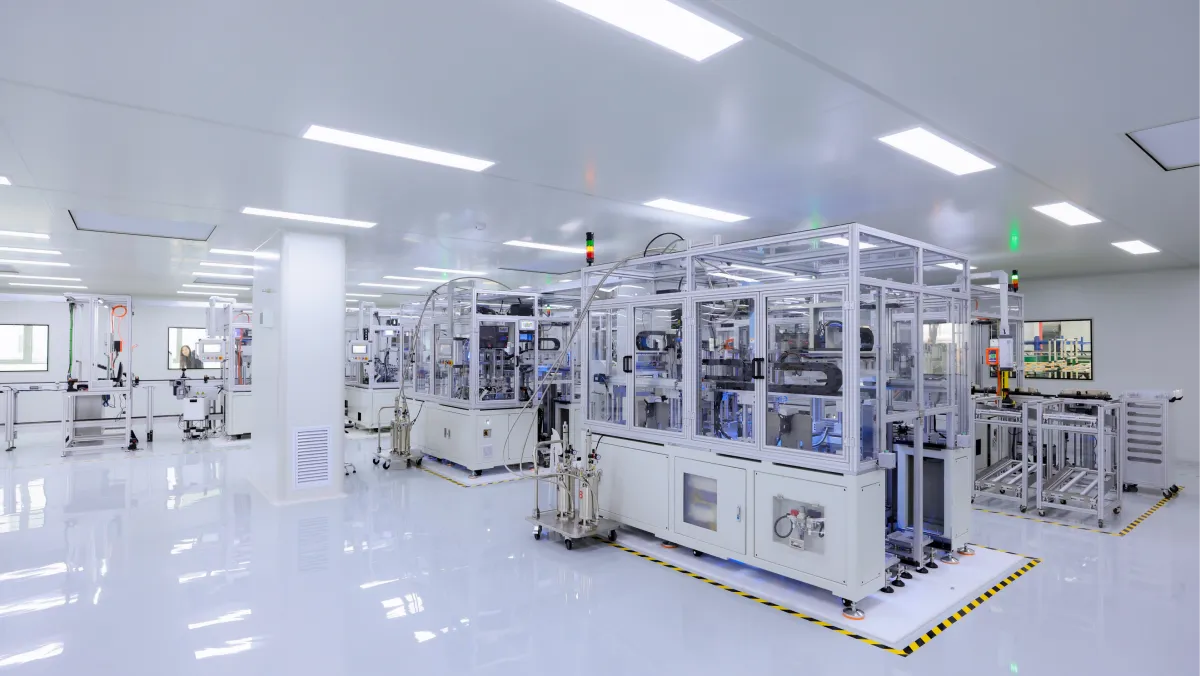
Sample performance is not volume performance. EYOU's split design lets the motor module and the reducer module run on independent automated lines in parallel, with 100% in-line testing of every submodule — encoder tests, motor inertia tests, torque ripple tests, brake tests, and reducer tests — before final assembly. No submodule enters final assembly unqualified. The shipped product holds 60 arc-second absolute positioning accuracy and 20 arc-second repeatability, with batch consistency guaranteed by the world's first automated robot joint production line.
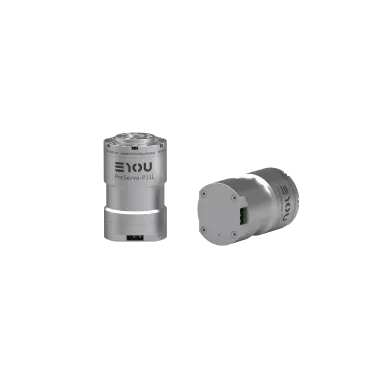
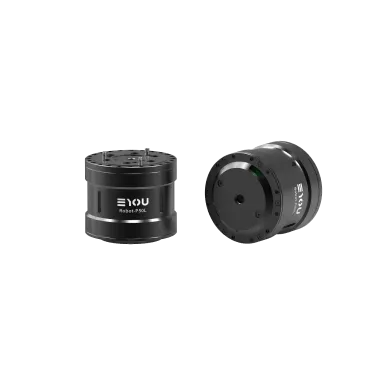
EYOU's harmonic portfolio spans three series: the PHU enhanced harmonic actuator, the first integrated joint produced on an automated line; the RHU humanoid harmonic actuator, 30% smaller than conventional designs at equal torque; and the PHA lightweight harmonic actuator, built for weight- and efficiency-sensitive applications. If you are selecting harmonic actuators for a robot, send your operating requirements to our application engineers.
FAQ
Both. Harmonic Drive is a registered trademark of Harmonic Drive Systems Inc. The technology's formal name is strain wave gearing, invented and patented by American engineer C. Walton Musser in 1955. Because the technology became so widespread, "harmonic drive" is now the generic term for this class of reducer.
It is structural. Once the wave generator deforms the flexspline into an ellipse, the teeth in the meshing zones stay fully engaged with no flank clearance — the source of backlash in conventional gearing simply does not exist. In engineering terms, backlash is measured as hysteresis per GB/T 35089—2018: the angular difference at the output under ±3% of rated torque with the joint braked. EYOU harmonic joints hold this value to 15 arc-seconds.
Life is determined by the wave generator bearing and can be estimated with Lh = Ln × (Tr÷Tav)³ × (Nr÷Nav), where average load torque has a cubic relationship with life — running 20% below rated torque roughly doubles it. EYOU's PHU series is rated for over 10,000 hours under rated conditions, and the RHU humanoid series for 8,000 hours. A harmonic reducer is ultimately a wear part: plan replacement when accuracy can no longer be compensated, backlash exceeds tolerance, or noise and vibration increase significantly.
No. The wave generator, flexspline, and circular spline form a matched precision set, and any unauthorized disassembly can cause permanent damage and total loss of accuracy. The only repair path is return to the manufacturer or an authorized service center. If you observe continuous abnormal noise, severe overheating, sudden large backlash, or jamming, stop the machine immediately and contact the supplier.
Follow the dominant requirement of each joint position. Where precision, compactness, and low weight dominate — forearms, wrists, hands, collaborative robots — choose harmonic. Where impact resistance and cost dominate — humanoid hips, knees, and ankles absorbing ground impact — choose planetary. See our full comparison in Types of Robot Joint Actuators.
It means the joint carries two absolute encoders: one on the motor side forming the inner loop for motor accuracy, and one on the output side measuring the actual load position as the outer loop. The reducer's own transmission error, backlash, and elastic deformation are measured and corrected by that outer loop, so terminal positioning accuracy is no longer limited by drivetrain error. EYOU harmonic joints use a 19-bit output encoder — 524,288 position steps per revolution.