Robot Actuator Cooling: The Four Stages of Thermal Management
A robot joint at work generates heat from two directions: resistive losses in the motor windings and friction losses in the drivetrain. All of it ends up trapped inside a small, sealed cavity. If the heat cannot get out, the joint runs a fever — accuracy drifts and performance drops first, then come fault shutdowns and accelerated wear. Thermal management has to work on both ends: generate less heat, and move it out faster. This article follows the four stages of that job — reduce, conduct, radiate, convect.
Why Temperature Decides Continuous Output
A joint motor's output capability is highly limited by its winding temperature — that is a measured result, not a rule of thumb. In quasi-direct-drive joint research for exoskeletons, a joint stalled at 22°C ambient with no external cooling reached 62.7°C on the housing surface within 15 minutes, and the test ended at a 100°C stator limit (IEEE paper). Motor manufacturers define continuous torque the same way — as a thermal rating: the operating point where the winding just reaches its maximum permissible temperature during continuous running at 25°C ambient (maxon technical documentation). Continuous torque is, at its core, a cooling specification.
The cost of exceeding temperature limits comes in two layers. Short term, insulation ages faster — the industry rule of thumb is that every 10°C of continuous operation above rated temperature halves insulation life (insulation class reference). Long term, there is irreversible damage: the coercivity of NdFeB magnets degrades at roughly 0.50–0.65% per °C, and high temperature combined with high current can push the operating point past the knee of the demagnetization curve, causing permanent loss of torque (MDPI study). Thermal management is not a comfort feature. It is a hard constraint on performance and service life.
Stage 1: Labyrinth Seals — Cut Heat at the Source
Traditional contact seals press a rubber lip against the rotating surface to keep dust out and grease in. That contact creates continuous friction — extra heat and extra torque loss, and the hotter it gets the faster the shaft spins. Pump-industry measurements give a sense of scale: a single lip seal consumes about 147 W on average, while a non-contact labyrinth seal consumes almost nothing (AESSEAL data, from large-shaft applications — the absolute numbers are smaller at joint scale, but the direction holds).
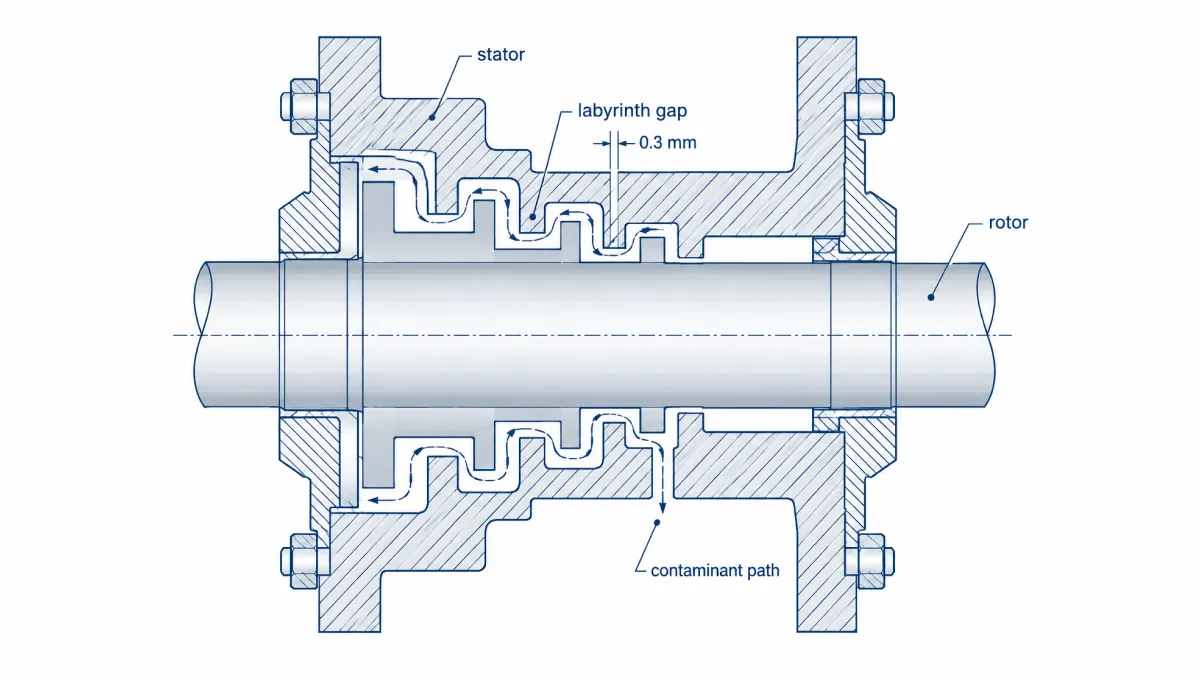
EYOU joints use a labyrinth seal, a non-contact design: a micro-gap between the rotating and stationary rings forms a tortuous pressure-relief path, and centrifugal effect helps block grease from escaping and dust or moisture from entering. With no continuous contact between hardware, friction heat from the seal disappears. The gain is twofold — less heat generated at the source, and a much longer seal service life. One honest boundary: a labyrinth seal is not an absolute seal, and it suits dust-and-splash joint conditions rather than immersion. Manufacturer comparison tests show a well-designed labyrinth protector can still reach IP66, survives close-range pressure washing, has no speed limit, and needs no maintenance (GMN comparison).
Stage 2: Thermal Potting — Conduct the Heat Out
Once heat generation is reduced at the source, the heat that still appears has to leave fast. The motor is the joint's biggest heat source. In conventional designs, air fills the space between the stator windings and the housing — and air conducts heat extremely poorly. Heat has to cross that air gap before it reaches the housing: a narrow, slow road, with temperatures climbing behind it.
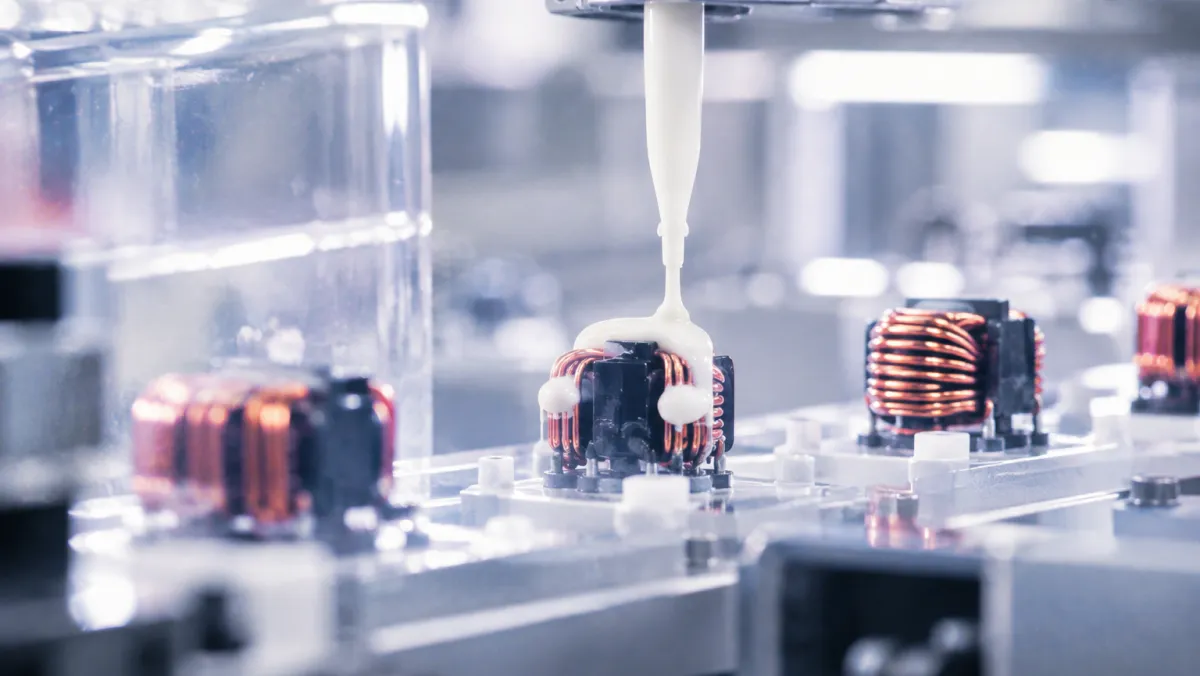
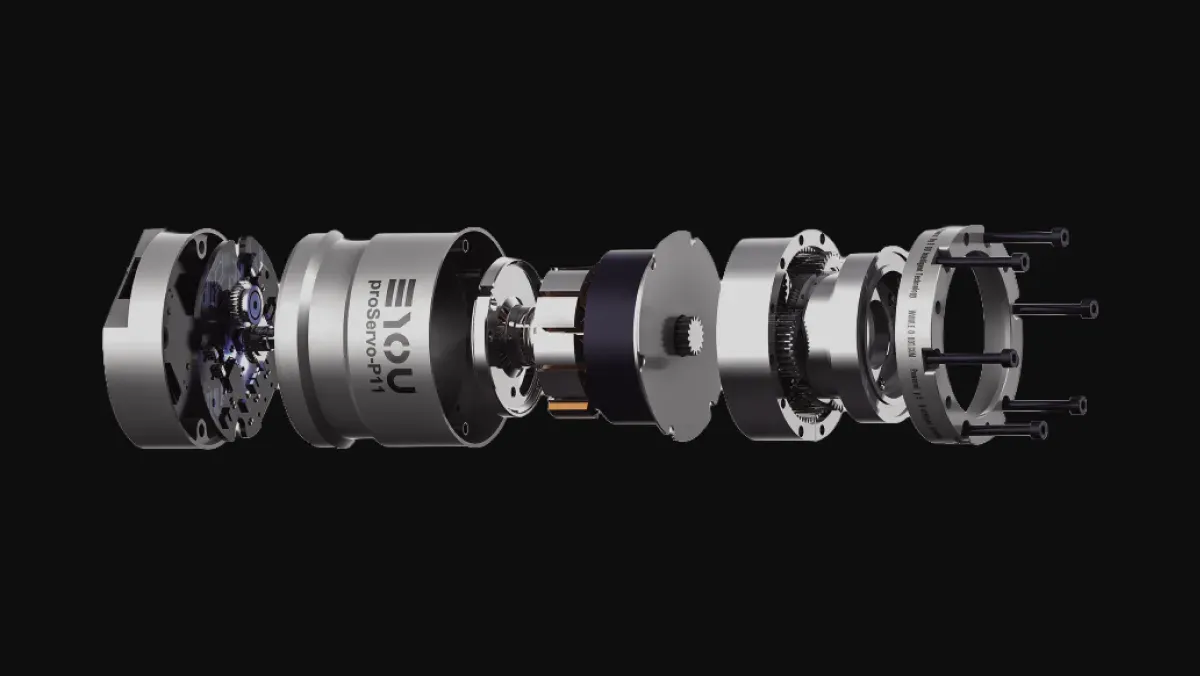
EYOU pots the motor stator with a high-thermal-conductivity compound. Once cured, the compound forms a continuous, dense solid whose thermal conductivity is far above air — a paved heat path from the source to the housing surface. Third-party test data supports the value: potting can lower winding hot-spot temperature by 10–20°C (ELAPLUS test data). A comparison case in Henkel's white paper is worth noting: a 1.5 W/m·K compound measured a lower average winding temperature (83.1°C) than a 2.2 W/m·K material (84.2°C) — conductivity alone does not decide the result; coverage and contact quality matter just as much (Henkel white paper). That is where process experience earns its keep.
Stage 3: Black Anodizing — Radiate Heat Off the Surface
Once heat reaches the housing, the job is to release it into the surrounding air. A housing sheds heat through two channels: radiation and convection. Radiative capacity depends on surface emissivity, and color decides much of that capacity. EYOU joints receive a black anodized finish, which raises the emissivity of the surface substantially and emits more heat as infrared radiation. Under identical conditions, the joint's steady-state temperature rise drops by 2°C — a direct contribution to performance stability and service life under high loads.
Stage 4: Cooling Fins — Expand the Convection Area
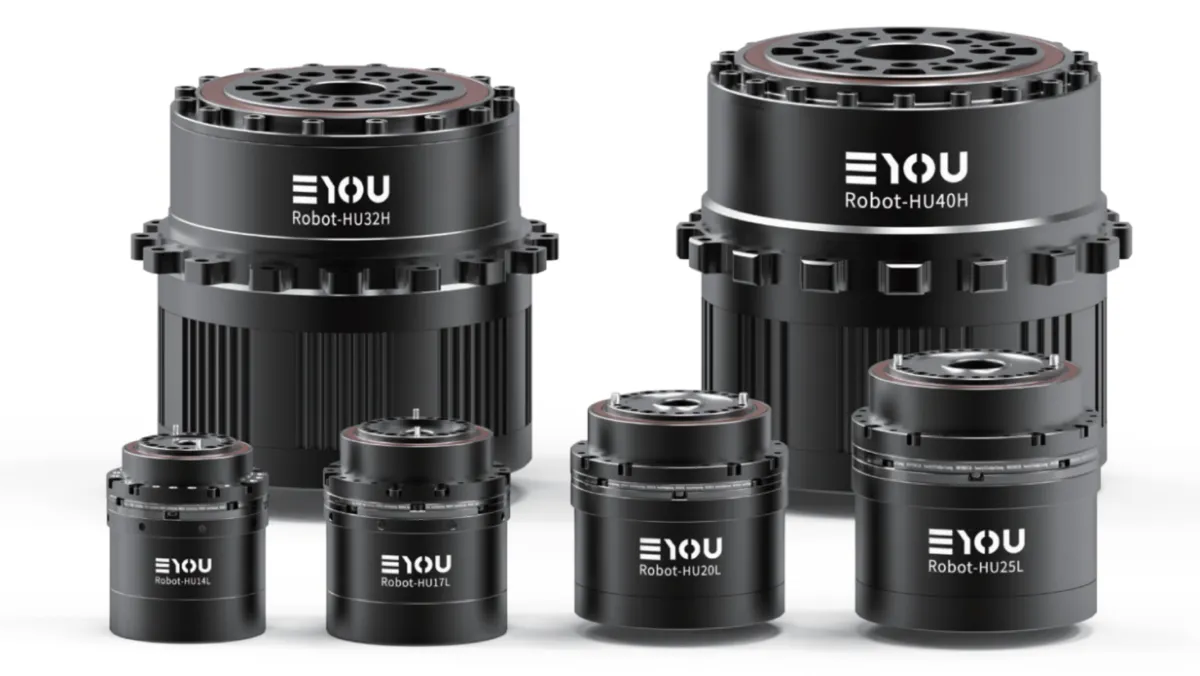
Convection scales with contact area. Adding a well-designed fin structure to an otherwise smooth housing greatly increases the surface area exposed to air — without a meaningful increase in volume or weight — giving heat more escape routes and lifting the cooling ceiling of the whole joint. Fins are not standard on every model; they follow the thermal load. Small joints with modest heat output cool fine with a smooth housing, while larger models built for high continuous output carry fins.
The Full Chain: Thermal Management as a System
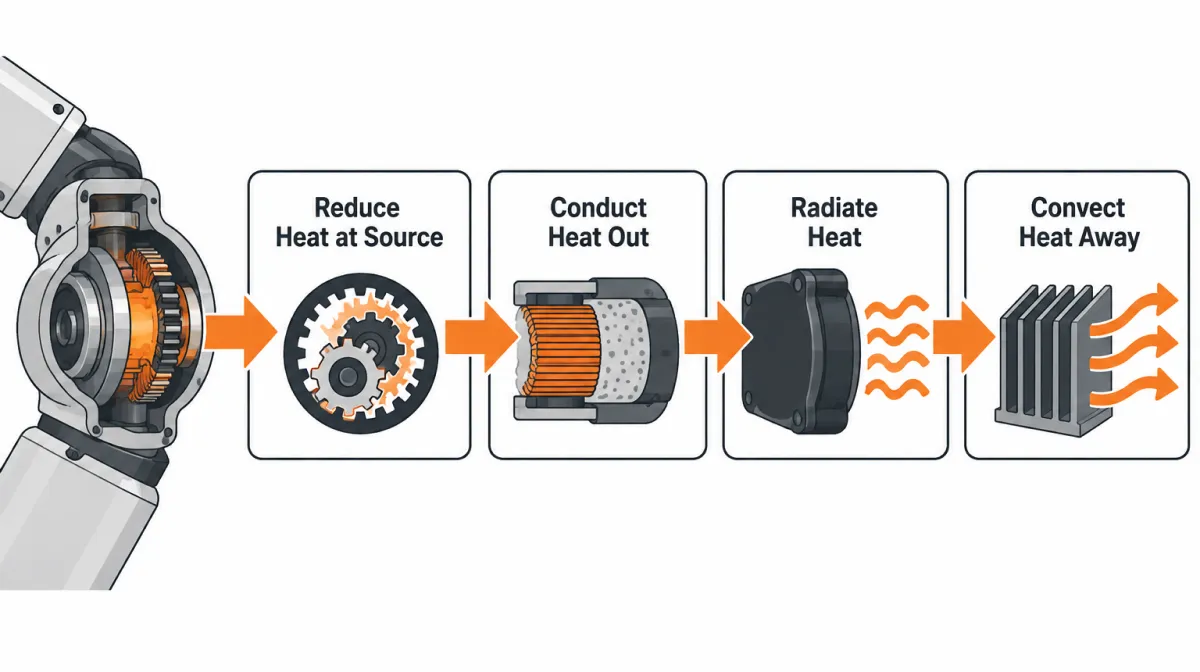
Managing a joint's operating temperature is end-to-end engineering: the labyrinth seal reduces heat at the source, potting conducts it outward, black anodizing radiates it, and fins convect it away. Sealing, potting, surface treatment, and housing structure are not isolated decisions — each is one link in the thermal chain. Cooling is also the hidden power-density lever: cooling decides continuous output, and continuous output defines the joint's real performance ceiling. For the full discussion, see How to Improve Robot Actuator Power Density.
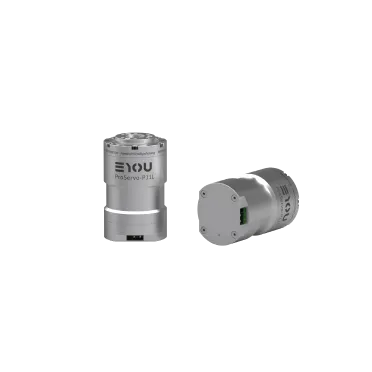
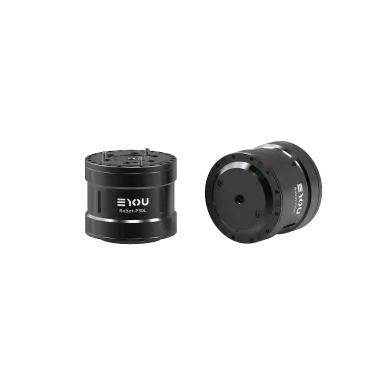
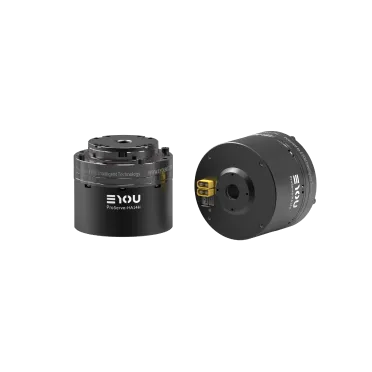
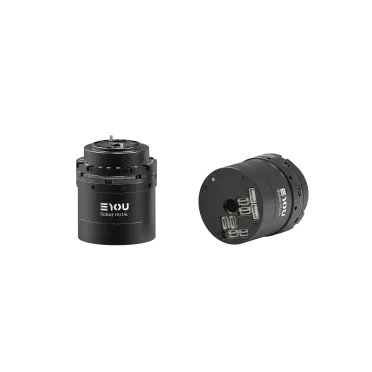
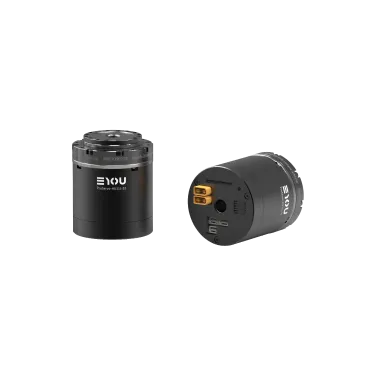
These designs are already shipping in mass-produced products: the RHU humanoid harmonic actuator and the RP humanoid planetary actuator both carry this thermal chain, holding stable operating temperatures while power density keeps climbing. For what sits inside a joint, see What Is Inside a Robot Actuator. If you are selecting joints for high-duty-cycle applications, send your operating conditions and temperature-rise constraints to our application engineers.
FAQ
The heat comes from resistive losses in the motor and friction losses in the drivetrain, and it accumulates inside the joint's small sealed cavity. If the structure gives heat no way out — air gaps between windings and housing, a housing surface with weak cooling ability — temperature keeps climbing until the drive derates or shuts down.
Peak torque lasts seconds and is limited by electromagnetic capability. Continuous torque is what the joint can output indefinitely at thermal equilibrium, and it is limited by temperature rise. Motor manufacturers define continuous operation as the point where the winding just reaches its maximum permissible temperature at 25°C ambient. Continuous torque is the number that matters when comparing joints.
A lip seal presses rubber against the rotating surface: absolute sealing, but constant friction heat, wear, and a speed limit. A labyrinth seal is non-contact: a micro-gap between rotating and stationary rings forms a tortuous path that, aided by centrifugal effect, blocks grease escape and dust ingress — zero friction, zero wear, no speed limit, no maintenance. The trade-off is that it is not an absolute seal, suiting dust-and-splash conditions rather than immersion.
Yes. The air between the windings and the housing conducts heat extremely poorly and is the biggest bottleneck in the heat path. A cured high-thermal-conductivity compound forms a continuous dense solid that paves a heat path from the windings to the housing. Third-party tests show winding hot spots dropping by 10–20°C after potting — though conductivity is not the only metric; coverage and contact quality matter just as much.
Part of a surface's heat loss is infrared radiation, and radiative capacity depends on surface emissivity. Black anodizing raises emissivity substantially, releasing more heat as infrared radiation. EYOU joints measure a 2°C lower steady-state temperature rise under identical conditions — a direct gain in stability and service life under high loads.
Yes — the main risk is irreversible demagnetization of the permanent magnets. The coercivity of NdFeB magnets falls quickly as temperature rises, and high temperature combined with high current can push the operating point past the knee of the demagnetization curve, permanently reducing torque. When selecting a motor, do not rely on the room-temperature datasheet alone; ask for demagnetization curves across the full temperature range.
Three common methods: embed a thermistor or PT100 in the windings for direct measurement; use the fact that copper resistance changes with temperature and back-calculate the average winding temperature from resistance — the standard method in stall heat testing; or scan the housing surface with a thermal camera. The first two reflect real internal temperature; the third is a quick diagnostic.