What Is Inside a Robot Actuator? Core Components Explained
The easiest way to understand a robot joint is to look at your own body.
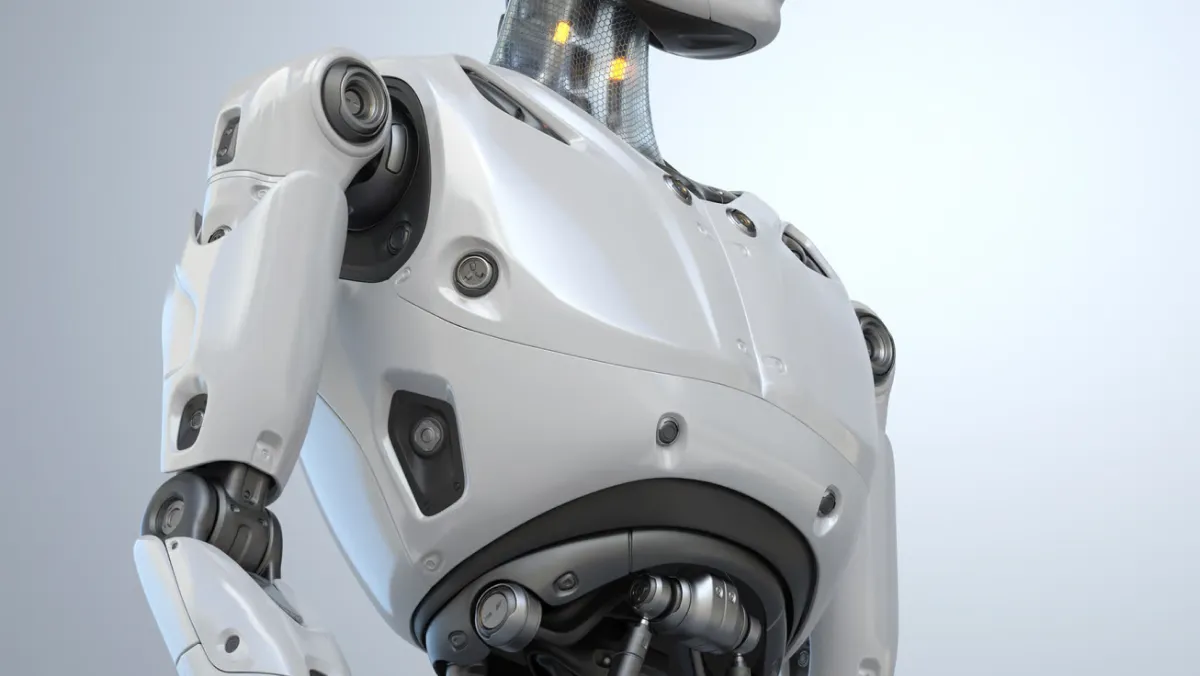
Your arm bends, your wrist rotates, your knee flexes — all thanks to the joints between bones. Every movement is the result of muscles, bones and the nervous system working together. A robot joint follows the same design logic: a motor replaces the muscle, metal structures replace the bones, and chips with algorithms replace the nerves.
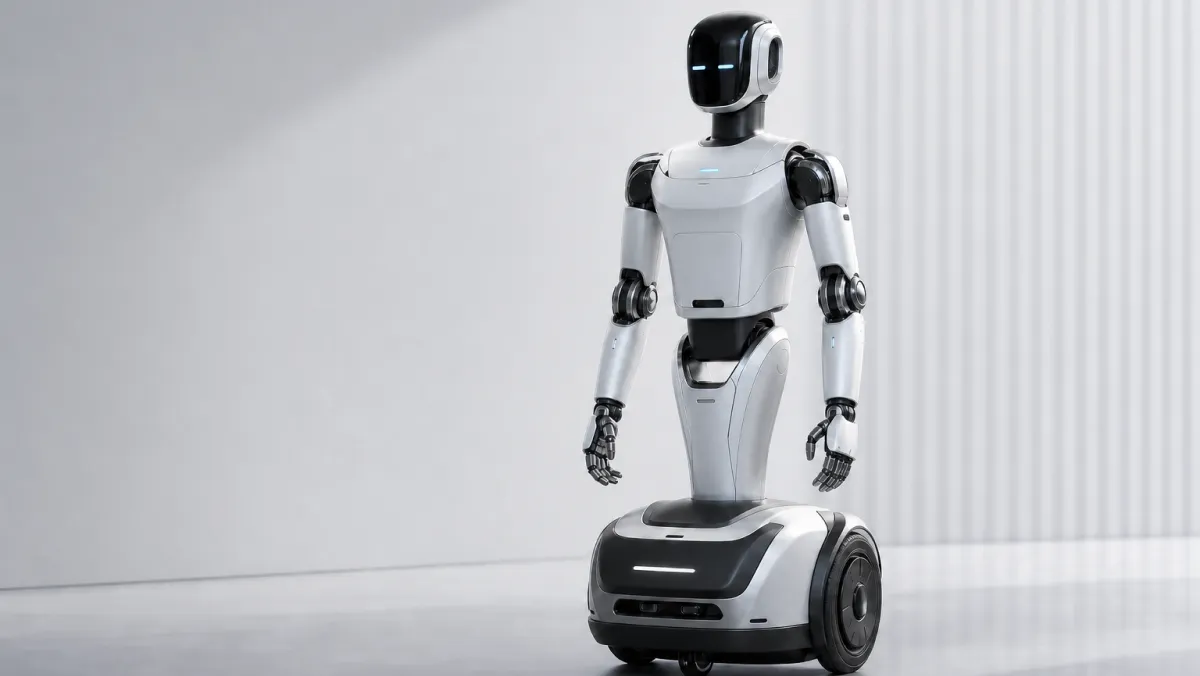
A typical humanoid robot needs 20 to 40 joints across its body. Each joint must output enough torque, control every angle precisely, and stay stable through the entire motion. So what is actually inside one of these joint modules?
What Is Inside a Robot Joint Module?
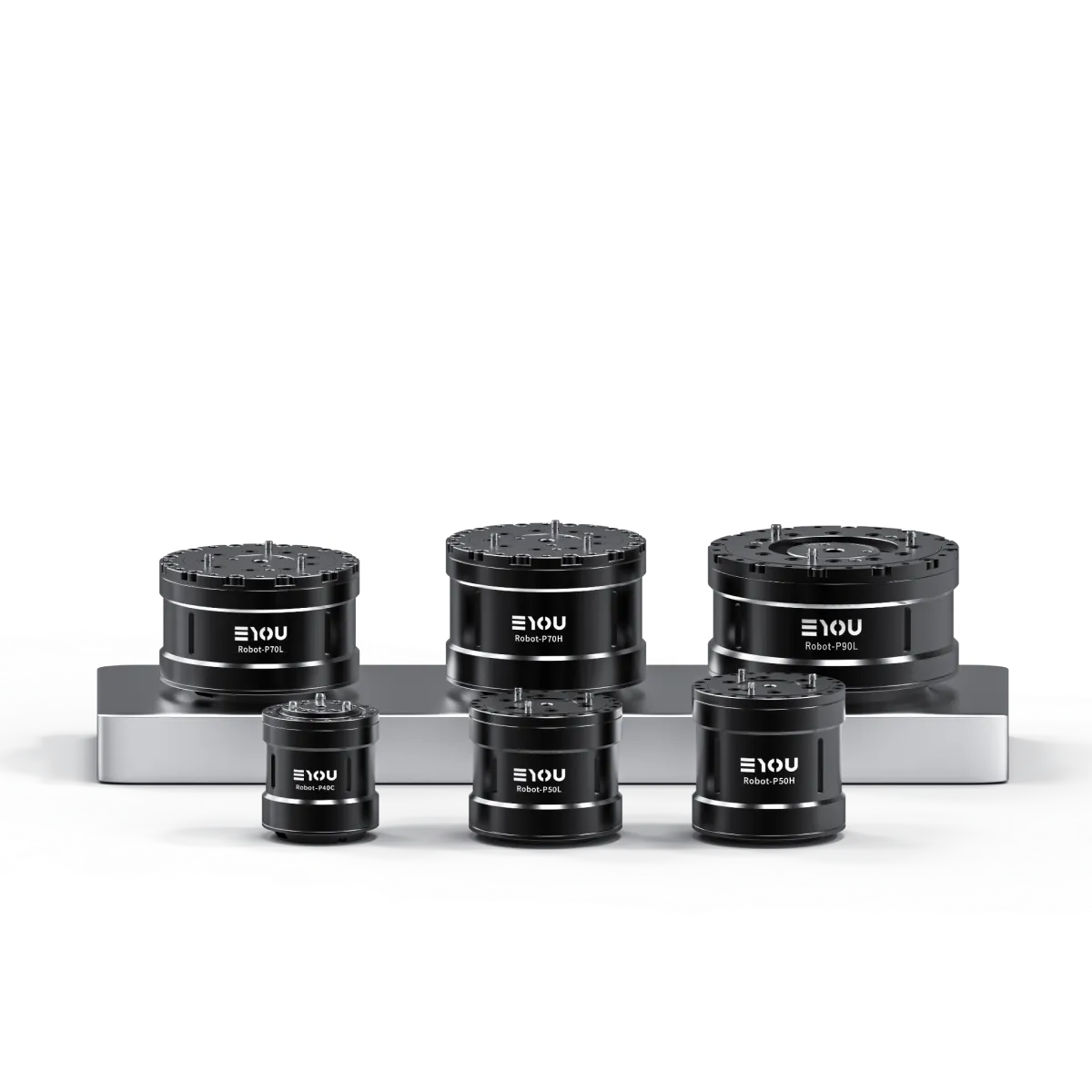
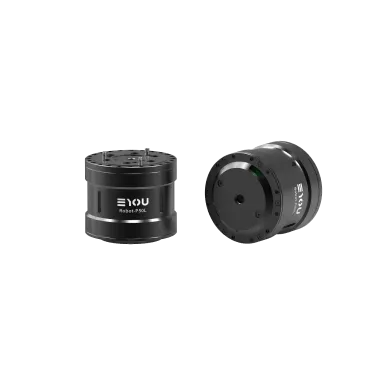
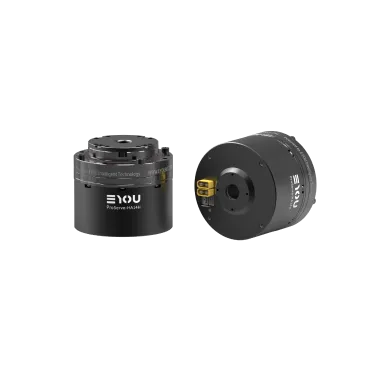
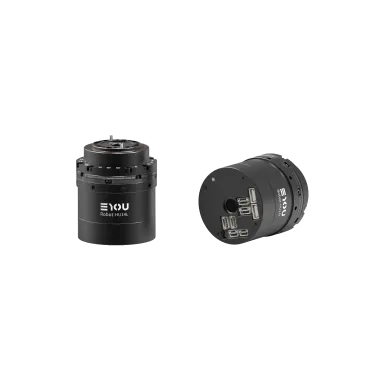
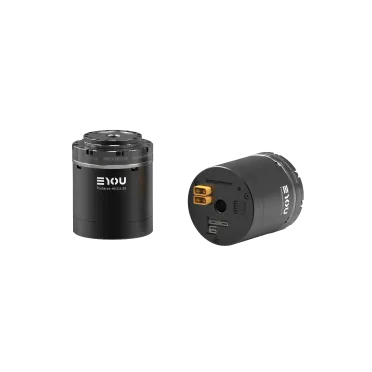
Take the integrated robot joint module from EYOU Robotics as an example. Inside one housing it packs a motor, a reducer or lead screw, a drive, encoders and structural parts. All of these capabilities are integrated into a single housing to form one complete power unit — bolt it on, connect power and communication, and it works.
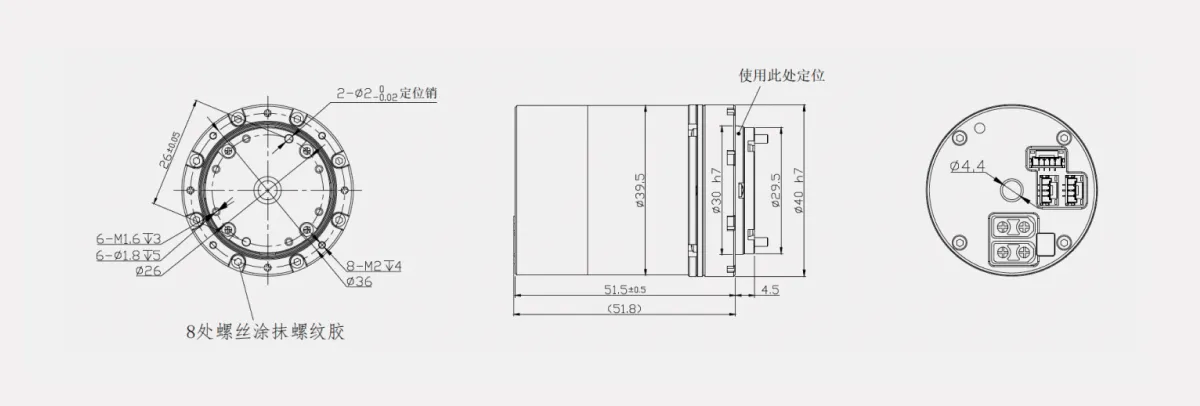
Let us break down each component along the power flow.
Motor: The Power Source of the Joint
The motor does one pure job: converting electrical energy into mechanical energy. Like a heart, it provides the raw driving force of the joint.
Robot joints commonly use frameless torque motors. Without the housing of a traditional motor, the rotor and stator are embedded directly into the joint structure, delivering more energy in a more compact space.
The motor makes the joint spin, but it has a clear limitation: it is good at high-speed rotation, not at outputting high torque directly. Spinning without load does no work — and that weakness is exactly what the transmission solves.
Transmission: The Torque Multiplier
In rotary joints, the core of the transmission is the reducer. Through gear transmission, it brings the motor's tens of thousands of RPM down while multiplying torque. With this "reduce speed, increase torque" effect, the joint slows down, gains control precision, and starts taking on load-bearing tasks.
The type of reducer defines the character of the joint:
- Harmonic reducer: The circular spline has slightly more teeth than the flexspline, so the two stay tightly meshed with no clearance, achieving zero-backlash high-precision transmission. Elastic deformation of the flexspline delivers a large reduction ratio in a single stage, making it extremely compact. Ideal for light-load, high-precision, space-constrained positions. View harmonic joint actuators
- Planetary reducer: The structure works like a miniature solar system — a sun gear at the center, three to four planet gears meshing around it, with the load shared across multiple gears. It offers strong shock resistance, high rigidity and low cost, making it suitable for lower-limb joints that absorb ground impact when running and jumping. View planetary joint actuators
In linear joints, the transmission uses a precision lead screw instead, converting the motor's rotation into linear motion. It delivers strong axial pulling force and shock resistance, serving positions like knees, elbows and ankles where motion is closer to linear extension than pure rotation.
Encoder: Letting the Joint Know Where It Is
A joint can output torque, but without knowing its current position, the control system cannot tell "how far is left to the target" — let alone control precisely. The encoder records the joint's rotational position and speed in real time, feeding accurate feedback to the control system so errors can be corrected in time.
EYOU harmonic and planetary joints use dual absolute encoders. The 19-bit high-precision encoder provides ultra-high resolution position feedback for dynamic balance, delicate manipulation and complex trajectory motion. The RL linear joint series uses an absolute multi-turn encoder with non-volatile memory that records multi-turn absolute position in real time — no homing is needed after power loss, improving equipment efficiency and simplifying control logic.
Drive: The Brain Hidden Inside the Joint
The drive is an often-overlooked but critical component. It receives motion commands from the upper controller (such as "move to 30 degrees"), reads the current position fed back by the encoder, calculates "how far is left", and decides how much current to apply to the motor and in what way.
In short, the drive organizes the internal components into a closed-loop system that works stably: command → drive → motor → transmission → output → encoder feedback, cycle after cycle.
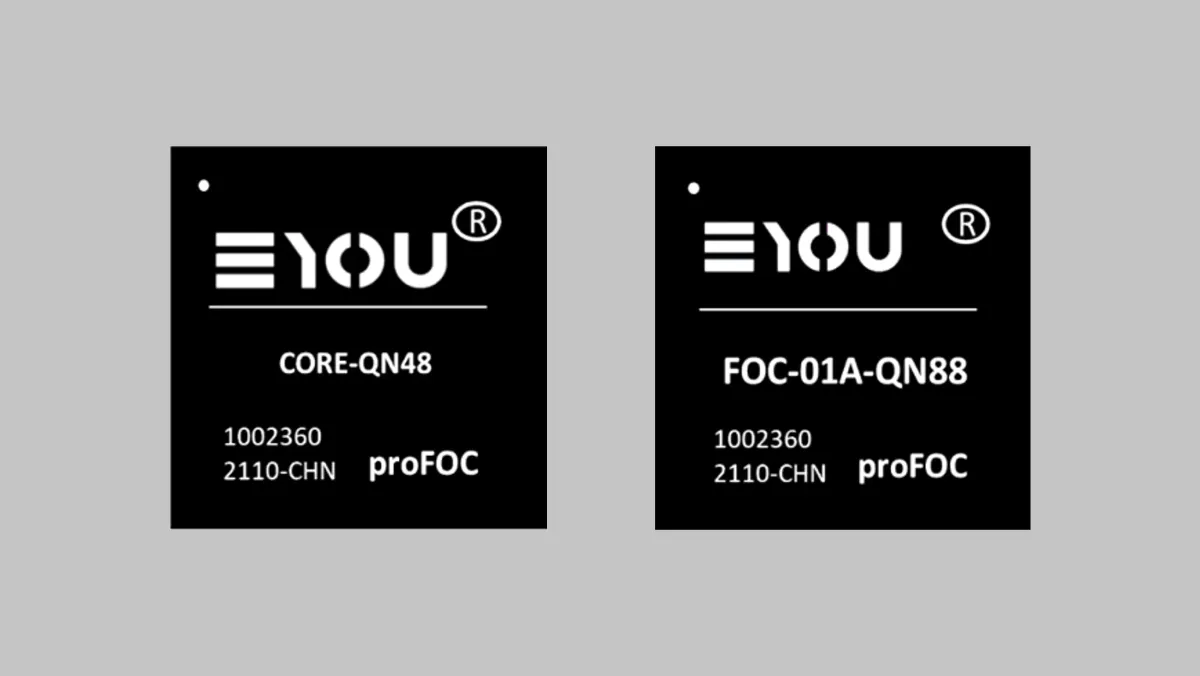
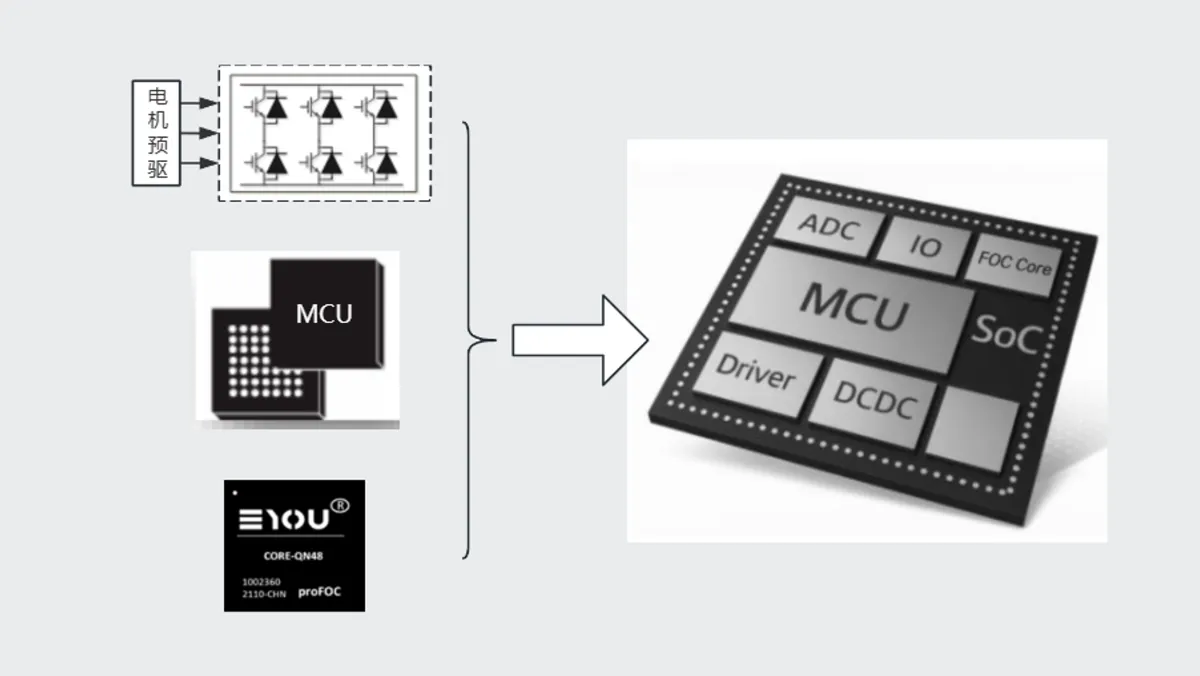
EYOU Robotics develops its own dedicated joint control chip, together with a full-hardware FOC algorithm and a millisecond-level high-precision force control algorithm, achieving over 70% terminal energy efficiency with extremely low speed ripple. For communication, standard products support CANopen, CAN FD and EtherCAT. The PHU and RHU series support both CANopen and EtherCAT at the same size, switchable via software configuration for better system compatibility.
Structural Parts and Integrated Packaging
Putting every component into one housing is not simple "packing". If the motor, reducer, drive and encoders were arranged separately, the axial size would be long, the machine heavy, and mechanical transmission loss and signal delay would pile up.
EYOU joints use a coaxial integration design, arranging the motor, reducer, drive and encoders along a single axis. The axial size is compressed to the extreme, greatly reducing transmission loss and dead weight. At the same output torque, the RHU series is 30% smaller in volume than traditional designs.
What Role Does the Joint Play in the Whole Robot?
Functionally, it is the robot's "capability boundary". Torque density decides how much the robot can carry and how fast it can move; precision decides whether it can perform delicate operations; response speed decides whether motion is agile or clumsy; reliability decides whether the machine is a productivity tool or a lab toy.
Financially, it is the robot's "economic lifeline". A full-size humanoid robot deploys 20 to 40 integrated joint modules, and joints account for nearly half of the total BOM cost — the single heaviest cost item. Without cheaper joints, humanoid robots remain expensive prototypes forever.
EYOU Robotics reduces joint cost in two ways. First, automated production lines replace manual labor, improving efficiency and cutting labor cost and quality fluctuation from manual work. Second, an automotive-factory-level quality management system moves quality control forward into every process step, eliminating hidden losses at the root — achieving "cost reduction through quality".
Conclusion
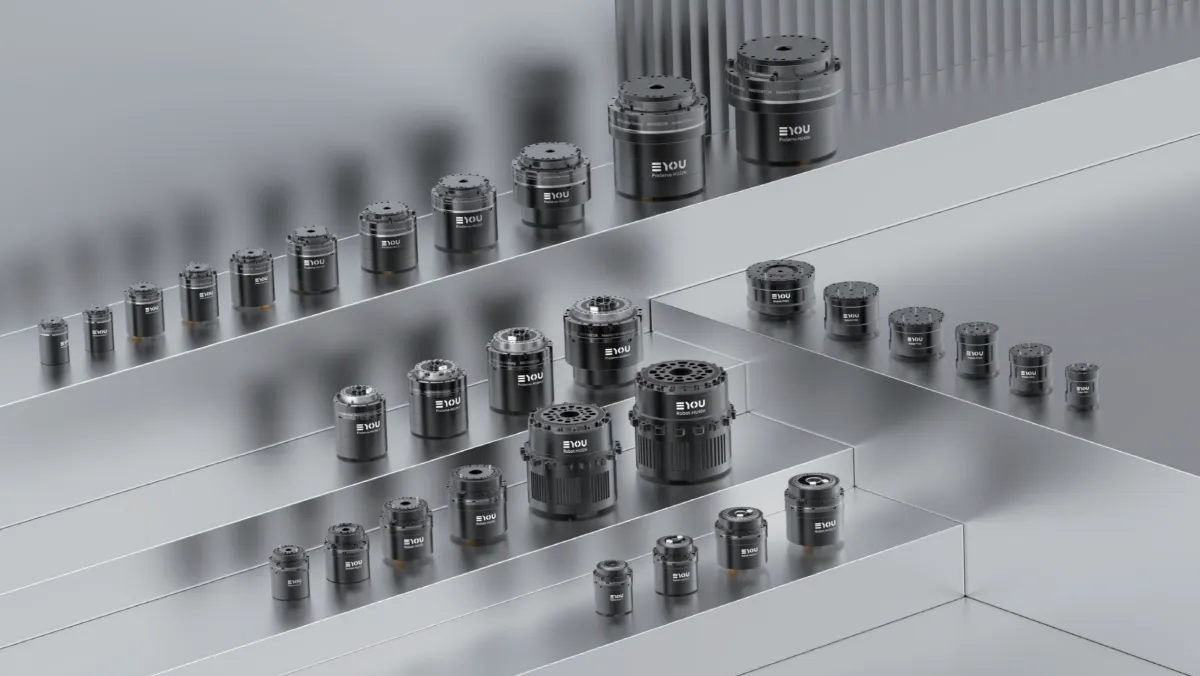
A robot joint is far more than a mechanical connector. The motor provides power, the transmission multiplies force, the encoder senses position, the drive coordinates the closed loop, and the structural parts integrate everything into one. Together these five systems form the power core that lets a robot move, sense and interact. As humanoid robots and embodied intelligence evolve, high-performance integrated joint modules will become the key to large-scale robot deployment.
FAQ
A complete integrated joint module typically packs five core components: a motor (power source), a reducer or lead screw (speed reduction and torque multiplication, or rotary-to-linear conversion), encoders (position feedback), a drive (the control brain) and structural parts (housing). Some scenarios also add a brake to lock the joint position when power is off.
No. A motor is only one core component inside an actuator, converting electrical energy into rotary power. An actuator (joint module) integrates the motor, reducer, encoder and drive into one complete device that receives control signals, controls position precisely and outputs high torque. The motor is a part; the actuator is a complete unit that drives a joint once bolted on.
A split setup is axially long and heavy, and introduces significant transmission loss and signal delay. An integrated joint packs all components coaxially into one housing — much smaller, with lower losses, exposing only power and communication lines. The mechanical structure and electrical layout of the whole robot are greatly simplified.
A single encoder only feeds back the motor-side position and cannot sense the actual angle at the reducer output. Dual encoders place one on the motor side and one on the output side, reflecting the true end position after the reducer. This enables full closed-loop control with higher positioning accuracy and better error correction.
A typical humanoid robot needs 20 to 40 joint modules across its body. Upper limbs (shoulder, elbow, wrist) usually use high-precision harmonic joints, lower limbs (hip, knee, ankle) use shock-resistant planetary joints, and positions closer to linear extension such as knees and elbows can use linear joints.