Top 15 Robot Actuator Manufacturers for Humanoid Robots in 2026
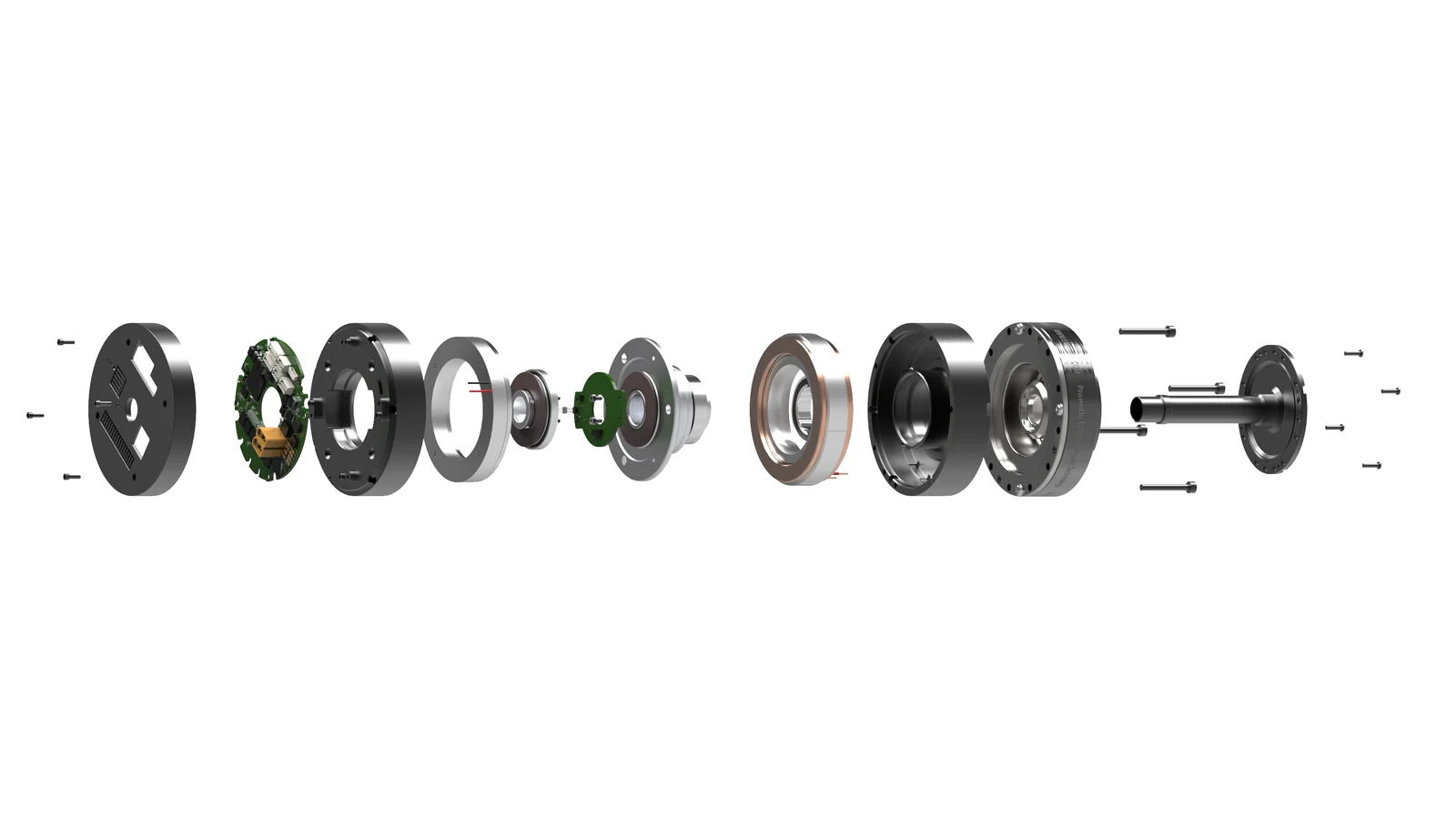
Robot actuator manufacturers build the integrated joint modules that move humanoid robots: a motor, a reducer, encoders, a drive and often a brake or torque sensor in one housing. Joints account for roughly 35% to 60% of a humanoid's bill of materials, and a June 2026 white paper by M2 Consulting puts global demand at about 720,000 joint modules in 2025, 70% of it from Chinese humanoid makers. This list covers fifteen humanoid robot actuator companies that sell complete joint modules. The first five follow the 2025 China humanoid harmonic joint module shipment ranking published by GGII (Gaogong Industry Research Institute) in April 2026. Nos. 6 to 11 are other Chinese makers with humanoid joint lines, and Nos. 12 to 15 are international makers with published humanoid actuator products; these ten are grouped by region, not ranked by volume. For the parts inside a joint, see What Is Inside a Robot Actuator.
Top 15 Robot Actuator Manufacturers at a Glance
The table lists each company's main humanoid actuator line. Specifications come from company releases, the GGII report and industry surveys cited in the sections below.
| # | Company | Headquarters | Humanoid actuator products | Note |
|---|---|---|---|---|
| 1 | EYOU | China | Harmonic (PHU, RHU), planetary (RP) and linear (RL) joint modules | No. 1 in GGII 2025 harmonic joint shipments |
| 2 | ZeroErr | China | eRob harmonic joint modules | No. 2 in GGII ranking |
| 3 | Juxie Intelligent | China | CE-HM harmonic joints, R48 to R120 | No. 3 in GGII ranking |
| 4 | Ti5 Robot | China | PRO lightweight harmonic joint modules | No. 4 in GGII ranking |
| 5 | Tomogawa | China | TM low-voltage harmonic actuators, sizes 11 to 40 | No. 5 in GGII ranking |
| 6 | Leaderdrive | China | KAH hollow harmonic actuators | Major strain wave gear maker |
| 7 | HCFA | China | Hu-MRS harmonic, cycloidal and Hu-MLS linear modules | Servo and motor maker |
| 8 | Welling Robotics (Midea) | China | Harmonic and planetary joint modules | New harmonic joint in 2026 |
| 9 | STEP Electric | China | HJLE1 humanoid joint modules | EtherCAT, 2026 launch |
| 10 | MyActuator | China | RMD-X planetary actuators | Legged and humanoid robots |
| 11 | CubeMars | China | AK and AKH planetary actuators | Legged robots and research |
| 12 | maxon | Switzerland | High Efficiency Joints (HEJ), planetary | Launched 2025 |
| 13 | Schaeffler | Germany | Planetary gear actuator, 60 to 250 N·m | Shown at CES 2026 |
| 14 | Synapticon | Germany | ACTILINK-JP harmonic actuators | Partner of Stabilus |
| 15 | LG | South Korea | LG Actuator AXIUM | 3D heat dissipation design |
The 15 Manufacturers
1. EYOU
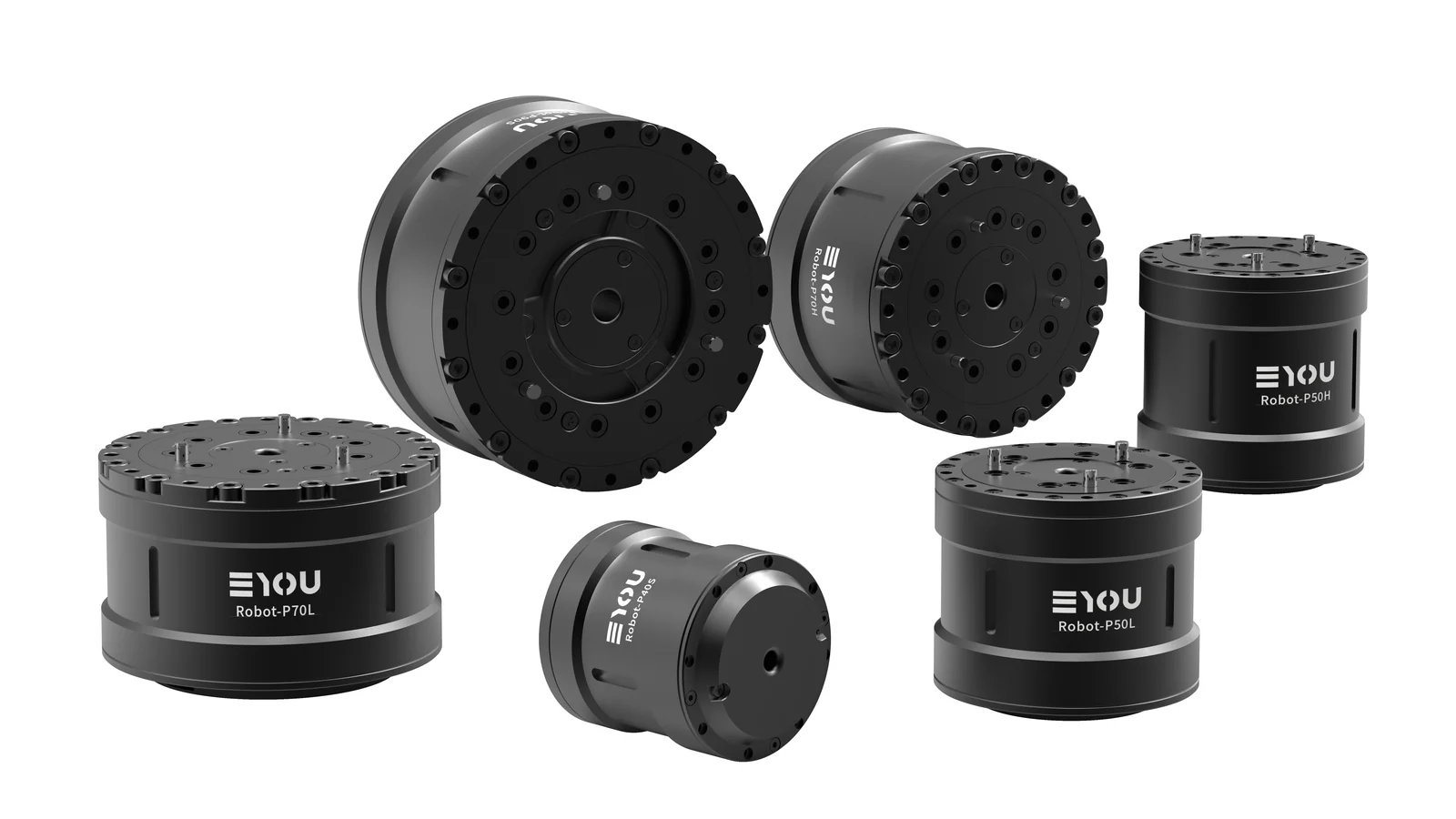
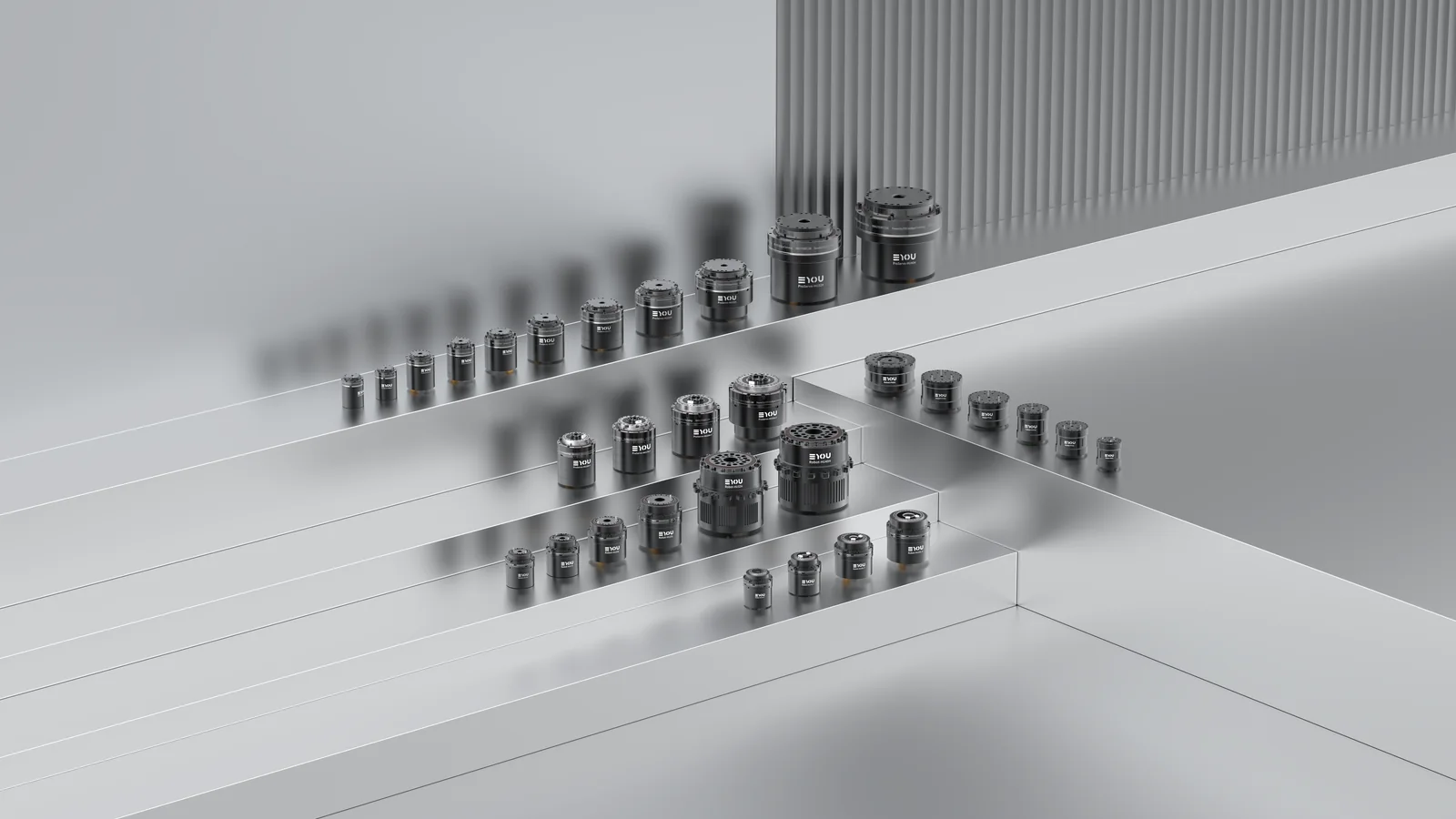
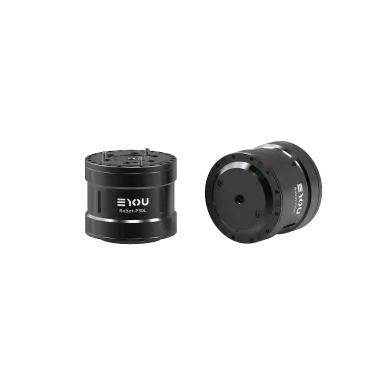
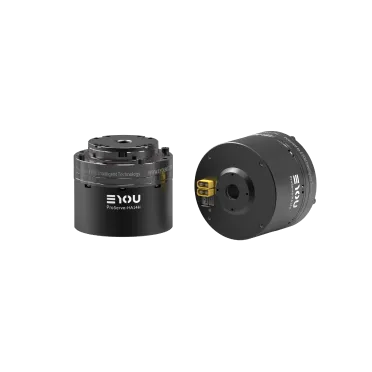
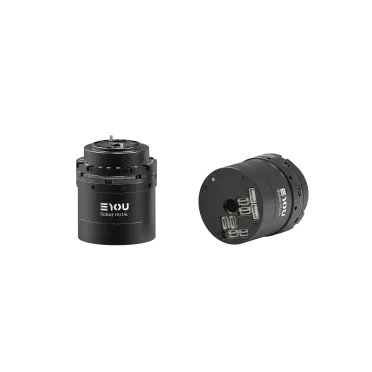
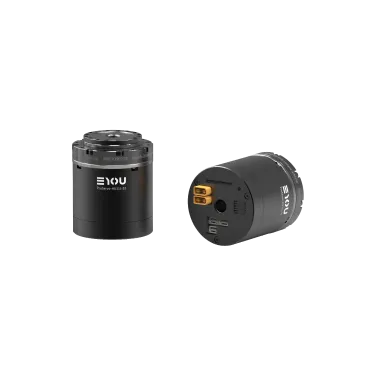
EYOU, founded in 2018, makes integrated servo joint modules and nothing else. The range covers harmonic joints (PHU and RHU series), planetary joints (RP series) and RL linear joints, so a humanoid maker can source the upper body, waist and legs from one supplier. An industry expert interview in May 2026 named EYOU as a representative supplier of complete upper-body harmonic joint solutions. EYOU develops its own FPGA-based full-hardware FOC control and drive chips and holds more than 120 patents.
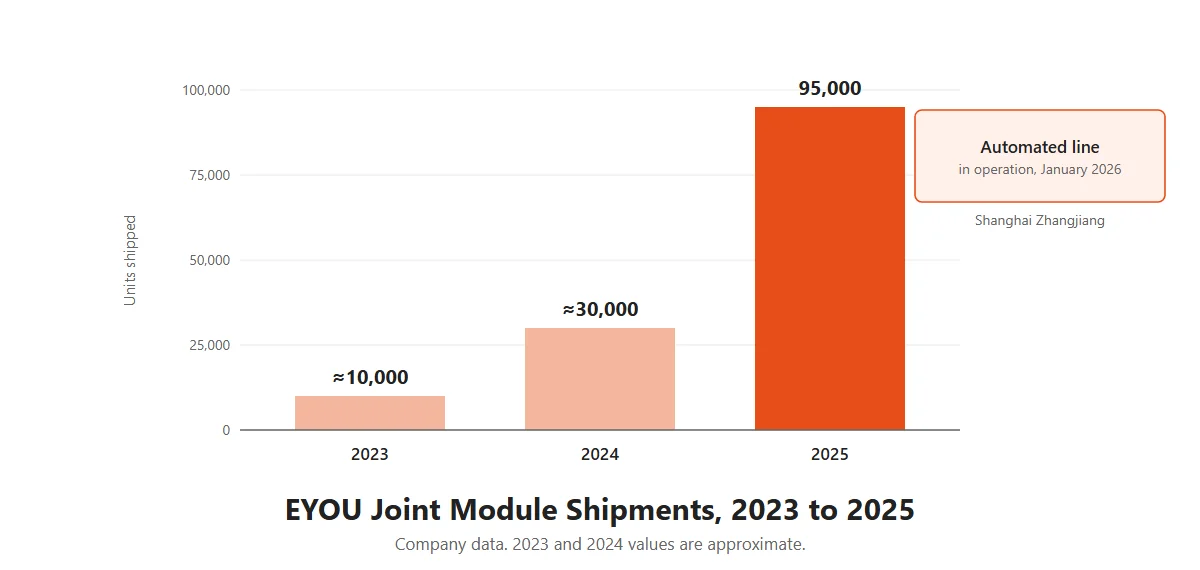
EYOU sold 95,000 joint modules in 2025 and ranked first in GGII's 2025 China humanoid harmonic joint module shipment ranking. The 2026 RHU humanoid harmonic joints reduce volume and weight by close to 30%, support both CAN and EtherCAT and offer optional high-precision force control; the RP planetary joints add an inductive encoder and reach a torque density of 114 N·m/kg. In January 2026 EYOU started China's first automated joint production line in Shanghai's Zhangjiang area, which the Pudong government reported at an initial capacity of 100,000 units a year. As of Q4 2026, EYOU's total annual capacity across its Shanghai, Wuxi and other production sites has passed 2 million joint sets, and its harmonic joints received China Robot (CR) certification in November 2025. The history of robot actuator manufacturing describes the move from manual assembly to automated lines.
2. ZeroErr
ZeroErr ranked second in the GGII shipment ranking. Its eRob rotary actuators integrate a harmonic reducer, frameless motor, drive and encoders, with EtherCAT and CANopen interfaces. ZeroErr quotes a repeatability of 7 arcseconds for the series, and the eRob 70 I lists ±7 arcseconds repeatability and ±15 arcseconds absolute accuracy with a 19-bit output encoder. ZeroErr closed a C+ financing round in March 2026.
3. Juxie Intelligent
Juxie Intelligent ranked third. Its humanoid joint product manual lists harmonic joint modules from R48 to R83 with a 101:1 ratio: the R48 (6.5 N·m rated, 16 N·m peak) and R58 for the head and wrist, and the R68 (33 N·m rated, 82 N·m peak) for the shoulder, elbow, knee and waist. At the 2026 World Robot Conference it launched a Lite series; the R48-Lite has a 48 mm outer diameter, a length of 45.5 mm and a weight of 0.26 kg, about 8 mm shorter than the previous generation.
4. Ti5 Robot
Ti5 Robot ranked fourth. Its PRO series lightweight joint modules pair an ultra-thin harmonic reducer with a brushless torque motor and a high-precision multi-turn absolute encoder, and hollow models support CAN, CANopen and EtherCAT with single or dual encoders and an optional holding brake. Ti5 Robot closed a C round in March 2026 and is among the joint makers that have announced automated production lines.
5. Tomogawa
Tomogawa ranked fifth. Its TM low-voltage harmonic actuators come in sizes 11 to 40 with full closed-loop control and high overload capacity, and the company states a design life of 10,000 hours and a positioning accuracy of 90 arcseconds.
6. Leaderdrive
Leaderdrive is one of the largest strain wave gear makers and also builds complete actuators. Its KAH hollow rotary actuators integrate a harmonic reducer, a frameless torque motor and a high-resolution absolute encoder on a hollow shaft, with absolute positioning accuracy down to 10 arcseconds. Published data for the KAH-25E lists 133 N·m rated and 217 N·m peak torque at a 161:1 ratio and a weight of 3.2 kg.
7. HCFA
HCFA, a servo and motor maker, offers rotary joint modules, linear actuators, frameless torque motors and coreless motors for humanoid robots, and told investors in September 2026 that it already has orders for these parts, though volumes are still small. Its Hu-MRS harmonic joints span 9.6 to 84 N·m rated torque at a 101:1 ratio, its Hu-MCS cycloidal joints are designed to take five times their rated torque in short impacts, and its linear modules use ball screws or inverted planetary roller screws.
8. Welling Robotics
Welling Robotics, part of the Midea Group, released a harmonic joint module in January 2026 with an integrated large hollow design, a peak torque density of 100 N·m/kg, a power density of 300 W/kg, force-position hybrid control and graphical tuning software. It also offers a planetary joint module for high-rigidity positions.
9. STEP Electric
STEP Electric's HJLE1 series humanoid joint modules, released in 2026, use a single-board drive architecture that cuts overall height by about 10 mm and weight by 15% to 20% while raising torque density by about 20%. The modules communicate over EtherCAT with synchronization accuracy of ±100 ns.
10. MyActuator
MyActuator, the brand of Suzhou Micro Actuator Technology, makes the RMD-X planetary actuators widely used in legged robots, humanoid prototypes and research. The V4 product manual describes hollow designs, dual encoders and EtherCAT or CAN bus options in sizes from X2-7 to X15-450, where the last number in the model name is the peak torque in N·m. MyActuator closed a B round in March 2026.
11. CubeMars
CubeMars AK series actuators combine a brushless DC motor, a planetary gearbox, an encoder and a driver, and are widely used in legged robots, exoskeletons and research platforms. In February 2026 the company introduced two hollow AKH planetary modules: the AKH70-16 for shoulders and elbows, with 85 N·m peak torque and 88.74 N·m/kg torque density, and the AKH70-48 for hips and knees, with 222 N·m and 159 N·m/kg.
12. maxon
The Swiss drive maker launched High Efficiency Joints for humanoid and mobile robots in 2025. Each HEJ unit combines a motor, a planetary gearbox, electronics and sensors in an IP67 housing controlled over EtherCAT. maxon lists up to 140 N·m for the HEJ 90 and 50 N·m peak torque at just over 1 kg for the HEJ 70.
13. Schaeffler
The German bearing and automotive supplier showed a planetary gear actuator for humanoid robots at CES 2026. It combines a two-stage planetary gearbox, motor, encoder and controller in one unit rated from 60 to 250 N·m for shoulders, hips and knees, and Schaeffler states that it makes all components in-house.
14. Synapticon
Synapticon develops servo drives and integrated motion products. Its ACTILINK-JP joint actuators pair a strain wave gear with an integrated drive, with peak torque from 34 to 411 N·m, and the company partners with Stabilus on actuators for humanoid robot joints.
15. LG
LG Electronics entered the actuator market with the LG Actuator AXIUM. The compact integrated unit uses a 3D heat dissipation design in which a multi-layer aluminum housing spreads heat evenly and keeps core components below 95 °C, and it recovers energy during deceleration.
Why Humanoid Makers Buy Some Joints and Build Others
GGII's survey found a clear split. Chinese humanoid makers such as Unitree and AgiBot mostly develop their own planetary joint modules, because planetary designs have not yet converged and few mature products are on the market. For harmonic joint modules, most humanoid makers buy from suppliers, because mature products exist and the development threshold is high. This is why the ranking above excludes robot makers' in-house joints.
The M2 white paper expects a hybrid architecture to dominate: harmonic joints for precise upper-body motion, quasi-direct-drive joints for dynamic legs, and planetary joints where cost matters most. Teams that build their own joints still buy core parts from component specialists, such as Harmonic Drive for strain wave gears and Kollmorgen for frameless motors, and then take on firmware, calibration, testing and volume production themselves. Frameless motor or integrated actuator compares the two routes at the joint level.
How to Choose a Robot Actuator Manufacturer
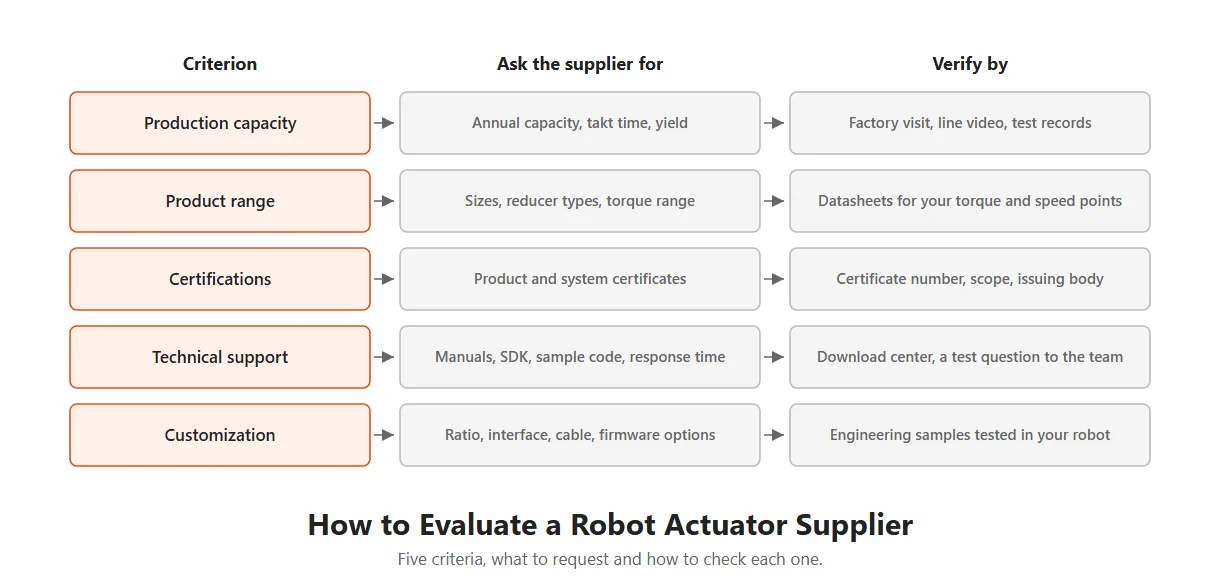
Industry analysts now describe the competition as a shift from peak performance to industrial capability: production consistency, yield, delivery stability and cost. Evaluate a robot joint manufacturer on five points and ask for evidence on each.
Production capacity and consistency
Ask for annual capacity, takt time, first-pass yield and how each unit is traced, then verify through a factory visit or video tour, test records for a sample batch and delivery dates on a trial order. As a reference, EYOU's automated line runs at a 90-second takt in its ramp-up stage with a target of 60 seconds and 85% automation, and the company reports first-pass yield above 98% with 100% inspection.
Product range
Check that the supplier covers the torque, speed and size points of your robot. One supplier for most positions means fewer interfaces, one communication protocol and one software tool. Ask for datasheets at your operating points instead of headline peak values.
Certifications for your target market
A joint module is a component: the robot maker certifies the finished robot, but the joint supplier's documents decide how much of that work is already done. Start from the market where the robot will be sold.
| Market | What applies to the robot | What to ask the joint supplier for |
|---|---|---|
| China | China Robot (CR) product certification; national standard system for humanoid robots released in February 2026 | CR certificate covering the joint models you buy |
| European Union | Machinery Directive 2006/42/EC, replaced by Machinery Regulation (EU) 2023/1230 from January 2027; Low Voltage and EMC Directives | Declaration of incorporation or conformity, LVD and EMC test reports, RoHS declaration |
| United States and Canada | UL 1740 robot safety certification by an OSHA-recognized lab (NRTL); ANSI/A3 R15.06 and CSA Z434 | Component recognition or test reports that support UL 1740 and NFPA 79 evaluation |
| All markets | ISO 10218-1:2025 robot safety, which now includes the collaborative requirements of ISO/TS 15066; functional safety under ISO 13849-1 or IEC 62061 | Safe torque off rated to IEC 61800-5-2 with a stated SIL or PL, and ISO 9001 for the factory |
For each certificate, check the number, issuing body, covered models and validity. Machine-level rules such as Regulation (EU) 2023/1230 and the 2025 revision of ISO 10218 also raise expectations for functional safety and cybersecurity, so ask how the supplier documents safety functions such as safe torque off.
Technical support
Review manuals, communication protocol documents, error code tables and sample code before you buy. Send a technical question and note how fast and how precisely the team answers, and for volume projects ask how on-site support is arranged.
Customization
Ask which parameters the supplier can change: reducer ratio, interface, cable length and outlet, brake, encoder and firmware. Request engineering samples and test them in your robot under your duty cycle.
Conclusion
Chinese suppliers lead harmonic joint shipments for humanoid robots, with EYOU, ZeroErr, Juxie Intelligent, Ti5 Robot and Tomogawa at the top of GGII's 2025 ranking. Reducer, servo and appliance groups such as Leaderdrive, HCFA, Welling and STEP Electric are building joint lines of their own, MyActuator and CubeMars serve legged and research robots, and maxon, Schaeffler, Synapticon and LG bring integrated actuators from the motion control, automotive and electronics industries. The right supplier is the one whose range fits your joint positions and whose production and support you have checked yourself. To learn more about EYOU, visit the about page or the product range, or send your joint positions, torque and speed requirements and expected volume to our engineers for model recommendations and samples.
FAQ
Integrated joint modules for humanoids come from Chinese actuator makers such as EYOU, ZeroErr, Juxie Intelligent, Ti5 Robot, Tomogawa, Leaderdrive, HCFA, Welling Robotics, STEP Electric, MyActuator and CubeMars, and from international makers such as maxon, Schaeffler, Synapticon and LG. Some robot makers also build their own planetary joints.
In GGII's 2025 ranking of China humanoid harmonic joint module shipments, published in April 2026, EYOU ranked first, followed by ZeroErr, Juxie Intelligent, Ti5 Robot and Tomogawa. EYOU sold 95,000 joint modules in 2025.
Some do, mainly for planetary joints, where designs have not yet converged. For harmonic joints, most humanoid makers buy from specialist suppliers because mature products exist and the development threshold is high.
Check five points: production capacity and yield, product range for your torque and speed points, certificates and their scope, technical documents and support response, and customization options. Ask for evidence on each and test engineering samples in your robot.
It depends on where the robot will be sold: CR certification in China, CE documents under the Machinery Directive (the Machinery Regulation from January 2027) with LVD, EMC and RoHS evidence in the EU, and test data that supports UL 1740 in North America. In all markets, ask for ISO 9001 and a safe torque off function rated to IEC 61800-5-2.