Unitree Launches H2-X Security Humanoid: 360 N·m Leg Joints, and 10,000–20,000 G1 Units Delivered
On October 21, Unitree Robotics unveiled the H2-X, a new humanoid built on its H2 platform and aimed at security and emergency-response work. The next day, at the 2026 World Physical AI Conference and Unitree partner summit, founder Wang Xingxing disclosed that the G1 — launched in May 2024 — has now rolled off the line roughly 10,000 to 20,000 times, making it the best-selling humanoid robot in the world to date. One announcement points to new scenarios; the other points to scale. The industry's two central questions both got fresh answers this week.
The Numbers That Matter in H2-X: Joint Specifications Set the Boundary
The H2-X stands 182 cm tall, weighs about 70 kg, and carries 31 degrees of freedom. For the actuator industry, the most valuable part of the launch is not the styling — it is two sets of joint figures: 360 N·m of peak torque at the leg joints and 120 N·m at the arm joints. The load profile of security and emergency work — long patrols, sudden heavy lifting, rough terrain — ultimately converts into peak torque, continuous torque, and thermal requirements at the joint level. A second figure deserves attention: endurance. The H2-X runs up to about 8 hours, versus roughly 3 hours for the base H2, and that gap is a direct examination of joint drive efficiency and the whole robot's power budget. The 2,070 TOPS of compute decides what the robot thinks; the joints decide what it can actually do.
G1 at Five Figures: Joint Modules Enter the Volume-Delivery Era
The G1's cumulative 10,000–20,000 units are the week's more important signal. With twenty to forty joints in every humanoid, ten thousand robots means joint modules in the hundreds of thousands have already completed the full cycle from design and validation to volume delivery. For upstream component makers, the nature of orders is changing: from sample validation to batch supply, where consistency, yield, and lead time matter more than headline specifications. The manufacturers that hold the post-10,000-unit orders will be the ones whose automated production lines can guarantee that every joint is the same joint.
What It Means for the Joint Supply Chain
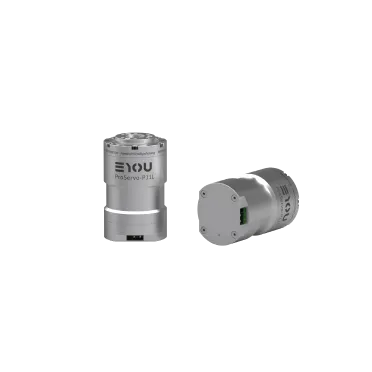
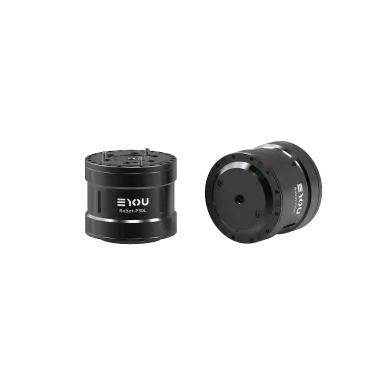
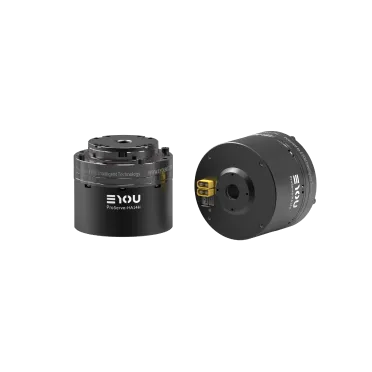
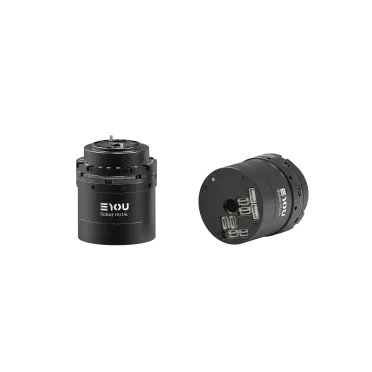
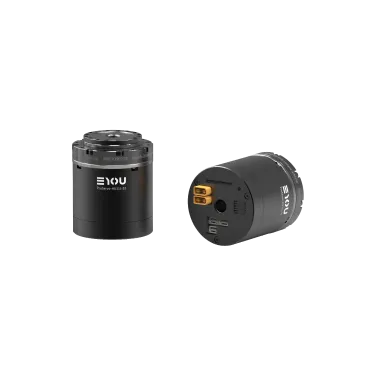
Unitree's two announcements together outline what robot builders now demand from joints: performance that holds up under 360 N·m-class peak output and 8-hour duty cycles, and delivery that keeps pace with five-figure production runs. Those two demands are precisely why integrated joint modules exist — EYOU's RP humanoid planetary actuator is designed for impact-loaded leg positions, and the RHU humanoid harmonic actuator for high-precision upper-body positions, both shipped as complete joint modules, with 95,000 units delivered in 2025 on an automated production line built for batch consistency. Every five-figure milestone a robot maker announces eventually becomes a mass-production exam for every joint in the supply chain.
Sources
Unitree launches H2-X — QQ News / MyDrivers (2026-10-21)
Wang Xingxing: G1 cumulative output of 10,000–20,000 units — ifeng (2026-10-22)