Harmonic Drive Bets on Integrated Actuators with Robot Joint Talk at RoboBusiness 2026
The inventor of the harmonic drive is publicly betting on the integrated joint route. The Robot Report said on October 8 that Harmonic Drive will deliver a technical talk at RoboBusiness 2026 (October 20-21, Santa Clara, California) on how integrated actuators reduce the engineering and assembly complexity of robot joints. The speaker is mechatronics applications engineer Marcel Almonte, scheduled for 10:30 a.m. PT on October 20.
The Product at the Center: RSF-5B IDT Integrated Actuator
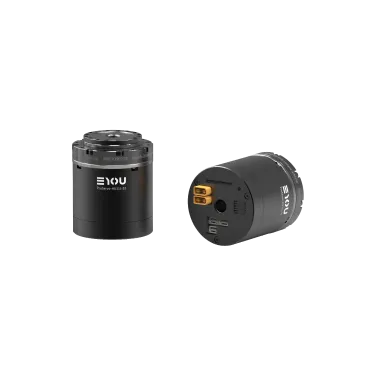
The talk centers on the RSF-5B IDT Supermini integrated actuator: a precision strain wave gearhead, brushless motor, magnetic encoder, and servo drive sealed into a single joint module, aimed at space-constrained positions such as collaborative robot wrists. The immediate payoff of the integrated architecture is the elimination of external cabling and separate couplings — with drive electronics inside the joint, a hollow arm shaft needs only a four-wire power and communication bus instead of dozens of discrete cables. The inherent qualities of strain wave gearing — single-stage ratios above 50:1 and near-zero backlash — remain unchanged. It is worth noting that the RSF-5B IDT is an existing commercial product; the session is a technology-route presentation rather than a new product launch.
Why the Leader Is Pivoting From Selling Reducers to Selling Joints
A deeper analysis by East Asia Brief frames the economics: precision assembly labor accounts for about 15% of a six-axis collaborative robot's mechanical cost, and motor-reducer pairs pre-aligned at the component factory can save an OEM up to two hours of calibration per robot — that is the integrated module's value math for robot builders. For Harmonic Drive Systems (6324.T) itself, the other side of the ledger is competitive pressure: media estimates put its global share of high-precision harmonic reducers at around 60%, while Chinese makers such as Leaderdrive price standard products roughly 30% lower; the company's response is to move up to complete mechatronic modules and raise the contract value per joint. The parent company guides FY2026 (ending March 2027) consolidated revenue of ¥68.0 billion (about $450 million), with April-June 2026 net sales of ¥16.68 billion, up 23.6% year on year, and was promoted from the TSE Standard market to the Prime market this February. The share and price-gap figures are media estimates, not company disclosures.
What It Means for Robot Builders
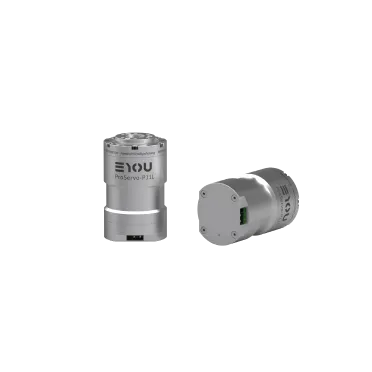
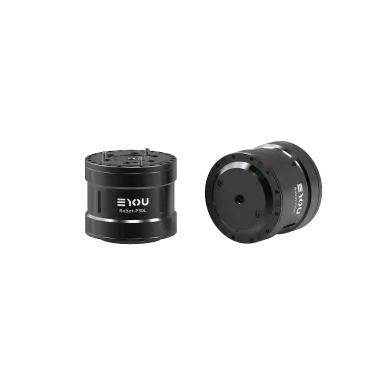
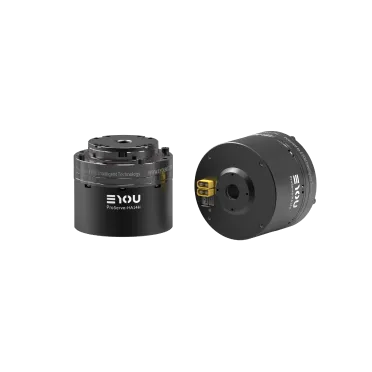
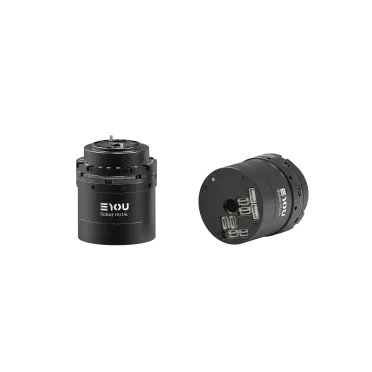
When the category-defining company spends its technical speaking slot on integrated joints, it is a public endorsement of the integrated actuator route: competition in joint modules is moving up from individual components — reducers, motors — to the whole-joint level, where what counts is not only specifications but also the assembly and calibration hours saved for the OEM. This is the existing route of Chinese integrated joints as well: with the harmonic approach, for example, the PHU enhanced harmonic actuator and the RHU humanoid harmonic actuator both ship with motor, harmonic reducer, drive, and dual encoders integrated in a single module. For buyers, the leader's entry into this narrative means the supply chain maturity and availability of integrated solutions are both improving — and the total-cost comparison between complete joints and self-assembled components deserves a fresh calculation.
Sources
Harmonic Drive pitches integrated actuators for robot joints — East Asia Brief (Oct 11, 2026)