OpenAI Confirms In-House Humanoid Robot — and Its Own Actuators
The world's largest AI company is officially entering humanoid robotics. Engadget reported on October 17 that OpenAI CEO Sam Altman confirmed the company will build its own humanoid robot — "We will definitely do a humanoid" — with a demo expected in 2027, while robots on the street remain years away. More telling than the statement itself is the hiring signal: OpenAI's careers page currently lists 27 robotics roles, four of them dedicated to actuator design. The listings show OpenAI is developing custom electromechanical actuators that integrate motors, transmissions, sensing, and thermal management, while building out manufacturing and supply-chain teams at the same time.
What 27 Job Listings Reveal About the Technical Route
OpenAI's robotics openings span motion control, state estimation, actuator control, whole-body behavior, and ML infrastructure. The keyword in the actuator roles is "custom": motor, transmission, sensing, and thermal management developed together as one module, rather than off-the-shelf parts assembled into a joint. That signals the same judgment made by leading robot builders — in the general-purpose era, a joint must be a deeply customized, integrated module, not a combination of catalog parts. The manufacturing and supply-chain roles on the same list say the company is thinking beyond a prototype, toward production.
Why Even OpenAI Has to Build Actuators Itself
This is not OpenAI's first contact with humanoid robots. It previously invested in 1X and Figure — and Figure ended that partnership in 2025 to bring development fully in-house. The same industry consensus sits behind both moves: the model decides what a robot wants to do, but the actuator decides what it can do. Torque density sets payload and battery life, control bandwidth sets agility, thermal management sets duty cycle, and cost sets whether the machine can ever ship at scale. A humanoid carries twenty to forty joints, and joints account for nearly half of the total BOM cost — a company that does not control this layer does not control its own product.
What It Means for the Joint Supply Chain
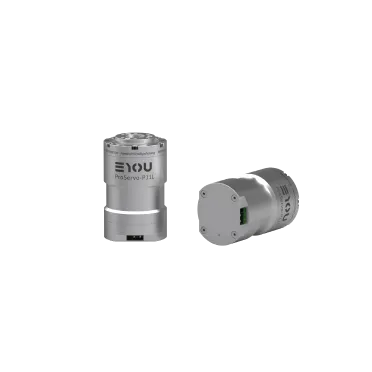
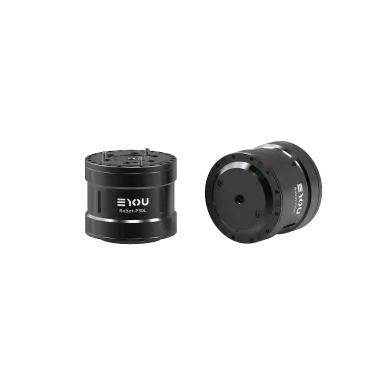
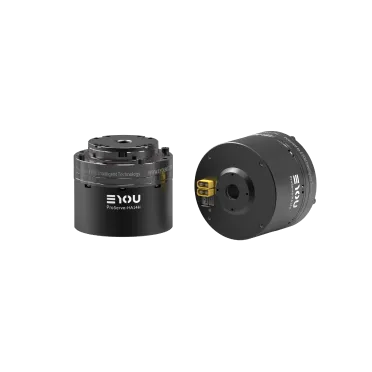
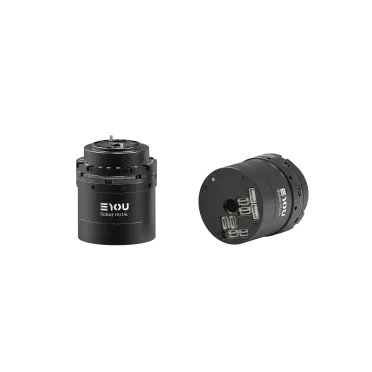
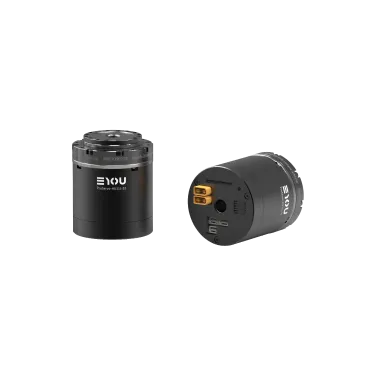
A top AI company building actuators in-house is, in the short run, more competition; in the long run, it is confirmation that the market is expanding. Every new humanoid builder must first answer the same question: where do the joints come from. Building them in-house means crossing electromagnetic design, precision transmission, drive control, and automated production — a multi-year commitment. The alternative is sourcing mature integrated joint modules and concentrating engineering resources on the model and the whole robot. EYOU's mass-produced products serve both paths: the RHU humanoid harmonic actuator for high-precision upper-body joints, and the RP humanoid planetary actuator for impact-loaded leg joints, both delivered as complete joint modules, with 95,000 units shipped in 2025. Whether OpenAI's 2027 demo arrives on schedule remains to be seen. What is already certain is that the actuator race now includes every company that wants to build a humanoid — not just robot companies.
Sources
OpenAI will 'definitely' build a humanoid robot, says Sam Altman — Engadget (2026-10-17)
Altman confirms OpenAI will build humanoid, demo in 2027 — AI Weekly (2026-10-18)