Mirle's Main Drive Ramps Harmonic Reducer Capacity Toward 10M Units a Year for U.S. Humanoid Demand
The capacity race for harmonic reducers is escalating. Between October 2 and 5, multiple Taiwanese media outlets — including UAnalyze, MoneyDJ, and Cnyes — reported that Main Drive, the harmonic reducer subsidiary of Taiwan's Mirle Automation (2464.TW), is accelerating capacity expansion to meet pull-in demand from a U.S. customer's humanoid robot program. The customer is widely reported to be Tesla's Optimus, though neither Mirle nor Tesla has officially confirmed the customer's identity.
Orders and the Capacity Roadmap: From 100K to 10M Units
The U.S. customer is expected to order 50,000 harmonic reducers by the end of 2026, up sharply from roughly 10,000 units in 2025, according to the reports. Main Drive's capacity plan tracks that demand:
- End of 2026: 100,000 units per year;
- Q1 2027: ramped to 800,000 units per year;
- Q3 2027: targeting 2 million units per year;
- Q4 2027: up to 10 million units per year.
Main Drive estimates it can reach breakeven once annual harmonic reducer sales exceed 300,000 units. Parent company Mirle reports an order backlog exceeding NT$15 billion, driven by semiconductor and robotics businesses. It should be noted that these capacity figures are company planning targets rather than existing capacity, and the 50,000-unit figure is the customer's expected order rather than a signed commitment.
Why Humanoids Are the Ones Absorbing This Capacity
The per-unit math cited in the reports: a humanoid robot of Optimus's architecture uses about 14 harmonic reducers, roughly 4.7 times a traditional industrial robot (about 3 per unit) — so 10 million units of annual capacity could support about 710,000 humanoids. For contrast, UAnalyze cites IFR World Robotics 2026 data: the global operational stock of industrial robots just passed 5 million units, with about 600,000 new installations per year. If all 10 million reducers went to traditional industrial robots, that would equal two-thirds of the entire global stock — the traditional market alone cannot absorb this capacity.
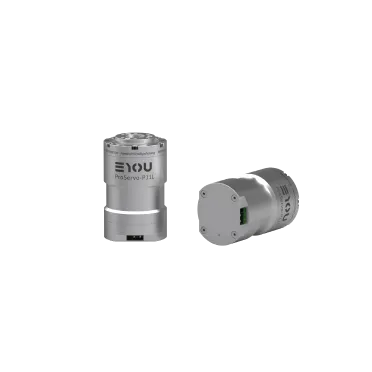
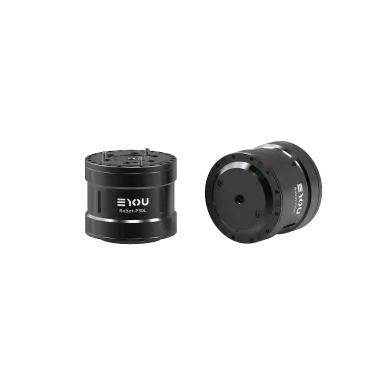
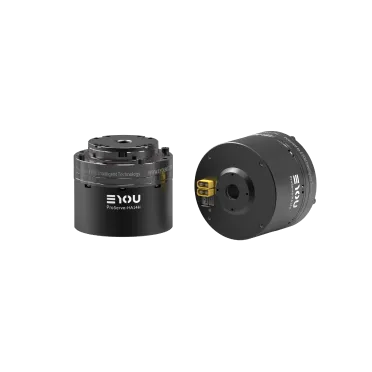
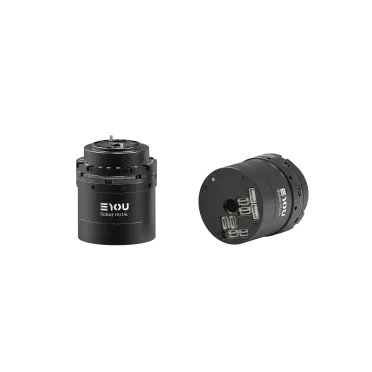
The reports also caution that not every humanoid joint uses a harmonic reducer: makers mix harmonic and planetary solutions by torque, precision, weight, and cost, so 14 per robot should be read as an order of magnitude, not a fixed standard. Harmonic reducers mainly cover upper-body and lighter joints where precision, size, and weight dominate — the position that harmonic actuators built for humanoid robots are designed for.
A Three-Region Footprint: Taiwan, Mainland China, Thailand
Mirle's expansion extends beyond Taiwan. According to a September 24 Money Weekly report, Mirle, together with Kedali — a leading mainland Chinese maker of precision structural parts for lithium batteries — and Main Drive, has set up a joint venture in Rayong, Thailand, to build a harmonic reducer production base. Kedali holds 51% and Mirle 39%, with Mirle's investment capped at NT$650 million. The expansion footprint now spans Taiwan, mainland China, and Thailand.
What It Means for the Joint Actuator Industry
This is the first time a reducer maker has publicly laid out an explicit humanoid capacity roadmap, and the signal matters more than the numbers: harmonic reducers are shifting from precision niche parts to scaled industrial goods, where production consistency and cost control become the dividing line — the exact problem that integrated harmonic actuators built on automated production lines are designed to solve. Competition is moving too: Germany's Schaeffler has introduced a strain wave gear designed for humanoid robots, with mass production planned for mid-2027. For buyers, harmonic reducer supply tightness should ease over the next two years — but a supplier's ability to ramp volume production reliably deserves close verification.
Sources
Analysis of Main Drive's harmonic reducer expansion — UAnalyze (Oct 2, 2026)
Global Market Watch — TechSoda (Oct 2, 2026, English summary)
Main Drive capacity roadmap report — MoneyDJ (Oct 5, 2026)
Mirle order backlog report — Cnyes (Oct 2, 2026)
Mirle-Kedali Thailand joint venture report — Money Weekly (Sep 24, 2026)