Robot Actuator vs Servo Motor vs Motor: The Difference Explained
When choosing a drive component, the words "motor," "servo motor," and "actuator" get used interchangeably — but they do not mean the same thing. Pick the wrong one and you waste cost at best, or end up with a joint that cannot meet your control requirements at worst. This article makes the difference clear and tells you which one a robot joint actually needs.
The Difference in One Sentence
A motor is the power part that produces rotation. A servo motor is a motor system with feedback that controls precisely. An actuator is the complete motion device that adds a reducer and integrates everything into one package. The three build on each other — they are not three parallel options.
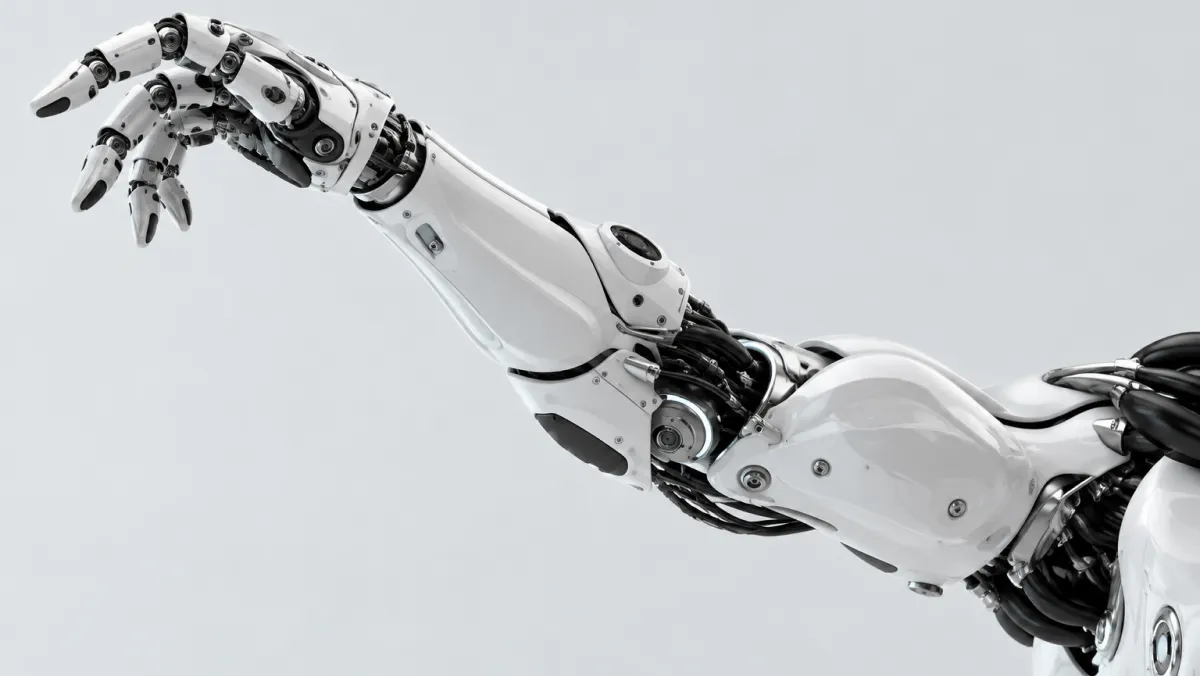
What a robot joint needs is the actuator: it controls precisely and outputs high torque, and once bolted on, it is a complete joint drive unit.
Motor: Only "Spins"
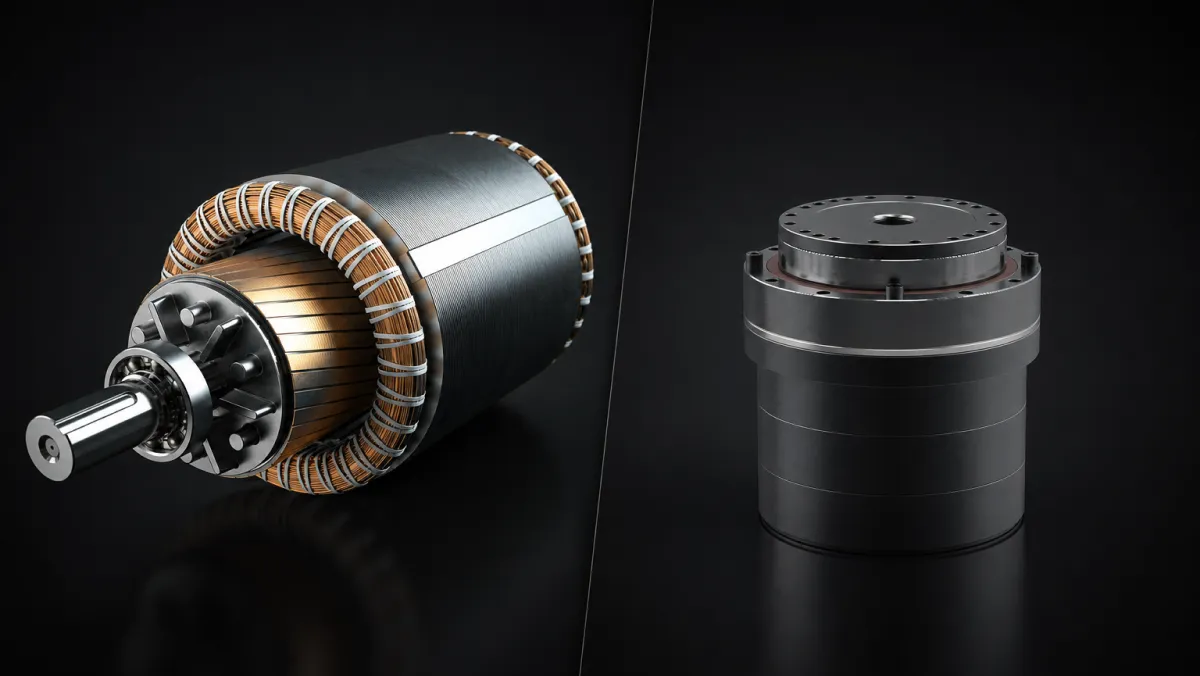
A motor is the lowest-level power source. Apply power and it spins, converting electrical energy into rotary mechanical energy. It is simple and low-cost, but has two built-in limits:
- No precise positioning: A plain motor just keeps spinning when powered. You cannot make it stop accurately at a specific angle — it does not know where it is.
- High speed, low torque: A motor spins fast but produces little force. Drive a joint directly and it spins too fast while failing to hold the load.
So a motor is almost never used alone in a robot joint. It is the base component for the other two — both a servo motor and an actuator contain a motor inside.
Servo Motor: A Motor System That Controls Precisely
Servo Motor = Motor + Encoder + Driver. Add two things to a motor and it gains the ability to control precisely:
- Encoder: Detects in real time where the motor has rotated to and feeds that back to the driver.
- Driver: Takes the feedback, continuously compares the commanded position with the actual position, and corrects automatically. This is closed-loop control.
With a closed loop, a servo motor can precisely control position, speed, and torque — tell it to rotate to 30 degrees and it stops exactly at 30 degrees, correcting itself if it drifts. This is the fundamental difference from a plain motor.
But what a servo motor outputs is still the motor's own speed and torque — high speed, low torque. Use it to drive a robot joint directly and the torque falls far short.
Actuator: A Complete Joint Unit with a Reducer
Actuator = Servo Motor + Reducer, integrated into one module. The key is the added reducer stage.
The reducer converts the motor's high speed and low torque into low speed and high torque. This is exactly what a robot joint needs — a joint does not need to spin fast; it needs enough force at low speed to hold the load steadily and control the angle precisely.
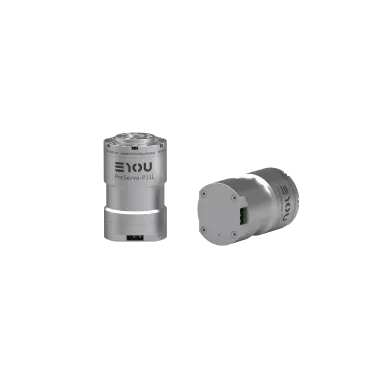
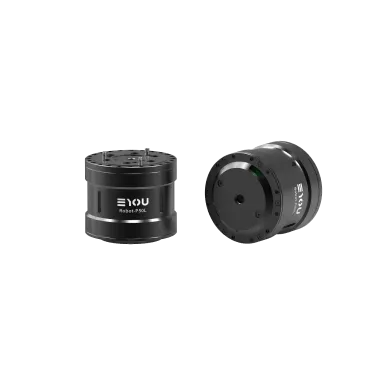
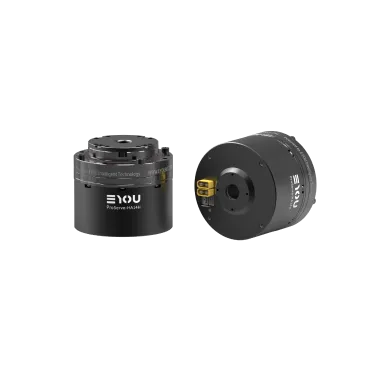
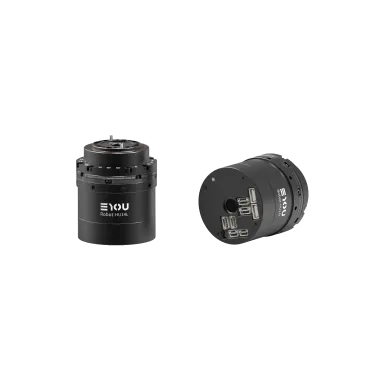
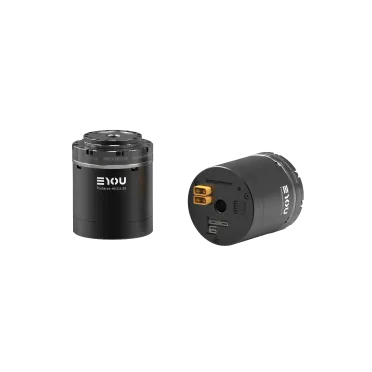
The integrated joint actuator used in modern robots packages a frameless torque motor, reducer, dual encoders, driver, and optional brake into one housing, with only power and communication lines on the outside. Once bolted on, it is a complete joint drive unit — no external control cabinet or separate gearbox needed. This level of integration is the biggest difference between an actuator and a build-it-yourself "motor plus reducer" approach.
Side-by-Side Comparison
| Item | Motor | Servo Motor | Actuator |
|---|---|---|---|
| Composition | Motor body | Motor + encoder + driver | Servo motor + reducer + integration |
| Precise positioning | No | Yes | Yes |
| Torque character | High speed, low torque | High speed, low torque | Low speed, high torque |
| Integration level | Part | System | Complete module |
| Drives a joint directly | No | Torque insufficient | Yes, plug-and-play |
Why Robot Joints Use Actuators, Not Bare Servo Motors
This is the trap engineers fall into most often. Many people search "robot servo motor" to pick a drive for a joint, but driving a joint with a bare servo motor has two problems:
First, not enough torque. A robot joint has to bear the weight of an entire limb or load, needing tens or even hundreds of newton-meters of torque. A servo motor without a reducer outputs the motor's raw torque, which falls far short. A reducer is required to multiply the torque by tens to hundreds of times.
Second, integration and wiring are a hassle. Pairing a servo motor with an external reducer and external driver yourself means more parts, more complex wiring, larger space, and solving alignment, rigidity, and heat dissipation on your own. An integrated actuator solves all of this at the factory.
So the conclusion is clear: if you are choosing a drive for a robot joint, what you want is an actuator (an integrated joint module with a reducer), not a bare servo motor. Searching "servo motor" turns up some related products, but what truly suits a joint is a complete device with an integrated reducer, like a harmonic actuator or a planetary actuator.
Why "Servo" Still Appears in Actuator Descriptions
Because an actuator does contain a servo system inside. Inside an EYOU joint actuator, the motor plus dual absolute encoders plus driver form a high-performance servo control core, with a harmonic or planetary reducer added on top. That is why you see names like "integrated servo joint" — it stresses that the actuator uses servo-grade closed-loop control inside, but the product itself is an actuator with a reducer, not a bare motor.
How to Choose for Your Robot
Sort out the requirement and the choice becomes clear:
- Needs continuous rotation, no precise positioning (wheeled bases, fans, pumps) → a plain motor is fine.
- Needs precise positioning but light load and low torque (small gimbals, light mechanisms) → a servo motor.
- Robot joints, robotic arms, needing high torque + precise control + compact integration → an integrated actuator. This is the standard choice for humanoid robots and collaborative arms.
EYOU Robot provides a full range of harmonic and planetary integrated joint actuators: enhanced harmonic or humanoid harmonic for precision joints, lightweight harmonic for weight-sensitive cases, humanoid planetary for high-impact lower limbs, and compact planetary for tight spaces. Tell us your joint requirements and we will help you pick the right model.
FAQ
No. A servo motor is a motor plus an encoder plus a driver — it controls precisely but outputs the motor's raw high speed and low torque. An actuator adds a reducer stage on top of the servo motor and integrates everything into a complete module, outputting low speed and high torque. A robot joint uses an actuator; the servo system is just one component inside it.
Usually not — the torque is insufficient. A robot joint needs tens to hundreds of newton-meters, while a bare servo motor without a reducer outputs only the motor's raw torque, far short of that. A reducer is required to multiply torque by tens to hundreds of times. So joints use an integrated actuator with a reducer, not a bare servo motor.
A plain motor spins when powered but does not know where it is and cannot stop accurately. A servo motor adds an encoder and driver to form a closed loop, detecting position in real time and correcting automatically so it stops exactly at the commanded position. In short, a motor can only "spin," while a servo motor can "spin precisely to a target position."
Because an integrated actuator does contain a servo system inside — a closed-loop control core formed by the motor, dual absolute encoders, and driver. The name "servo joint" stresses the servo-grade precise control inside, but the product as a whole is an actuator with a reducer that outputs high torque, not a bare motor.
Searching for an actuator (or integrated joint module) is more accurate. "Servo motor" turns up some related products, but many of them are bare motors without a reducer, which does not fully match the intent. A robot joint truly needs an actuator with an integrated reducer, so searching "joint actuator," "harmonic actuator," or "planetary actuator" finds more suitable products.