First U.S. Robotics Actuator ETF Launches: Actuators Become an Investable Category
On September 15, 2026, Defiance ETFs launched the Defiance Robotics Actuators ETF (Cboe: AT), the first U.S.-listed ETF dedicated to robotics actuators. The fund tracks the MarketVector Humanoid Actuator Index, a basket of around 25 companies that derive at least half of their revenue from actuator systems and precision motion components for humanoid robots, collaborative robots, and next-generation automation. For everyone building or buying robot joints, the signal from the capital market is unambiguous: the actuator layer is now a recognized, investable category of its own.
What Happened
AT is a rules-based thematic ETF with a 0.69% expense ratio, rebalanced quarterly. To enter the underlying index, a company must earn at least 50% of its revenue from activities that read like a parts list of the robot joint: servo motors, harmonic drives and cycloidal reducers, precision gearboxes, ball screws and linear actuators, motion controllers and encoders, high-precision bearings, micro-actuation, integrated actuator modules, and multi-axis movement components.
Defiance's Chief Investment Officer Sylvia Jablonski put the thesis bluntly: "Every conversation about humanoid robots is about the brain. The brain does not lift anything. The actuators do, and there are dozens of them in every robot."
Why Actuators, Why Now
The numbers behind the launch explain the timing. McKinsey estimates that actuators account for 40 to 60 percent of a humanoid robot's bill of materials, making them the largest cost driver and the primary performance differentiator in the machine, while depending on one of the least developed supplier ecosystems in the hardware stack. McKinsey's April 2026 analysis went further: as humanoid volumes rise, demand for actuators could outpace the speed at which suppliers can add qualified capacity. Compact strain-wave gearboxes in particular remain concentrated among a small group of manufacturers, and their production is precision-bound and capital-intensive.
Demand signals keep stacking up. Tesla has converted the former Model S and X line at Fremont to build Optimus, a robot McKinsey counts at 28 joint actuators in the body plus 50 more in the hands, with production slated to begin in late summer 2026. Schaeffler has signed three humanoid actuator supply partnerships in five months and expects up to 10% of group sales in 2035 to come from new sectors including humanoid robotics. TrendForce projects China's humanoid robot output will nearly double in 2026.
What It Means for Robot OEMs and Suppliers
- The component layer gets its own capital channel. A dedicated ETF lowers the barrier for public-market money to flow into actuator makers, which should accelerate capacity expansion and consolidation across the supply chain.
- Qualified capacity is the chokepoint asset. Both McKinsey and Defiance frame the same bottleneck: not designs, but production lines that can hold precision at volume. Suppliers who own that capacity sit at the most valuable position in the chain.
- Integrated modules are explicitly in scope. The index methodology names integrated actuator modules as a core eligible activity, confirming that the market sees motor-reducer-driver integration, not individual parts, as the product form that matters.
How This Relates to Us
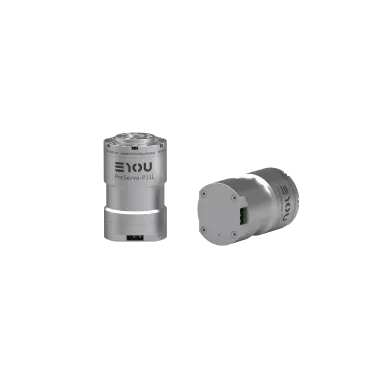
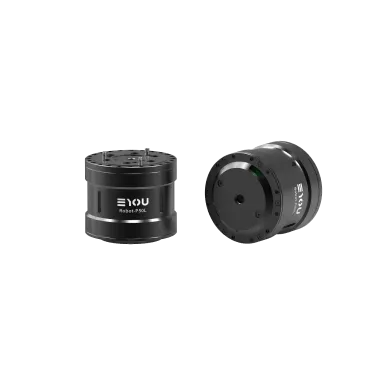
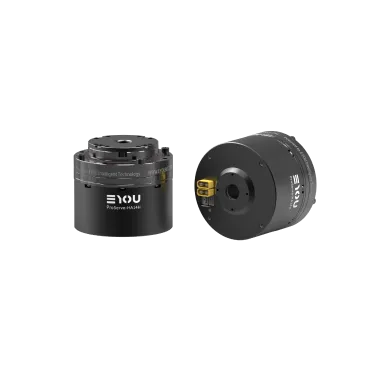
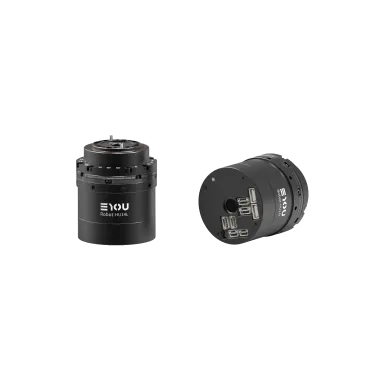
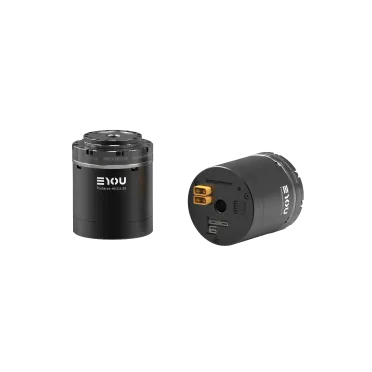
The thesis behind this ETF is the one we have been building on for years: value in robotics concentrates where precision meets mass production. EYOU Robot delivered 95,000 integrated joint actuator modules in 2025 and runs China's first automated joint production line, with harmonic drive actuators and planetary series covering every joint position on a humanoid. If you are sizing up joint supply for a robot program, send your requirements to our application engineers for a selection proposal.
Sources
- Defiance ETFs press release (GlobeNewswire): Defiance Launches AT, the First U.S.-Listed ETF Dedicated to Robotics Actuators (September 15, 2026)
- Yahoo Finance: Defiance Launches AT, the First U.S.-Listed ETF Dedicated to Robotics Actuators (September 15, 2026)
- Markets Insider: Defiance Launches AT, the First U.S.-Listed ETF Dedicated to Robotics Actuators (September 15, 2026)